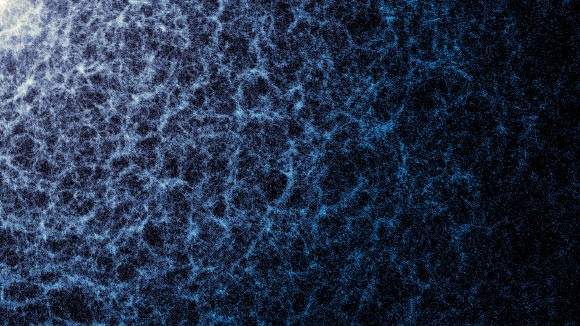
Astronomers have reached a historic milestone in the study of space by completing the creation of a three-dimensional map of the Universe that is unprecedented in its detail. Using the Dark Energy Spectroscopic Instrument (DESI), a team of scientists successfully determined the positions of more than 47 million galaxies and quasars**, as well as 20 million stars, creating a structural portrait of the universe that surpasses anything previously created in accuracy.
Překonávání předchozích rekordů
The scale of this achievement greatly exceeded the project’s original ambitions. While the original goal was to detect light from 34 million galaxies over five years, DESI has fallen far short of that goal.
The volumes of data obtained are of enormous importance:
– Unrivaled scale: The current dataset contains cosmological measurements for a number of galaxies and quasars that is six times greater than all previous measurements combined.
– Efficiency: The review completed its main objectives ahead of schedule, demonstrating the high performance of the instrument and the effectiveness of global collaboration between scientists.
– Data Depth: By mapping objects in three dimensions, scientists can observe how cosmic structures have shifted and clustered over 11 billion years of history.
Finding the solution to the mystery of dark energy
The main impetus for this massive undertaking is the mystery of dark energy – the mysterious force responsible for the accelerating expansion of the Universe.
By comparing the distribution of galaxies in the distant past with their current positions, astronomers can trace how dark energy influenced the growth of the Universe over eons. This approach to studying “cosmic history” is critical to understanding whether dark energy is constant or whether it changes over time.
“With hints that dark energy may be deviating from a constant that could potentially change our destiny, this moment feels like I’m sitting on the edge of my seat, waiting for the outcome,” said Dr. Stephanie Juneau of NOIRLab (US National Science Foundation).
If dark energy is truly variable rather than constant, it will fundamentally rewrite our understanding of physics and change predictions about how the universe will ultimately end.
Co bude dál?
Completion of the initial review marks the beginning of an extensive data processing phase. The scientific community is now awaiting several key milestones:
- Initial Analysis: The team is currently processing data from the first three years to refine their measurements of the structure and evolution of the Universe.
- Upcoming Publications: Several research papers are expected to be released later this year detailing new discoveries made from this data set.
- 2027 Milestone: Full and final results of the five-year study are scheduled to be presented in 2027.
Závěr
By mapping millions of celestial objects with unprecedented precision, DESI has provided humanity with a colossal array of data that could fundamentally redefine our understanding of cosmic expansion and the ultimate fate of the Universe.