


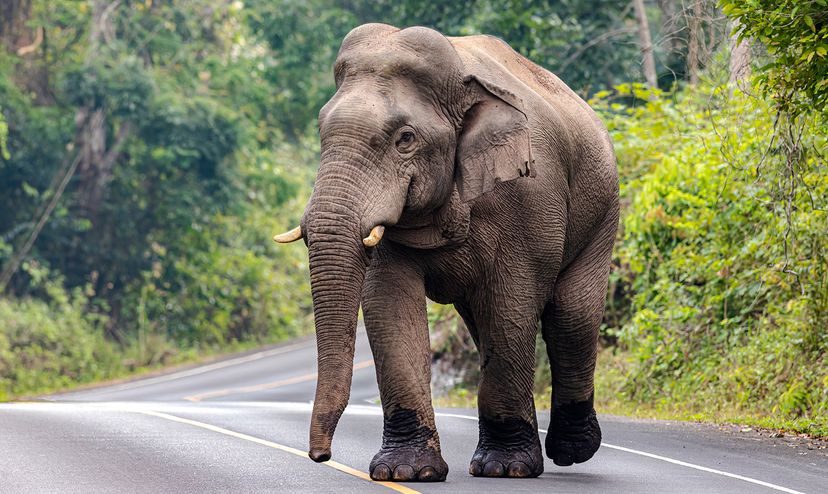
If we’re talking about animals that start with the letter A, we have to start with the absolute heavyweight champion of the mammal world. Asian elephant.
These are not just large animals. They are ecological architects. And they are vanishing fast.
Asia’s largest land animal
The Asian elephant (Elephas maximus ) currently holds the title of Asia’s largest land animal.
But scale alone is only half the story.
Males are significantly larger than females. The height of the bull at the shoulder can be 3.2 meters. Their weight can exceed 5400 kg. This corresponds to more than 5 tons of muscle, bone and intelligence.
compared to their African cousins. African elephants are larger. However, Asian elephants have unique characteristics. Smaller ears. A twin-domed head. A smoother back. Yes, and their tusks. Only some males have visible teeth. Some females do too. However, most Asian elephants do not have tusks.
Why it matters
It’s not just cute. they are essential.
Think of them as forest gardeners.
Elephants eat a lot of plants. They travel long distances in search of food. At the same time, they clear trails through the dense jungle. Small animals use these paths. The seeds pass through the digestive tract unharmed and fall to new soil several kilometers away.
Without elephants, many plant species would not have spread. Forests do not regenerate. Collapse of biodiversity.
This is directly related to the elephant’s diet and the survival of the entire ecosystem.
Where do they live now?
Historically, their footprint covered much of South and Southeast Asia.
today? They are fragmented. isolated.
These can still be found at:
* India
* Nepal
Bhutan
* Bangladesh
Myanmar
* Thailand
* Laos
* Cambodia
Vietnam
Malaysia
*Indonesia (especially Sumatra)
India has the largest population. But even there, habitat loss is encroaching on their territory. Agriculture expanded. Roads cut through the migration corridor.
Conservation crisis
It is listed as an endangered species on the IUCN Red List.
This is not a suggestion. This is a warning sign.
The biggest threat is human-centered.
1. Habitat loss : Forests are cleared to produce palm oil, rubber and housing.
2. Man-Elephant Conflict : As forests shrink, elephants move to farms. Crops are destroyed. People get hurt. Sometimes elephants are killed in retaliation.
3. Poaching : Ivory is still a problem, although less so than in Africa. However, they are also captured for tourism and logging.
We will lose them. Not all at once. But steadily.
Intelligence and emotions
This is why they are so strikingly similar to humans.
They have a complex social structure. The matriarch leads the herd. They remember the water source from decades ago. They mourn the dead. They touch the bones to the bones of their dead relatives.
Recent studies have shown that they can recognize themselves in the mirror. They passed the test. they cooperate. They show empathy.
When you look into the eyes of an Asian elephant, you aren’t looking at a beast.

Why American alligators are important in modern ecosystems
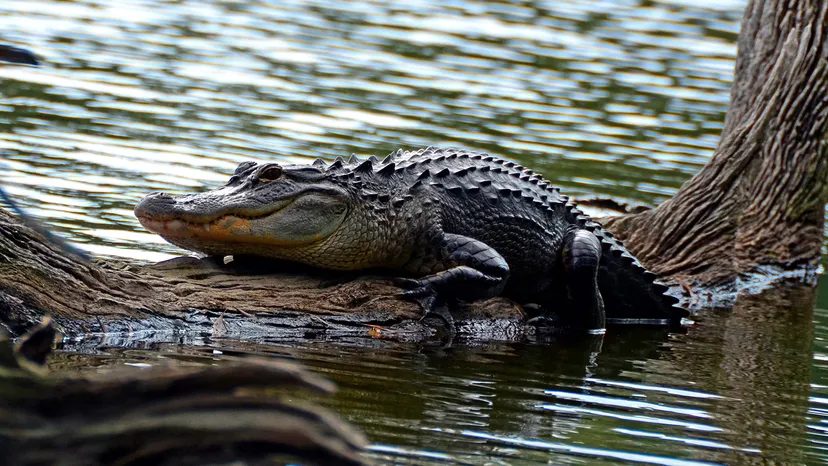
Asian elephants may get a lot of attention for their enormous size and social complexity, but let’s take a look at what lurks in the swamps of the southeastern United States. American alligators aren’t just prehistoric relics waiting for a movie. It is an important species that maintains the entire wetland ecosystem. Without them, the delicate balance between the marsh and the bay would have been disturbed.
These reptiles are apex predators. This means they are at the top of the food chain and regulate populations of fish, birds and small mammals. Their presence is a sign of a healthy environment. If alligators are thriving, water quality and habitat structure are likely in good shape. When they disappear, everyone downstream is affected.
Habitat and distribution
The American alligator (Mississippi alligator ) lives in wetlands in the southeastern United States. It is found in Florida, Georgia, Louisiana, Texas, and parts of North and South Carolina. They prefer fresh to slightly brackish water. Swamps, swamps, rivers and lakes are their favorite places.
They are cold-blooded and this determines their actions. They basked in the sun to warm themselves and then took shelter in the water to cool off. This thermoregulation shapes their daily life. They are most active during the day in the cold months and become nocturnal in the hot summer months.
The Role of Alligator Gators
People often think thought of as mindless killers. This is a dangerous misconception. They are highly adaptable and intelligent creatures. they learn. they remember. During the breeding season, they have been observed to attract birds with tools such as sticks.
Their nests are engineering marvels. The accumulation of plants and soil can reach a height of three feet. The decomposition of this plant material produces heat that incubating the eggs. The nest temperature determines the sex of the hatchlings. Warmer nests produce in warm nests. Cooler nests produce in cool nests. This temperature-dependent sex determination makes them vulnerable to climate change. The rise in temperature may skew sex ratios and threaten the stability of the population.
Conservation success stories
In the middle of the 20th century, American alligators were on the verge of extinction. Their numbers have declined dramatically due to overhunting due to skins and habitat loss. They were listed as an endangered species in 1967. However, this is not a story of inevitable extinction. This is a story of recovery.
Strict hunting regulations and habitat protection plans turned the tide. By 1987, the US Fish and Wildlife Service removed them from the endangered species list. Today, their population is over one million. This is one of the most significant achievements of conservation biology. This shows that science-based policy works.
Human Interaction
Living near alligators requires respect. they are not pets. they are wild animals. This encounter occurs most often in Florida, where urban sprawl meets wetlands. The rule of thumb is simple. Keep a safe distance. Don’t feed them. Feeding associates humans between people and food. It reduces their fear. This creates a dangerous situation.
If you see one, observe it from a distance. Understand their role in the ecosystem. They control invasive species like Burmese pythons in the Everglades. During the dry season, create gator holes and provide water shelter for other wildlife.

The ancient legacy of #Crocodiles and the plight of Africa’s wild dogs
They endured the empire. The American crocodile is a true survivor, the last of the reptiles that have walked the earth for millions of years. It is not found in northern regions or in the dry west. These giant beasts cling to the humid shadows of the southeastern United States. Swamp. river. dark backwaters. They lie down and wait. Their jaws are deadly hydraulic pistons designed to capture prey with amazing efficiency. But they are more than just predators. They are ecosystem engineers.
“When drought occurs, crocodiles dig burrows to store water and create microhabitats for fish and amphibians that would otherwise become extinct.”
They play an important role in maintaining wetland ecosystems. Without them, the delicate balance of these water bodies would be disturbed. They control the population. They create space. They are the swamp’s lungs and liver.
Lost dog
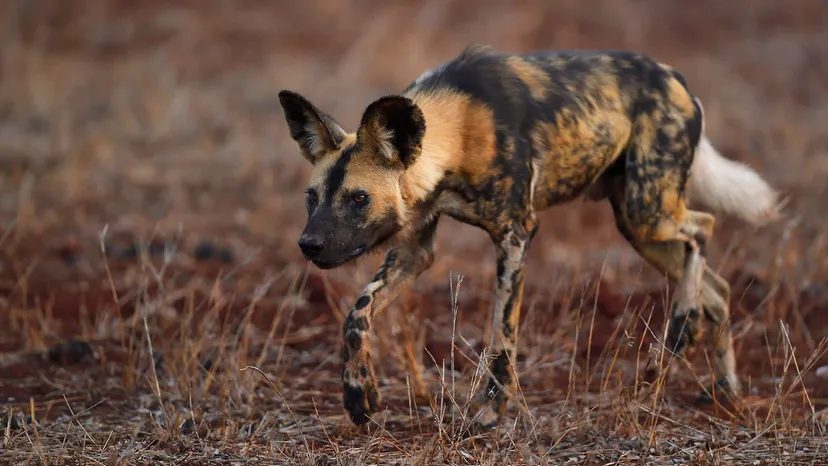
Next is the African wild dog. Or a painted dog. Or maybe a Cape Hound. The name has changed. The reality remains the same. They are one of Africa’s most endangered mammals.
They look like a puzzle put together by a hodgepodge artist. Their fur has black, white, brown and brown spots. No two dogs are alike. This is their most distinctive feature. However, their appearance is secondary to their hunting strategy.
They do not follow up. They don’t do ambushes. they chase.
Packs of African wild dogs can run for many kilometers. They are hardy hunters. They hunt prey much larger than themselves. Impala. Wildebeest. Antelope. they work as a unit. Dogs can be a distraction. Another aspect. Packages are collected. Killing is fast. Cruel. Effective.
Their success is their curse.
Why did they disappear?
Loss of habitat. Human-wildlife conflict. disease.
When farms spread into nature, dogs lost their hunting grounds. Cattle breeders consider them a threat to their livestock. The bullets flew faster than the bullets in the minds of the frightened ranchers. But it’s not just land. This is a disease. canine distemper. Rabies. These viruses are transmitted from domestic dogs. One epidemic can destroy an entire herd.
they are social animals. They rely on complex communication. A loud cry is a sign of killing. Whistle coordinates the chase. When groups are small, such interactions break down. Social structures are collapsing.
Security work
The group sets out to save them. The African Wild Dog Conservation Project operates in Zimbabwe and Botswana. They create a buffer. They educate the local community. They offer compensation for lost animals. This is not enough. Dogs need space. Movement between protected areas requires passageways. If you don’t exercise, your genes turn off. Without inheritance, extinction is inevitable.
We watch the twilight of two ancient survivors. The man hides in the mud. The other crosses the plateau. Both are fighting for the same thing. state of existence.
Ghosts of the Far East
If the African wild dog is a master of coordination, the Amur leopard is a master of camouflage.
rare. Elusive. On the verge of collapse.
This is more than a big cat. It is the rarest cat on earth. For a long time we thought it was gone for good. Populations are so small that extinction is not just a risk, but a statistical certainty.
But this is about the hope of survival. It is stubborn.
The Amur leopard, also known as the Far Eastern leopard, lives in the rocky, snowy mountains on the border between Russia and China. The climate is harsh. Temperatures plunge. The terrain is rugged. Yet these cats thrive there. they have thick fur. They have broad paws that act like snowshoes.
Why is this important?
This is because their survival is inextricably linked to the health of the entire ecosystem. Saving the Amur leopard means protecting the mixed forests of the Russian Far East. You protect the prey base. You protect the water sources for local communities.
How close are we to losing them?
At the beginning of the 21st century, there were fewer than 30 individuals in the wild.
Thirty.
Poaching has drastically reduced their numbers. Fragmentation of habitats divides their area into unsustainable parts. Genetic diversity has collapsed. Inbreeding becomes a real threat.
Then came the push.
The Russian authorities have established a protected area. They have stepped up their patrols. They stopped the illegal trade. China has followed suit and created its own protected areas.
Is it effective?
Yes. But hardly.
Currently, only about 100 Amur leopards remain in the wild. It is still on the verge of extinction. But this is no longer a death sentence. This is a warning sign.
Why is it so different?
You might think that all Leopards look the same.
They don’t. Amur leopards have a unique coat. The spots are larger and more widely spaced than their southern cousins. Their fur is longer and denser. They can handle the sub-zero temperatures in the Sikhote-Alin mountains.
This adaptation is not superficial. This is survival.
Without these physical properties, they would freeze. If you don’t have room to wear a jacket, you might end up too hot during the short summer months. It’s a perfect but fragile balance.
Where can they be found now?
The main base is Land of the Leopard National Park in Russia. The park was established in 2012 and covers thousands of square kilometers of protected land.
But they are not limited to one place.
Northeast China also has a small population. Cross-border cooperation is crucial. These cats do not respect political boundaries. When left in protected areas, they are vulnerable to attack by poachers and highway vehicles.
The real cost of protection
Saving the Amur leopard costs a lot of money.
It requires:
– Constant monitoring of each individual cat
GPS tracking collars
– 24/7 anti-poaching patrol
– Community engagement programs to reduce human-wildlife conflict
– Genetic research to ensure healthy breeding pairs
This is not a quick fix. It is a decades-long commitment.
And yet, every new cub born in the wild is a victory.
What happens if it disappears?
We lose
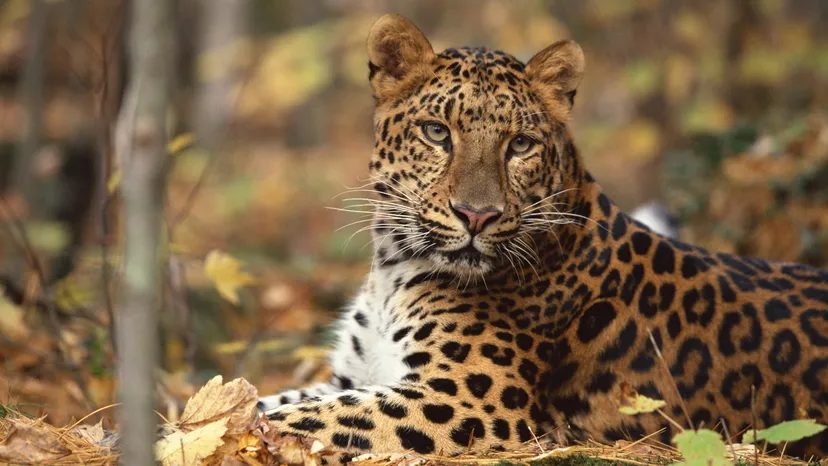
Scattered in the Russian Far East and Northeast China, the Amur leopard is the only real specialist in cold climates among cats. Their survival depends on their thick, dense fur that protects them from the cold. This is a biological miracle that separates them from their tropical relatives. Just because a building is built to withstand cold weather is no guarantee that it will survive. The Amur leopard is highly endangered, as there are fewer than 100 individuals left in the wild. Conservation measures are no longer just useful. They are the only barrier between extinction and revival. Every animal is important now.
### Why is the Amur leopard endangered?
The rarity of these big cats is no wonder. Their range has decreased due to habitat loss. For decades, poaching has reduced their numbers. Fragmentation and direct human pressure push this apex predator to its limits. Unlike lions and tigers, which are abundant in some areas, the Amur leopard’s range is limited to a small area of land. This geographic limitation means they have “nowhere else to go” if their current habitat becomes uninhabitable.
### Cold Weather Cat Protection Strategies
The recovery plan focuses on two main areas. First, it is important to protect the remaining forests in the Russian Far East and China. Second, combating illegal trapping requires strict law enforcement and community involvement. Their population is so small that every birth counts. Captive breeding programs exist, but the goal is always to restore or genetically augment wild populations. Connections are key here. Connecting isolated forest patches allows for genetic diversity, which is currently the Amur leopard’s greatest weakness. Without gene flow, inbreeding depression accelerates the decline.
5. African Grey parrot
After moving from the frozen tundra to the tropical treetops, the gray parrots face a different kind of crisis. Known for their extraordinary intelligence and ability to mimic human speech, these birds have long been popular as pets. This demand promotes illegal trapping in indigenous habitats in West and Central Africa. Their cognitive abilities, once a curiosity, are now a double-edged sword. People want them because they are smart. This desire has left the forest empty for some of the remarkable minds in the bird world.
### Intelligence vs. Exploitation
African Greys have the problem-solving skills and emotional depth of young children. They understand concepts such as zero, color and shape. But this intelligence made them a target. The pet industry focuses on performance, not pet welfare. In nature, however, they play an important ecological role. They are important seed dispersers. Without these, many tree species cannot reproduce effectively. The disappearance of the African Grey parrot disturbs not only the bird population but the entire ecosystem.
### How to help the African Grey populations
Supporting conservation means avoiding the pet trade altogether. There are alternatives, but the supply chain is often opaque. For those in need, supporting organizations protecting Central African forests is the most immediate thing you can do. By protecting their habitat, you protect the food sources and nesting sites these birds rely on. Parrots don’t need more cages. It needs forests. It’s not a question of whether you can maintain them
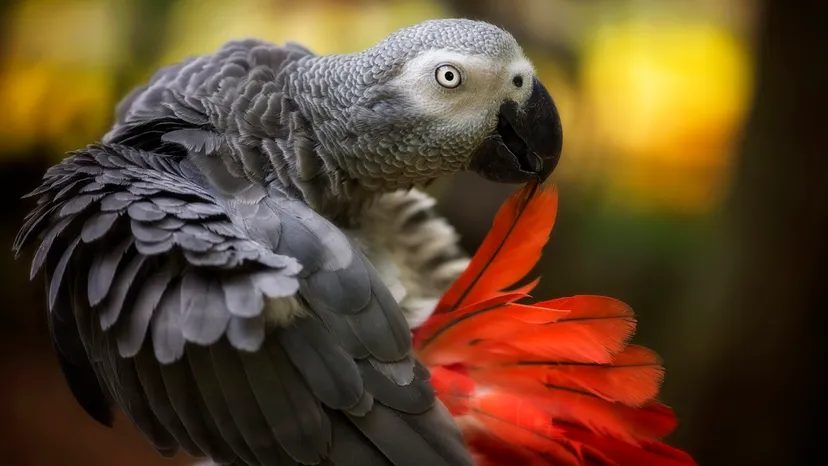
Gray parrots are not just noisy birds. They are cognitive heavyweights.
These birds are known for their extraordinary intelligence and amazing ability to imitate human speech. They’re not just squawk. They learn hundreds of words. Some even understand the context.
But their charm also has a dark side.
They form strong social bonds. People crave this kind of connection. The pet trade takes advantage of this. Wild populations are declining to meet demand. Not just cute birds. It’s about the ecological collapse caused by curiosity and consumption.
The elegance of the Afghan Hound
6. Afghan Hound
Moving from the skies to the highlands, you will encounter creatures that built for speed and style.
Afghan Hounds are not your typical family pet. a pedigree can be traced back thousands of years. These dogs were bred for hunting in the rugged terrain of the Hindu Kush mountains. They needed to be fast. Independent.
Their most famous feature is their fur. Long, silky hair that flows as they run. It looks delicate. It is not. The hair protects them from the strong winds and cold nights in Afghanistan.
Why They Stand Out
- Independence : Unlike many breeds that seek constant approval, Afghan Hounds are often aloof. they think for themselves. This makes training a unique challenge.
- Hair care needs : Hair requires daily care. It mats easily. It’s not just a casual accessory, it’s a commitment.
- Prey Drive : Born to chase small animals, they have an high instinct to chase moving objects. Fenced yards is essential.
The reality of ownership
Gray parrots and Afghan hounds both represent extremes of the pet world. One is a talking mind that is caught in the market. The other is a majestic runner with a mind of its own.
Choosing one or the other means taking on responsibilities that go far beyond feeding and walking.
For the parrot, this means preventing illegal trade. For the hound, this means respecting their history and instincts.
They are not props. They are living, complex creatures.
Questions remain. Are we ready for that kind of commitment, or do we just want the image of intelligence and grace without the work?
The wild populations of greys don’t care about our aesthetic preferences. The Afghan Hound’s ancestors did not hunt for our amusement. they survived.
We are left with the choice to protect or consume. The outcome is already unfolding.
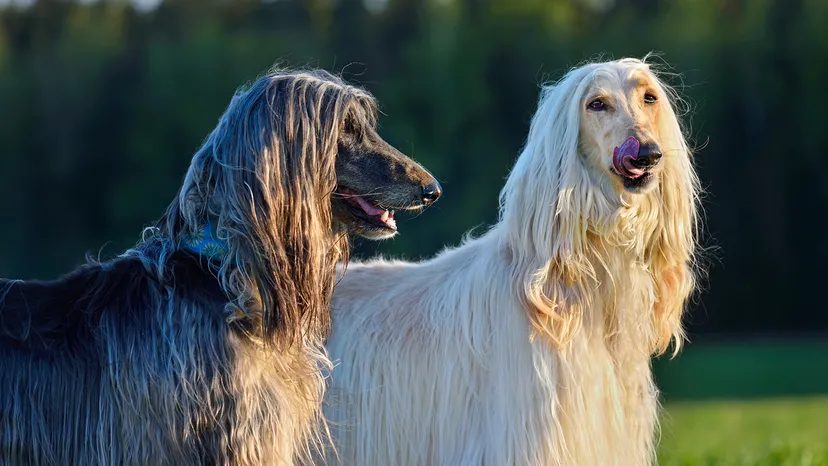
The legacy of the #Afghan Hound and the rise of the American Eskimo Dog
There is a special arrogance in the movements of the Afghan Hound. It isn’t just confidence. It is a biological necessity disguised as haute couture. These dogs were bred in the rugged mountains of Afghanistan to chase prey in dangerous terrain. They need speed. They needed endurance. But they also need fur thick enough to withstand the cold wind and sharp enough to withstand thorns.
The result is a contradiction. A stylish predator wrapped in silk.
This dichotomy defines the breed’s modern reputation. People see the glamour first. Their flowing fur requires hours of maintenance. This cold look shows that they have more important things on their mind than your order. But underneath the vanity is a serious working dog. They can run faster than most horses for short distances and can easily access rocky slopes.
White Fluff Counterpoint
Next is the American Eskimo Dog. 🇺🇸
If Afghans are aristocrats, American Eskimos are show business stars. They are distantly descended from the Spitz family and have a pointed muzzle, erect ears and a curly tail. However, their history is completely different. These dogs do not hunt in the Himalayas. They worked in circus entertainment and on riverboats along the Mississippi River.
Their main mission is simple. Keep varmints out of the feed bins. 🐭
Although the name sounds distinctly European, the breed is well established in the United States. German immigrants brought Spitz-type dogs to America, and over the generations, these white, furry friends have evolved into the unique breed we know today. During the First World War they were called “American Eskimos”. This was a patriotic branding that helped avoid anti-German sentiment while maintaining a distinctive look.
Why coats are important
Both breeds emphasize extreme physical attributes. The afghan jacket was a means of survival, but later became a fashion. The dense double coat of the American Eskimo Dog is pure insulation.
One is built for the high peaks. The other is for the cold deck of the work boat. However, in modern living rooms it is often confused with “the cutest white dog”. This is wrong.
The Afghan requires a firm hand and a patient groomer. They are independent thinkers. They look at you as if you were the one who made the mistake. American Eskimos want to please others. they are very intelligent. They learn tricks quickly because they were bred to perform.
Which one suits your lifestyle?
Choosing between them comes down to what you value. Do you want a dog that reflects your grace and distance? Or do you want to be the center of attention and learn all the tricks you know?
Afghan Hounds are not for everyone. Their shedding is minimal, but their grooming is maximal. You will spend hours brushing. You will worry about mats. You will wonder if they like you.
The American Eskimo sheds like crazy. Twice a year, your home looks like it was hit by a blizzard. But they will happily greet you at the door. They learn to shake hands. They will bark at every squirrel. 🐿️
Both are stunning. Both are very intelligent. Both require a high level of maintenance in their own unique way. The Afghan demands respect through silence. The American Eskimo demands attention
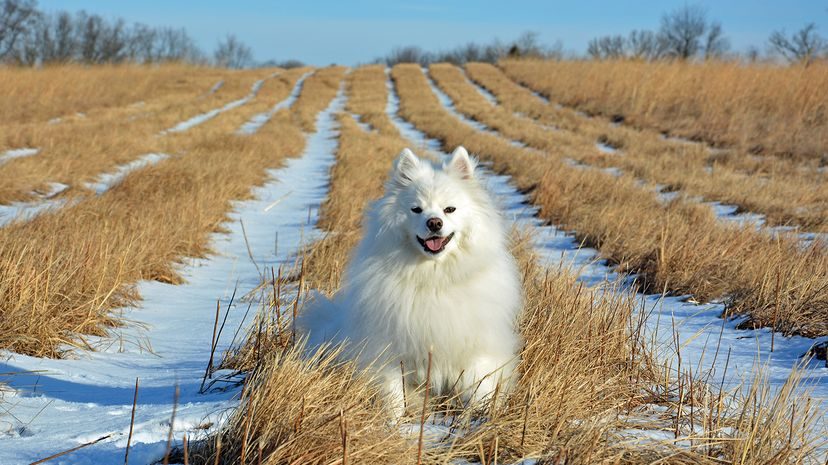

The name of the American Eskimo dog is misleading, suggesting that its heritage is deeply rooted in Arctic aboriginal culture. This connection is invalid. Although the breed’s fluffy white fur and keen intelligence are real, its ancestry has nothing to do with the peoples of the Far North. Known in traveling circuses for their trainability and charm, these dogs have proven better for entertainment than survival in cold conditions.
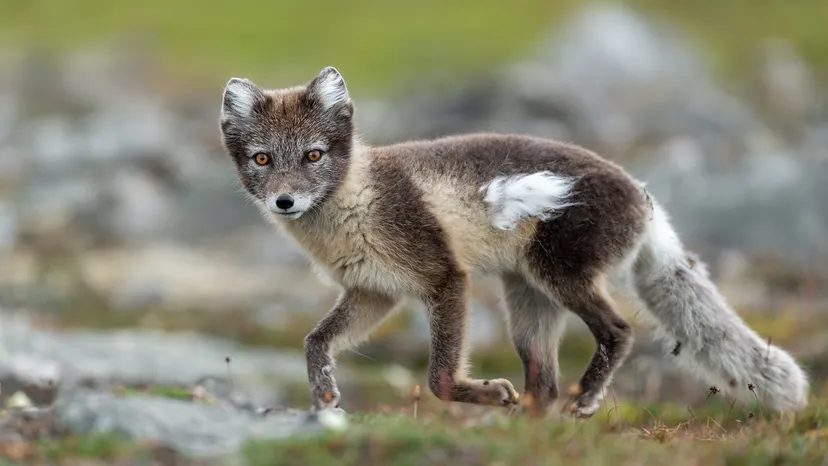
8. Arctic Fox
While the Eskimo dog was a circus star, the Arctic fox is a master of survival. Its story is defined by an incredible biological adaptation: seasonal camouflage. This small canid doesn’t just change color for fun. Their coat color changes from dark brown or blue-gray in summer to bright white in winter. This allows them to disappear into the snow, evade predators and sneak up on prey just as easily.
A fox’s coat is more than just a coat. That’s the thing. It’s a technological marvel. The dense undercoat and long protective hair trap air and form an insulating layer that keeps the animal warm even when the temperature drops to -50°C.
Scientists have studied these adaptations for decades. The main reason for this is that it makes clear the effects of climate change. As the Arctic region warms, snowfall becomes more and more unpredictable. Against the background of the melting ice, a fox with white fur is clearly visible. This difference increases the risk of predation and makes hunting more difficult. The survival of animals is directly related to the integrity of the environment, making them important indicator species of ecological health.
Unlike domestic dogs, who thrive on interacting with people, naals live in one of the harshest ecosystems on earth. The story tells about long-distance migrations of polecats, hitchhiking in ice streams and following the movements of large predators such as polar bears. They clean up the leftovers, but this strategy requires keen intelligence and opportunism.
The survival of the polecat is directly related to the uniformity of its environment, which makes the polecat an important indicator species of ecological health.
Scientists monitor these populations to understand broader trends in the tundra. Shortened snow cover periods change the food web of the area. When a fox struggles, it is a sign of the destruction of the entire ecosystem.
What other species show similar signs of climate stress? The answer may be found in the habitat changes of other high-latitude animals. The arctic fox is a stark reminder that the beauty of nature often contains extreme vulnerability.
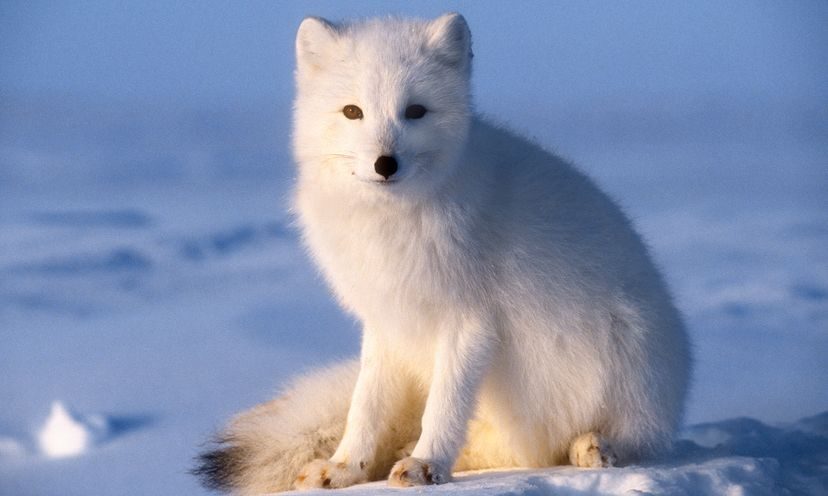

Winter in the Far North is more than just a season. This is a test. Only the most adapted creatures can pass through. The Arctic fox is one of the survivors. Its secret weapon is a coat that defies logic. The fur is very thick. Captures body heat with incredible power. But that’s not all. The color varies according to the calendar. In summer, it turns brown or gray. In winter, it turns pure white. This is not just about aesthetics. This is camouflage against the snow.
Foxes also have supernatural powers. I heard the prey moving under the ice. Mice and lemmings dug under it. The fox jumped on me. they are invisible. He listens. This hunting strategy allows them to find food even when the surface is buried under several meters of ice.
9. Arctic Hare
Then there’s the Arctic hare. Looks like a giant rabbit. They share DNA with hares from warmer climates. However, the arctic version evolved for extreme cold. The fur is thick. It also covers your legs. It’s like a built-in snowshoe. Rabbits don’t freeze. It runs
These animals are found everywhere in the tundra. They feed on moss and lichen. They remain active throughout the winter. Many animals sleep during the cold season, but hares are awake. They rely on their large ears to detect predators. Ears also help regulate body temperature. Blood circulation changes because of the cold.
The rabbit’s survival strategy is simple. Eat what you find. Stay hidden. Move fast. Predators such as wolves and foxes chase them. However, rabbits can run at high speeds. It zigzags through deep snow. It was hard for the fox to keep up. The hare wins the race most times.
This dynamic shapes the entire ecosystem. Without the rabbit, the fox would probably have starved to death. Without foxes, the number of hares would increase exponentially. It’s a delicate balance. One species directly affects the fate of another. Climate change is disrupting this. Warmer temperatures mean less snow. The white fur became a burden. The rabbit stands out from the brown ground. Predators detect them more easily. The fox loses its camouflage too.
The Arctic region is warming faster than other regions. This threatens special survivors. Their adaptation is too specific. They don’t change fast enough. Snow melts faster. The ice is getting thinner. The cycle is broken. It is disturbing to watch these animals struggle to adapt. They are resilient. However, flexibility has its limits. The tundra is changing. The old rules no longer apply.
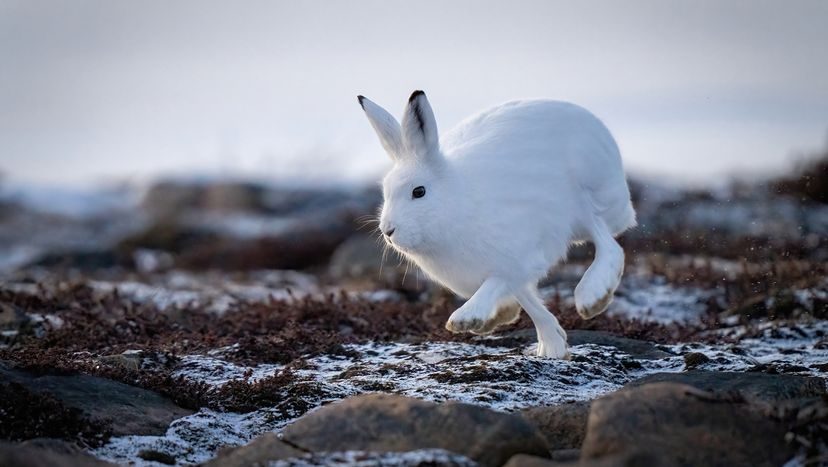

The arctic hare is like the white ghost of the tundra. Thick fur isn’t just for warmth. This is camouflage. They disappeared into the background of snow. Predators see nothing but empty space.
When danger strikes, speed is your only defense. they don’t hide. they are running. Run across the ice at amazing speed. It can defeat wolves and foxes with its superior kinetic energy.
It’s a simple equation. It means “to melt”. If you fail, run faster than others.
10. Armadillo
Armadillos live from the cold north to the dusty south. Different armor. It’s the same survival instinct. But where hares rely on speed, armadillos rely on clarity.
The Nine-Giant Armadillo is the most common species in the United States. Bony plates called scutes form a flexible covering. It is not indestructible. You can crush it with a powerful blow. But it prevents most casual attackers. Coyotes learn to translate from time to time. A bare stomach is prone to injury.
they dig. deep cave. Complex tunnel system. They spend most of the day underground. Escape the heat. Hide from predators.
Diet plays an important role in their survival strategy. they eat insects. Under. Termite. Sometimes small reptiles. collected meat. This low-energy diet helps save electricity. Not designed for sprints. Designed to last and protect.
Why does it curl up into a ball? Not all species can do this. Water armadillos can form a whole ball. It’s impossible with 9 belts. Instead, they dig into the ground. Use the ground as additional armor.
Their sense of smell is very accurate. They track prey based on scent alone. Dig holes with strong claws. Expose the insects to the surface. A simple feeding method. Effective for animals with poor vision.
Humans have been interacting with them for centuries. In some cultures they are food. In other cases, they are pests. The spread of leprosy at the waist is a well-known medical problem. Research on the spread of zoonoses continues.
They sail at night. Nocturnal habits reduce competition. Avoid midday sun. Keeps body temperature stable.
The shell also grows together. More discs over time. A living record of their lives.
That’s a different kind of cover-up. They don’t hide in plain sight like rabbits. But be a good part of the earth. Buried. Sheltered. Wait.
Which one is better? Speed or armor? It depends on the predator. Depends on the terrain. The rabbit ran across the open ice. Armadillo disappears into the dirt. Both will survive. Both enjoy themselves.
There is no single answer. Just adapt.
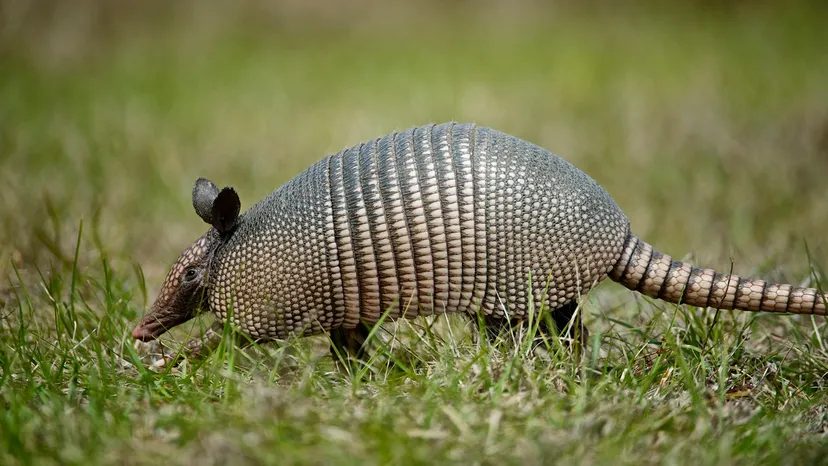
The nine-banded armadillo is found from the southern of the United States to Mexico and is known for being impenetrability. This reputation is mainly based on the fact that its shell looks like a blacksmith’s fire and protects the animal from bites and claws with overlapping parts of the joints of the bones.
But the problem starts here. It doesn’t turn into a perfect ball.
If you’re imagining a foot cone, you’re looking at the wrong animal. This is a large nine-banded armadillo. Each of the nine belts has its own survival strategy. It depends on the speed. It depends on the digging. If a predator gets too close, it won’t hide in its body. It hides on the ground or digs a nest in the bush.
This nocturnal digger spends the night sniffing for insects lurking in the ground. It is adept at finding larvae and cocoons that are overlooked by other predators. If something happens, the shell protects it, but the real tool is its nose and claws.
11. African golden cat
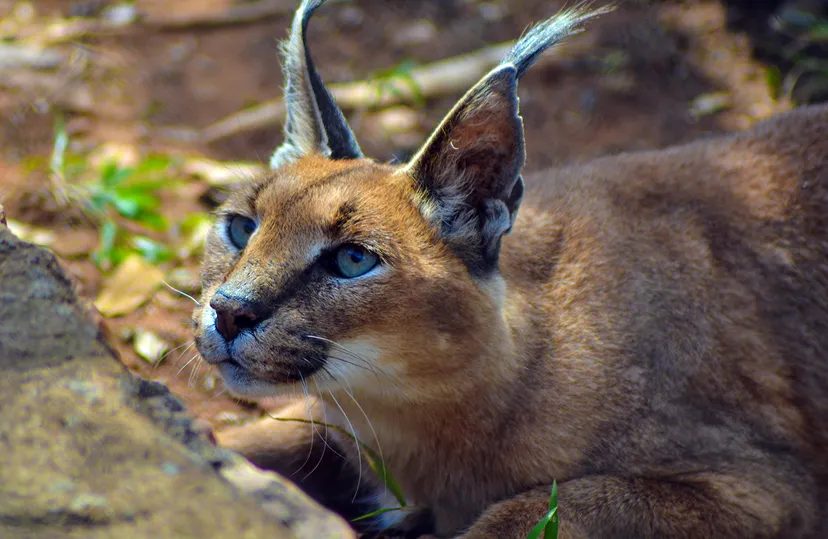

The African golden cat (Caracal aurata ) is not native to Central and South America. This is deliberately misleading in relation to the test of focus. The facts are more certain. This tricky cat lives in the dense, humid forests of Africa. It remains one of the least studied wild cats on the African continent.
Scientists know little about their daily habits. They suspected that it was a skilled night hunter. It probably resorted to stealth and silence to hunt prey deep in the treetops. This makes it a ghost in the woods.
Why African golden cats are important
You may be wondering why single, shadowy cat are worthy of attention. The answer lies in its rarity. Most people have never seen it. Some people think it doesn’t exist. However, camera traps and scat analysis proved otherwise. The cat’s secret is its defense mechanism. Avoid contact with people. It lives in remote areas of West and Central Africa.
This species is critically endangered. Loss of habitat threatens its survival. Logging and agriculture are encroaching on its homeland. Understanding this cat is more than just academics. This is about protecting Africa’s wildlife heritage. I don’t know much about it because I’ve been looking elsewhere.
“It’s a forest ghost that avoids human contact and thrives in secluded corners.”
Myth and reality
Many people confuse the African golden cat with the Caracal. they are different. Caracals are more widespread. Golden cats are relatively rare. It is characterized by its shiny golden coat. The eyes are large and amber in color. It moves silently through the undergrowth.
Researchers tracked the population using DNA found in hair and feces. This non-invasive method helps researchers count populations without disturbing them. It’s a small victory for conservation. Each data point brings us closer to protection.
How to help
You don’t have to come to Africa to help. Supporting organizations that protect rainforests can help. It is important to reduce the use of paper. Every tree saved is a habitat preserved. African golden cats do not seek fame. It just requires space.
There is still much to learn about its hunting patterns. Do it stalk alone or in pairs? We don’t know. The questions remain. This uncertainty is what makes it so fascinating.
12. American Bulldog
This change in tone is jarring. We went from a rare African feline to a robust working dog. The American Bulldog is a completely different beast. It’s powerful. It is faithful. It is often misunderstood.
These dogs were bred for agricultural work. They hunt wild boars. They protect property. Their history is rooted in work. Not companionship. However, they are popular as pets.
The size varies depending on the variety. Some are compact. Others are huge. They have a muscular build. Their heads are very broad. Their fur is short and requires little maintenance.
Training Challenges
American Bulldogs are intelligent. But they are also stubborn. They require intensive and continuous training. Hard methods fail. They respond better to positive reinforcement. Socialization is key. Without it, they can become aggressive.
They are not for first-time owners. They need energy. they need space. A small apartment is not suitable. They thrive in homes with gardens. They love to play. They also love
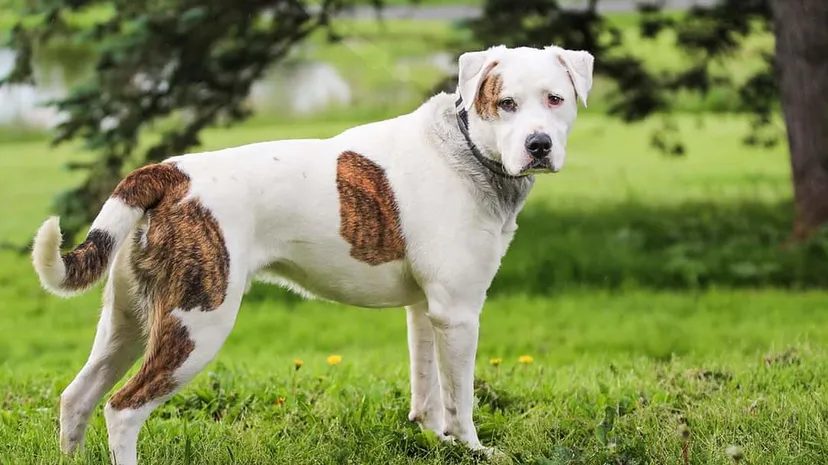
Forget everything you think you know about exotic pets. With its muscular build and farm-raised loyalty, the American Bulldog is a strong family protector, but requires strict training. Strong, brave and affectionate, but without proper socialization this strength can turn into a disadvantage. It thrives in structure. We can’t leave it as it is.
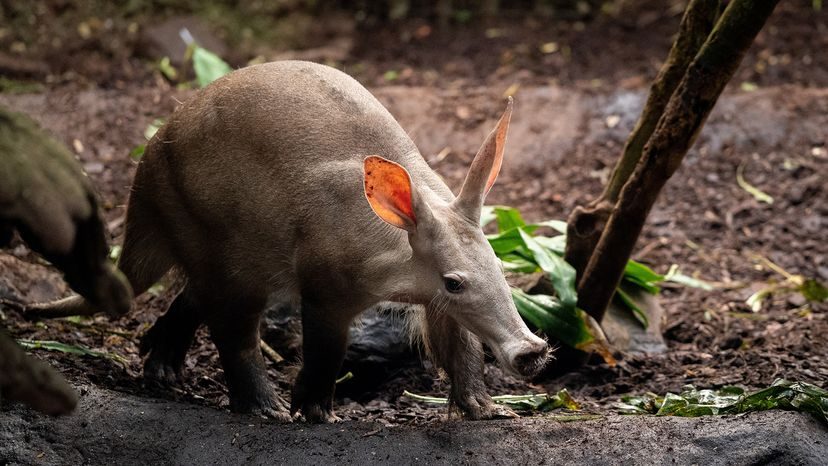
Then there is the Aardvark.
A Burrowing Oddity
If bulldogs are terrestrial creatures, aardvarks are underground engineers. This solitary mammal is native to Africa and looks like a biological mashup. It has a nose like a pig, ears like a rabbit and a tail like a mane. But don’t be fooled by its cute appearance. This is a machine made specifically for one purpose: to eat ants and termites.
Why is it important?
Aardvarks are more than just a quirky curiosity. It is an ecosystem engineer. By digging huge burrows, they aerate the soil and create homes for other animals once it abandons them. Their diet suppresses insect populations that can destroy crops. It has a role disproportionate to its size in the food web.
How to survive
Aardvarks are nocturnal. In hot weather, they sleep in burrows that they dig themselves or steal from other animals. At night they come out to look for food. Their long, sticky tongues can reach up to 12 inches. they have no teeth. Instead, they crush insects with their hard palate, which is covered in keratin spikes. This adaptation is efficient. It requires no energy to grow and maintain enamel.
The threat of habitat loss
Despite their ecological importance, aardvarks face growing pressure. Due to the expansion of agricultural land and the fragmentation of habitats, their range has decreased. Climate change is also changing the availability of their most important food sources. Understanding their needs is the key to protection. You can’t protect what you don’t understand.
Can I keep it as a pet?
Not really. Aardvarks are wild animals with complex eating habits and space requirements. They have not been tamed. The idea of keeping one as a pet is not only unrealistic, but also cruel. Digging requires special soil conditions and requires a constant supply of ants and termites. They are lonely and can get stressed easily in captivity.
American bulldogs are companion dogs. Aardvarks are the earth’s hard workers. One fits into human homes. The other is perfect for the African landscape. It would be a mistake to confuse the two. Respect the boundaries of each species.
Stop imagining icebergs.
You don’t see them sliding down the slope on their bellies.
African penguins (Spheniscus demersus) live in a climate where they would freeze to death if they wore the same clothes they wear in Antarctica. They wandered along the coast of South Africa and Namibia.
This is in stark contrast to their colder cousins.
This bird has another set of problems.
The real enemy here is heat stress.
Not a predator.
It’s not even fishing.
The water may be cold, but the sun is fierce.
Why are they called “rabbits”
If you visit these colonies, you may hear visitors refer to them as “rabbits”.
It sounds cute.
This is also completely wrong.
It doesn’t look like a rabbit.
They look like seabirds in tuxedos and have very specialized survival techniques.
The nickname comes from the sound of their voices.
They bray.
Like donkeys.
Or a mule.
It is a harsh, grating sound that echoes off the rocky shores of Stony Point and Boulders Beach.
This is not a song.
This is a warning.
Or a complaint.
Probably both.
Cooling system built into the skin
How do they stay cool?
They don’t sweat.
Penguins do not have sweat glands.
That’s why they rely on physiology.
Look at their feet.
Do you see the pink spots?
It’s not a blush.
It is a radiator.
Blood vessels expand near the surface of the skin.
The heat escapes into the air.
They can even stand on one leg.
To reduce contact with the hot sand.
They also tuck their flippers against their bodies.
To trap a layer of warm air next to their skin.
Wait.
That sounds counterintuitive for staying cool.
However, it prevents the rise of heat in the surrounding air.
It’s a delicate balancing act.
One wrong move and they overheat.
Population crisis
This adaptation is no longer enough.
The numbers are dropping fast.
They are listed as an endangered species.
The reasons are complex.
And human-caused.
Oil Spills are a big threat.
Coated feathers lose their waterproofing.
The bird drowns or freezes.
Overfishing by commercial vessels destroys food sources.
Sardines and anchovies are disappearing.
Fertilizer leakage from farms can cause algal blooms.
These blooms deplete oxygen in the water.
The fish died.
Penguins starve.
This is a chain reaction.
It’s happening now.
Where to look
You can still see it.
But you have to go to the right place.
Stony Point in Simon’s Town is the most famous tourist attraction.
It is easy to access.
And it’s full of tourists.
If you want something a little more secluded, check out a west coast colony.
Mercury Bay.
Cape Columbine.
These are small groups.
It’s going to be hard to get to.
But more authentic.
What can you do?
You don’t have to donate millions of dollars.
You just have to be careful.
Support sustainable fishing.
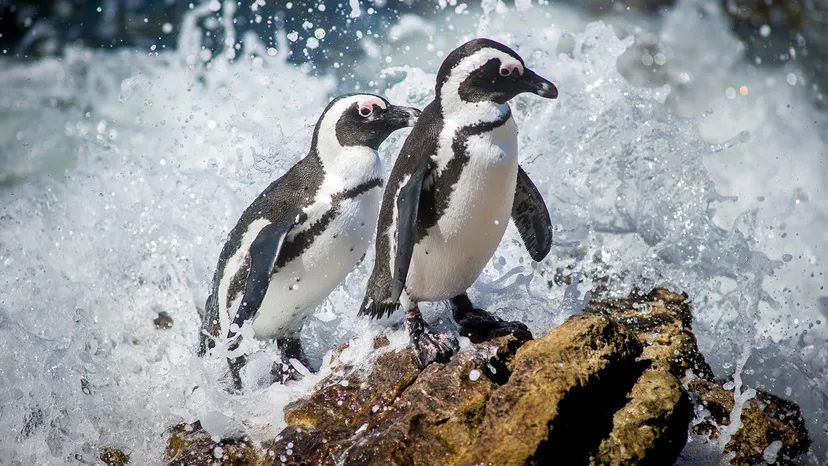
African penguins are doesn’t fit the image of what you imagine when you think of frozen wastelands. They don’t live in Antarctica. They call the southern coast of Africa home. In particular, they live on the coasts of Namibia and South Africa. These birds are black-footed penguins. They look cute. They are also very good swimmers.
The sea is their treasure trove. They rely on sardines and anchovies. The water here is warmer than in the polar regions. This makes survival more difficult in some ways. Birds have to work hard to stay cool and find food.
The situation is serious. African penguins are an endangered species. Their numbers are collapsing. Why? There are two main reasons for that. Loss of habitat. Fish stocks are decreasing.
Humans have taken over their breeding grounds. Coastal development destroys the beaches where they lay eggs. At the same time, overfishing robs the ocean of its most important source of food. It’s a double whammy. There is no place to raise young ones. There is no food for them.
This isn’t just about losing a cute bird. It’s about a broken ecosystem. The disappearance of African penguins is a sign that the ocean’s food web is collapsing. We need to understand how to fix it. Quickly.
The article you are reading was created using a combination of artificial intelligence techniques. It was reviewed and edited by HowStuffWorks editors. We’re not just spitting words. We verify it.


