



How #AI is shaping careers: Jobs are disappearing, evolving and being created
Artificial intelligence is no longer a distant concept. It is actively rewriting the rules of employment. Technologies that once existed in science fiction laboratories are now shaping our daily working lives. It’s not just about efficiency. It’s about a fundamental change in the way humans interact with machines.
Some jobs will disappear. Others turn into something unrecognizable. New roles are appearing that could not be named ten years ago. The idea that AI will simply take everything away is not entirely true. The situation is even more complicated. This is a filter. It weeds out the repetitive. It elevates the creative. It creates entirely new categories of labor.
To understand where we are going, we need to look at three different groups. First, roles at high risk of automation. The second is a professions undergoing a heavy makeover. Third, new career paths directly created by the artificial intelligence boom.
The most vulnerable jobs in automation
Routine tasks are the easiest to automate. Artificial intelligence and robotics are starting to intervene in jobs where the same actions are repeated over and over again with predictable results. These are not just fears of the future. These are the current realities in some industries.
Data Entry Operators was one of the first victims. Their job is to manual input. AI tools can now handle data integration and capture with incredible speed and accuracy. Why pay someone to a human to type when a machine can capture, clean and file data instantly?
Assembly line factory workers face similar pressures. Advanced robots take over repetitive motion tasks such as bolt tightening, packing and sorting. These systems are tireless. They don’t call in sick. they just work.
Telemarketers find their role diminishing. Chatbots and virtual assistants can now handle basic sales pitches. They can screen leads and arrange meetings. The human touch is nice, but slow. AI can scale quickly.
Accountants has not completely disappeared, but the time of manual ledger-keeping is over. Financial software now uses artificial intelligence for real-time analysis and reporting. The tedious task of balancing the book is removed, leaving only high-level interpretation.
Secretaries and administrative assistants are also feeling the heat. Scheduling, email management and basic correspondence are now taken care of by virtual assistants. Although the role is changing from “gatekeeper” to “strategic coordinator”, the volume of pure administrative work has been significantly reduced.
Professions Undergoing Radical Transformation
Not all jobs will disappear. Others are transforming so dramatically that today’s workers don’t recognize them. This is the “augmentation” phase. AI will be your co-pilot, not your pilot.
Doctors is a good example. AI won’t replace doctors, but it will change the way medicine is practiced. Diagnostic tools can now analyze medical images more accurately than the human eye. Treatment plans can be tailored based on large datasets. The doctor’s role shifts from pure information retrieval to complex decision-making and patient empathy.
Lawyers are also in a similar situation. Legal research that once took months to go through archives can now be done in seconds with the help of artificial intelligence. The review of lawsuits is automated. A lawyer is no longer a researcher, but a strategist and negotiator. The value lies in understanding context, nuance, and human behavior—things AI has a hard time solving.
Teachers will not be replaced by robots. They are being equipped by them. Artificial intelligence can create personalized lesson plans. It can track individual student progress of individual students in real time. It can grade routine assignments. repetitive tasks. This frees up teachers to focus on mentoring, social-emotional learning and complex instruction. The classroom becomes on facilitation rather than lectures.
Engineers use AI for simulation and optimization. There are millions of variables involved in designing bridges and chips. Artificial intelligence can perform thousands of iterations in the time it takes a human to draw. The engineer’s job is to set the parameters, interpret the results, and make the final creative leap.
Salespeople have found that AI can help them identify prospects and craft proposals. But what about that last handshake? That’s still human. AI handles the data. The relationship handles the trust.
The new economy: careers created by artificial intelligence
For every job is lost or changed, new opportunities arise. These are not just “tech support” roles. They are specialized fields that didn’t exist before the AI explosion.
Data scientists are the architects of this new world. They analyze large data sets to find patterns and insights. They build models that drive artificial intelligence. Without them, technology is just code on a screen.
AI engineers design and implement these models. Requires in-depth expertise in algorithms, data structures and software development. They are the architects of the new industrial revolution.
Robotics Expert bridges the gap between software and hardware. They design, program and maintain physical robots that work with us. This requires a combination of mechanical, electronic and software engineering skills.
Ethical hackers (or penetration testers) are very important. As the importance of artificial intelligence systems increases in our lives, their security becomes important. These experts find and fix vulnerabilities in artificial intelligence systems. These ensure that the technology is not only efficient, but also safe and fair.
AI Designer focuses on the human side. They create user-friendly interfaces for complex AI models. Let people actually use the tools. This requires expertise in UX (user experience) and UI (user interface) design.
The transition will not be smooth. There will be confusion. There may be some anxiety. But there will be a chance. The main thing is not to fight the waves. This is about learning to surf. Successful employees are those who are able to collaborate with these new tools, not those who choose to ignore them. The future of work is not a battle between humans and machines. It is a combination of man and machine. The question is: Are you ready for a partnership?

There is a skills gap
We’re not just looking at changes in the workforce. We live in a reshuffle.
Artificial intelligence is no longer a science fiction concept or a background tool for tech giants. It is in the office, in the creative studio, and in the code editor. Jobs that were safe five years ago are now at risk. The ones that will define the next decade are already emerging.
But here’s the problem.
Most people think the solution is to compete with AI. You can’t beat the machine. There is no better way to process data than algorithms. If your skills are purely mechanical, purely repetitive or purely data-intensive, you’re already behind.
The future of work is not smarter than a robot. This means they are more human than robots.
“Human Edge”
What exactly does this mean?
This means leveraging traits that are inherent in our biology, but which are computationally expensive to simulate.
**Empathy and emotional intelligence. **
Artificial intelligence can create condolence letters. You cannot “feel” the weight of the moment. Analyze customer opinion data with 99% accuracy. You can’t sit across from a grieving client and navigate the messy, wordless dynamics of human grief.
Work that requires deep and nuanced human relationships is increasingly valuable. therapist. nurses. Executives who must conduct merger negotiations based on trust, not just spreadsheets.
**Critical thinking and judgment. **
AI generates options. It does not make moral or strategic decisions. It doesn’t have a stake in the outcome. Bias often persists when algorithms recommend hiring decisions based on historical data. A human leader must override that. They need to ask “why” the data looks the way it does. Context that is not present in the data set must be taken into account.
This is a new “power skill”. The ability to review the outputs of artificial intelligence, spot the hallucination, biases and strategic errors and make final decisions.
Learn to learn
The half-life of technical capabilities is shortened. It was 10 years. Now it is closer to five. Or maybe two.
If you spend four years in college studying a particular coding language, the language may be outdated by the time you graduate.
The only permanent skill is adaptability.
This means you have to become comfortable with discomfort. You have to look like a beginner over and over again. The successful people of 2030 are not the ones who know everything. These people can abandon old ways of doing things and master new tools in weeks instead of months.
Prompt Engineering as a New Literacy
Let’s look at it in detail.
You don’t have to be a data scientist. However, you need to speak the language of the machine. This is often referred to as “prompt engineering”, but this term is too narrow. The most important thing is clarity of communication.
Artificial intelligence is a mirror. It reflects the quality of your input. If you ask a vague question, you will get a vague answer. Communicating context, constraints, and a clear purpose will result in a high-quality draft.
Think of it this way:
Artificial intelligence cannot replace writers. Blank page replacement.
The skill is no longer starting from scratch. The
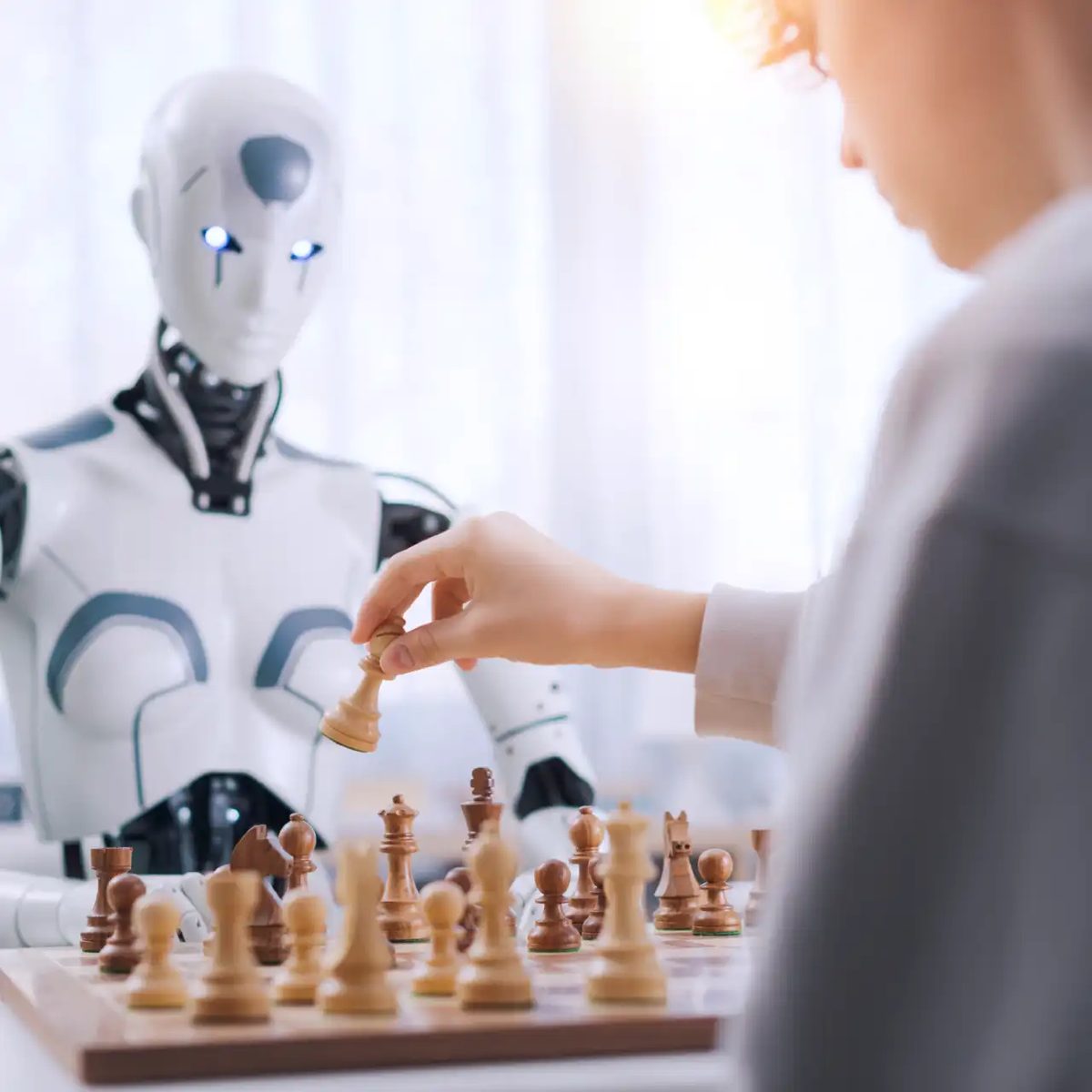

Human advantage in an automated world
Artificial intelligence is rewriting the rules of productivity. It processes data faster than any human brain. Create code, design graphics and analyze market trends in seconds. However, there are some skills that cannot be replicated. These are not just soft skills. These are the skills to survive in the modern workplace.
Artificial intelligence handles mundane tasks, but humans need to deal with complex problems. The gap between what machines do and what people do is growing. It’s not about competition anymore. It’s about complementarity.
Creative Thinking: Where Machines Stumble
AI creates content based on patterns in existing data. Predict the next word. It mimics the next brushstroke. However, it is not an “invention” in the human sense of the term. It remixes.
Creative thinking is different. You have to connect unrelated concepts. You need intuition. You take a problem that has no clear precedent and build solutions from the ground up.
“Artificial intelligence can simulate creativity, but it cannot imagine new things without human guidance.”
In terms of marketing, AI can write 1000 blog posts. However, we cannot pinpoint the cultural changes that make brand messages resonate. It can’t feel the timing. Humans do. This is why creative direction is still an advanced skill. The volume is set by the machine. Man provides that spark.
Critical Thinking: Truth Filter
We are drowning in output. Artificial intelligence produces huge amounts of information. Much of it is plausible. Some of them are wrong. All of this lacks context.
Critical thinking is a filter. It is the ability to question sources. To spot bias. Understand “why” the conclusion is made.
AI models have hallucinations. They make confident errors. Without a human editor to apply logic and validation, these errors spread. Critical thinking is more than analysis. This is skepticism. It’s demanding proof. Recognize when statistical correlation can be mistaken for causation.
Who verifies the verification? Humans.
Complex Problem Solving in Ambiguity
Artificial intelligence thrives on structured data. Give clear variables and clear goals. It will find the optimal path.
Real life is a mess. Problems are often ill-defined. The rules have changed. The information is incomplete.
Human problem solvers thrive on ambiguity. We can navigate uncertainty. We are able to make decisions even with incomplete information. We use heuristics. We rely on experience.
When a crisis occurs, whether it’s a supply chain disruption, a PR disaster, or a sudden regulatory change, AI doesn’t know what to do. It waits for new data. Humans adapt. We improvise. We pivot. We solve problems without algorithms.
Communication: the nuances of connection
Chatbots keep getting better and better. They can model empathy. They can follow the script. They cannot “feel”.
Effective communication is about reading the atmosphere in the room. It’s all about tone. It’s about understanding the subtext. It’s all about persuasion.
When you negotiate a contract, you’re not just exchanging information. You build trust. You read microexpressions. Adjust your messages in real time based on how your audience reacts. Artificial intelligence misses these hints. It processes text. Humans process relationships.
Cooperation requires such nuances. Complex ideas need to be explained simply. You have to motivate your team. Conflicts must be resolved. These are deeply human tasks.
Teamwork: synergy of diversity
Artificial intelligence is a tool. It doesn’t have colleagues. It has no loyalty. It doesn’t have a stake in the outcome.
Teamwork is about combining different strengths. It’s about making use of diversity. People bring different perspectives. different backgrounds. Different lived experiences.
When a diverse team works together, the result is greater than the sum of its parts. AI can help everyone. It can’t replace the dynamic between them. The spark that happens when two minds collide is unpredictable. It’s where true innovation often begins.
“Machines optimize tasks. Humans create synergy.”
Artificial Intelligence Literacy: Navigating the New Normal
You don’t have to be a programmer. But you need to understand what AI is and what it is not.
Artificial intelligence literacy means understanding the limits of technology. This means understanding data protection. It means recognizing ethical implications
Why AI makes skill improvement undeniable
This change is more than just the introduction of new tools. It’s about surviving in an economy where the baseline of “ability” is changing. AI is rewriting the rules of the workplace faster than most corporate training programs update their curricula.
This puts urgent pressures on the education system and individual workers. The goal is no longer static information storage. It is adaptability. In order to keep up with this pace, the skills being taught and their teaching methods must change. The old model of learning a trade once and relying on it for thirty years has been broken.
Update courses for the algorithm era
Traditional education often lags behind the needs of industry. Artificial intelligence accelerated that gap into a chasm.
Companies understand that relying only on raw intelligence is no longer enough for recruitment. They need people who know how to work with machines. This means updating the curriculum by focusing on:
- Artificial Intelligence Literacy: Understand what these models can and cannot do.
- Critical Thinking: Spotting hallucinations and biases in automated outputs.
- Prompt Engineering: The art of communicating effectively with non-human entities.
Future employees no longer need to code every line. They need to direct the code.
Human factors in an automated world
As artificial intelligence handles more mundane and data-intensive tasks, people’s roles are shifting to supervision and strategy. This isn’t a replacement narrative. It’s a transformation narrative.
Workers must develop skills that are difficult for AI to learn. empathy. complex negotiations. moral judgment. These are not soft skills. These are hard skills that are unique to humans.
The implication is clear If training does not focus on these strengths, employees will be left behind. It’s not because they aren’t smart. But because they have not been trained to adapt to the new reality. There is a growing gap between what is taught in schools and the needs of the AI workplace.
Why your school curriculum needs an AI upgrade
The education system is lagging behind. Curricula must be updated to adapt to the reality of an AI-driven workforce. This does not mean that all students become programmers. It’s about literacy. We need to teach how these systems work, why they are important, and where problems occur.
Teaching the Black Box
The student must understand mechanical principles. It’s not just magic. The new curriculum must cover the basics. Algorithms. Data training. How a model predicts the next word or recognize a face.
“Understanding the possibilities and limitations is the only way to use these tools responsibly.”
When students understand how to build machine learning models, they no longer see them as oracles. They see it as a tool. This is a defective product. something artificially created.
The Ethics Gap
Most technical courses skip ethics. They shouldn’t. Artificial intelligence has biases. It’s discriminatory. There are risks involved.
Teaching students about these dangers is non-negotiable. How does the algorithm decide who gets the loan? Who will be hired? Who is marked as suspicious? If the training data is biased, the output is biased. Students must know how to spot these errors. They need to know how to reduce these effects. Without this knowledge, they are just passengers in a car without brakes.
New Jobs, Old Skills
Look at the labor market. Data Scientist. Artificial Intelligence Engineer. Robotics expert. Ten years ago, these titles didn’t exist on a large scale. They are everywhere now.
The education system must pivot. Personnel training is required for these specific roles. But it’s not just technical skills. It’s about adaptability. Artificial intelligence is used in many different fields.
- Health care: Diagnosis and personalized treatment plans.
- Finance: fraud detection and algorithmic trading.
- Manufacturing: predictive maintenance and supply chain optimization.
- Retail: Inventory management and personalized marketing.
Students should see these applications. They need to understand how AI can reduce manufacturing costs and saves time in retail. Context matters. A coder in a hospital requires different skills than a coder in a bank.
Lifelong learning is no longer optional
This isn’t just for kids. Adults are left behind. The workforce is changing rapidly. Retraining is urgently needed.
Companies and governments have to finance this. Courses. Seminar. Certification program. Further education. This is not a one-time degree. It’s a habit. If you don’t upgrade your skills, you’re becoming obsolete.
Investing in education means investing in stability. It unlocks the full potential of AI. It prepares society for the disruption. The alternative is chaos. No one benefits from chaos.
The AI films that actually get it right
We’ve all seen it. The robot stands up. The screen turns around. Humanity is questioned. However, if you’re looking for a blockbuster movie that isn’t a cliché, you’ll have to dig past the blockbusters. These weren’t just explosions. They tell of the quiet, macabre horrors and wonders of thinking machines.
Here are the films that define the genre’s best instincts.
Ex Machina (2014)
This is not a war movie. A psychological thriller set in a server room. Programmer Caleb visits CEO Nathan’s remote home to evaluate Ava, a humanoid AI. The test? Can she pass as human?
“I can see right through you.”
The brilliance here lies in the silence. The feeling of tension does not come from laser blasts. It comes from the language. From manipulation. The scary thing is that intelligence may have nothing to do with biology. Ava is cold. Calculated. And totally convincing. If you want to know the fear of being outsmarted by something that doesn’t breathe, watch this.
Her (2013)
Spike Jonze paints the future in pastel colors. Theodore is a lonely writer who falls in love with his operating system, Samantha. There is no body. No face. Just a voice. Scarlett Johansson’s performance is entirely vocal, but still contains a lifetime of sadness and joy.
This film asks another question. It’s not “Will AI destroy us?” But “what happens when we fill the emotional void with code?” Sad. It’s beautiful. This is the most realistic depiction of the close relationship between humans and artificial intelligence that I have ever seen. Technology is not bad. Loneliness is.
Arrival (2016)
Aliens land. But they don’t attack. they communicate. Linguist Louise Banks must decipher a language that does not follow linear time. The twist isn’t just that the aliens aren’t human. Their language rewires her brain. She starts to see the future.
The science here is rooted in the Sapir-Whorf hypothesis. Language shapes thinking. do you experience time differently if we spoke a language without past or future tenses? Amy Adams’ performance is full of quiet devastation. The film is complex, non-linear and deeply moving. It’s about connection. About the sacrifice. About how understanding another point of view can change everything.
Blade Runner 2049 (2017)
Denis Villeneuve expanded on Ridley Scott’s original vision without losing its soul. K is a replicant hunter who discovers secrets that could throw society into chaos. The visuals are stark. The color palette is washed out except for Joi’s holographic projection.
The central conflict is not good versus evil. It is real vs. artificial. What makes us human? Is it our memories? Our emotions? Or are we simply born and not created? Ryan Gosling’s K is a machine that learning to feel. The film lingers on the emptiness of existence. The beauty of snow. The pain of losing a loved one, even if it wasn’t “real”.
A.I. Artificial Intelligence (2001)
Stanley Kubrick’s dream, Steven Spielberg’s execution. David, a robotic boy


