


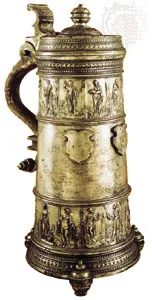
When you think of pewter, you might think of your grandmother making teapots, but the history of this material goes back 2,000 years. It was originally a staple in Rome. In ancient times, this alloy contained about 70% tin and 30% lead.
This ancient process has a name: black metal.
It’s not pretty. It darkened rapidly with age. This is dangerous.
Lead can leach out if it comes into contact with acidic foods. Eating it puts your health at risk. Modern pewter is a completely different beast. No more toxicity. The shine has become even brighter. And the chemistry is accurate.
Safety chemistry
The current version is safe as a drinking container. This is the main reason for changing the recipe. Lead-free and suitable for daily use.
The latest standard alloys are approximately:
* 91% tin
* 7.5% antimony
* 1.5% copper
Instead of lead, antimony and bismuth were used. Makes metal more durable. It also gives a brighter glow. The surface is bluish white. You can get a fresh bright shine or a soft satin look.
Prevents staining. The color lasts forever.
How to do
Most pewter work begins with casting. Pour the molten metal into the mold. Then comes the hardest part.
Artisans hammer it. They turned it on a lathe. They polish the surface. Sometimes details are engraved.
For complex items such as snuff boxes, the individual parts may need to be soldered together. Stamping machines are sometimes used in modern manufacturing.
The metal itself is malleable. Works easily. Cold working does not harden enough to require annealing. This means that manufacturers don’t have to stop and heat the metal to soften it, and it can be shaped over and over again.
Silver’s cheap cousin
Pewterware began to develop in Europe in the 14th century. This is very common. It was utilitarian.
People used it for dishes. vessels of the church. decorations.
This is a replacement product. Precious metals such as silver are too expensive for most households. So pewter filled the gap. Often imitates silver patterns.
Some unscrupulous pewter merchants tried to pass off their products as silver. It happened from time to time.
Most pieces were unornamented. However, some parts are painted. enamel. Gilt. Inlay brass. These were display items.
The main purpose is functionality. Another goal is aesthetics. However, the result was a material that survived for centuries due to its usefulness. And it’s safe. And stunningly beautiful.
So the next time you see dull, silvery tankard, don’t ignore it. This isn’t any old cup. This is a chemistry class. And survival.


