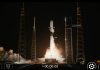
In the coming years, particularly by 2026, astronomy will be dominated by a surge of new data on galaxies. This isn’t a prediction made from authority, but a logical expectation given the imminent launch of two major observatories: the Vera C. Rubin Observatory’s Legacy Survey of Space and Time and the NASA Nancy Grace Roman Space Telescope. Both instruments are designed to systematically study galaxies, conducting a large-scale census of their shapes, behaviors, and evolutionary histories.
Why Galaxy Research Matters Now
The current wave of interest in galaxies isn’t arbitrary. Decades of theory and observation have shown that galaxy shapes and internal processes reveal fundamental truths about the universe’s evolution. The distribution of stars, the presence of supermassive black holes, and the influence of dark matter all leave unique signatures on galactic forms. Understanding these signatures is key to unlocking the mysteries of dark energy, which drives the accelerating expansion of space-time.
From Confusion to Clarity: Classifying Galaxies
Historically, categorizing galaxies has been a surprisingly messy process. Early systems, like Edwin Hubble’s classification of spirals, ellipticals, and lenticulars, were later expanded by astronomers like Gérard de Vaucouleurs to account for countless sub-variations. This complexity isn’t a flaw, but a reflection of the real challenge: we only see galaxies as two-dimensional snapshots in time. Their slow rotation makes it impossible to observe their full three-dimensional structure directly.
The categories themselves matter because they indicate a galaxy’s age and environment. Ellipticals, for example, are typically older, reside in dense galaxy clusters, and have evolved differently than spiral galaxies like our Milky Way. The shape of the dark matter halo surrounding a galaxy also profoundly influences its structure, linking galactic form to the unseen forces governing the cosmos.
New Tools, New Insights
The Rubin and Roman telescopes will dramatically refine our understanding of galaxies through unprecedented data collection. Rubin’s focus on dwarf spheroidals – small, faint galaxies that orbit larger ones – will illuminate the formation of larger structures. These satellite galaxies hold clues to the hierarchical assembly of the universe. Meanwhile, the Roman telescope will hunt for connections between galactic shapes and the behavior of dark energy, potentially shedding light on the accelerating expansion of space-time.
Notably, the teams behind both missions are coordinating their efforts, ensuring that data from Rubin and Roman are combined for maximum scientific impact. This synergy honors the legacies of Vera C. Rubin and Nancy Grace Roman, two pioneers whose work continues to inspire a new generation of astronomers.
In essence, 2026 will mark a turning point in galactic astronomy, as these instruments provide a clearer, more detailed picture of the universe’s most fundamental building blocks.