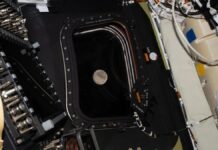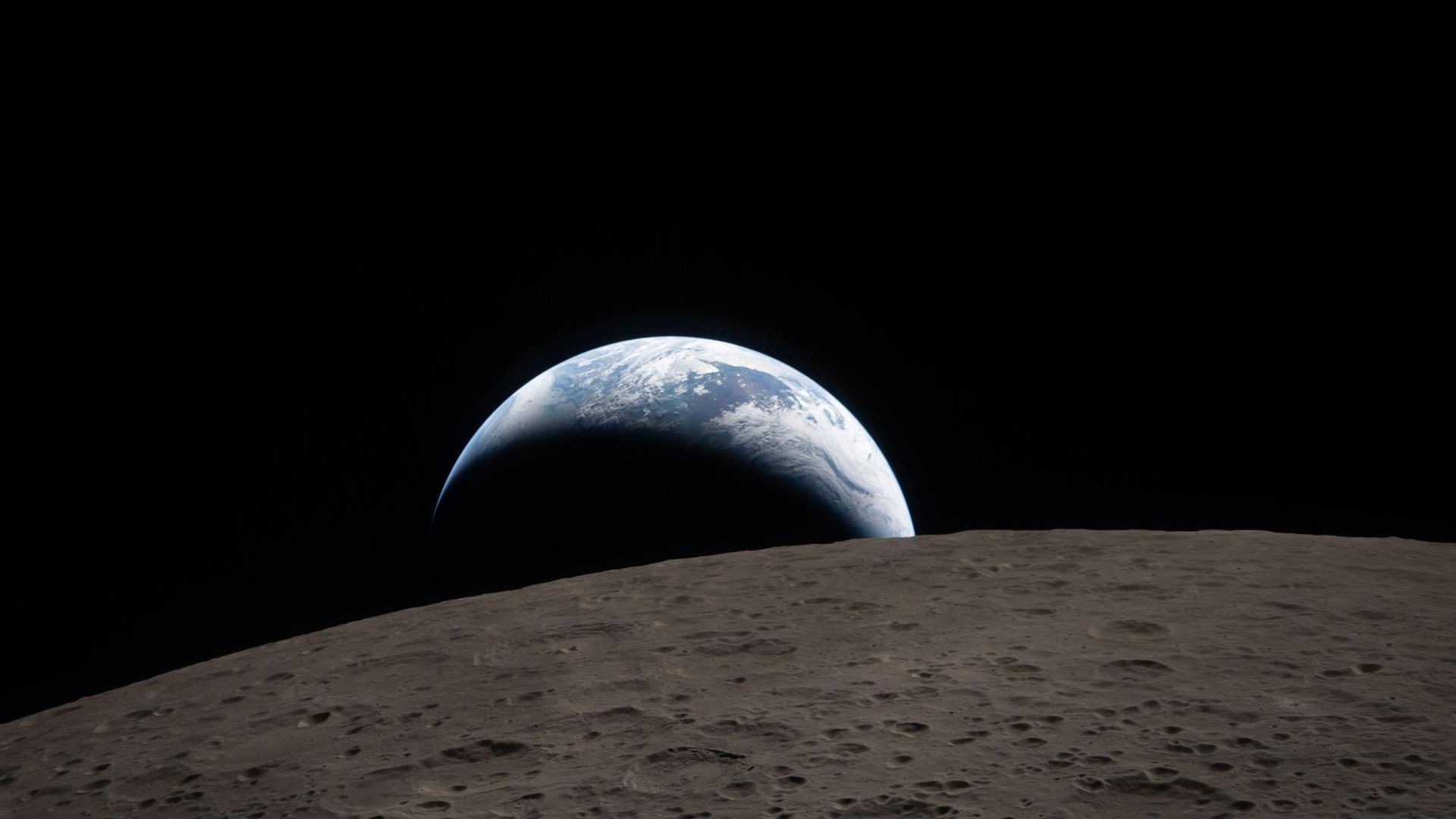
The Artemis 2 mission has reached a symbolic milestone, capturing a breathtaking view of Earth disappearing behind the lunar horizon. Taken from the window of the Orion spacecraft, the image—dubbed “Earthset” —marks a profound connection between the current era of deep-space exploration and the legendary Apollo missions of the late 1960s.
The View from the Far Side
On Flight Day 6 of the 10-day mission, as the Orion spacecraft—named Integrity —traversed the far side of the Moon, the crew witnessed a rare celestial alignment. At approximately 6:41 p.m. EDT on April 6, the Earth began to slip from view, leaving only a thin, illuminated crescent visible.
The photograph reveals several striking details:
– A Fragmented Earth: Only a sliver of our planet remained in direct sunlight, showcasing swirling white cloud patterns over Australia and Oceania.
– Lunar Topography: The Moon’s ancient, scarred landscape is prominently featured, specifically the Ohm Crater. This 40-mile-wide crater is identifiable by its sloping, terraced rims and a distinct central peak.
Echoes of Apollo 8
The term “Earthset” is a deliberate nod to one of the most famous photographs in human history: the 1968 “Earthrise” captured by Bill Anders during the Apollo 8 mission. By documenting this phenomenon, the Artemis 2 crew—Reid Wiseman, Victor Glover, Christina Koch, and Jeremy Hansen —are not just collecting data; they are continuing a visual legacy that defines our relationship with the cosmos.
This connection is significant because it highlights the cyclical nature of lunar exploration. While Apollo proved we could reach the Moon, Artemis aims to establish a sustainable human presence there. Seeing the Earth “set” serves as a powerful reminder of the isolation and perspective experienced by astronauts venturing further from home than ever before.
A Sequence of Celestial Rarities
The “Earthset” was merely the beginning of a remarkable series of events for the crew. Following the photograph, the mission experienced several extraordinary phenomena:
- The Earthrise: After a planned 40-minute communications blackout caused by the spacecraft moving beyond the range of relay satellites, the crew witnessed a spectacular “Earthrise” as the planet emerged from behind the Moon.
- A Total Solar Eclipse: In a rare feat of celestial timing, the Orion’s trajectory placed the Moon directly between the spacecraft and the Sun. This allowed the crew to witness a total solar eclipse from a free-flying vantage point—a sight few humans in history have ever seen.
The Artemis 2 mission continues to bridge the gap between historical lunar milestones and the future of long-duration spaceflight, providing both scientific value and profound perspective on our place in the solar system.
Conclusion
Through these rare astronomical events, the Artemis 2 crew has provided humanity with a fresh look at our home planet and the lunar landscape. These observations underscore the technical precision and the awe-inspiring reality of modern deep-space travel.