


Astronomers are constantly refining our understanding of how stars are born, but one question has been particularly persistent: Does simply adding more material to a star-forming cloud automatically result in more stars? A new study led by researchers at the European Southern Observatory (ESO) suggests the answer is surprisingly complex. The findings, part of the Core And Filament Formation/Evolution In Natal Environments (CAFFEINE) survey, challenge the intuitive idea that denser regions are always more efficient at star birth.
The CAFFEINE Survey and GAL316
The CAFFEINE survey uses the ArTéMiS camera at the Atacama Pathfinder Experiment (APEX) – a radio telescope in Chile – to map star-forming regions in detail. The team focused on GAL316, a particularly active stellar nursery within our Milky Way. This region was chosen as a test case for determining whether increasing the density of a star-forming cloud leads to a proportional increase in star formation.
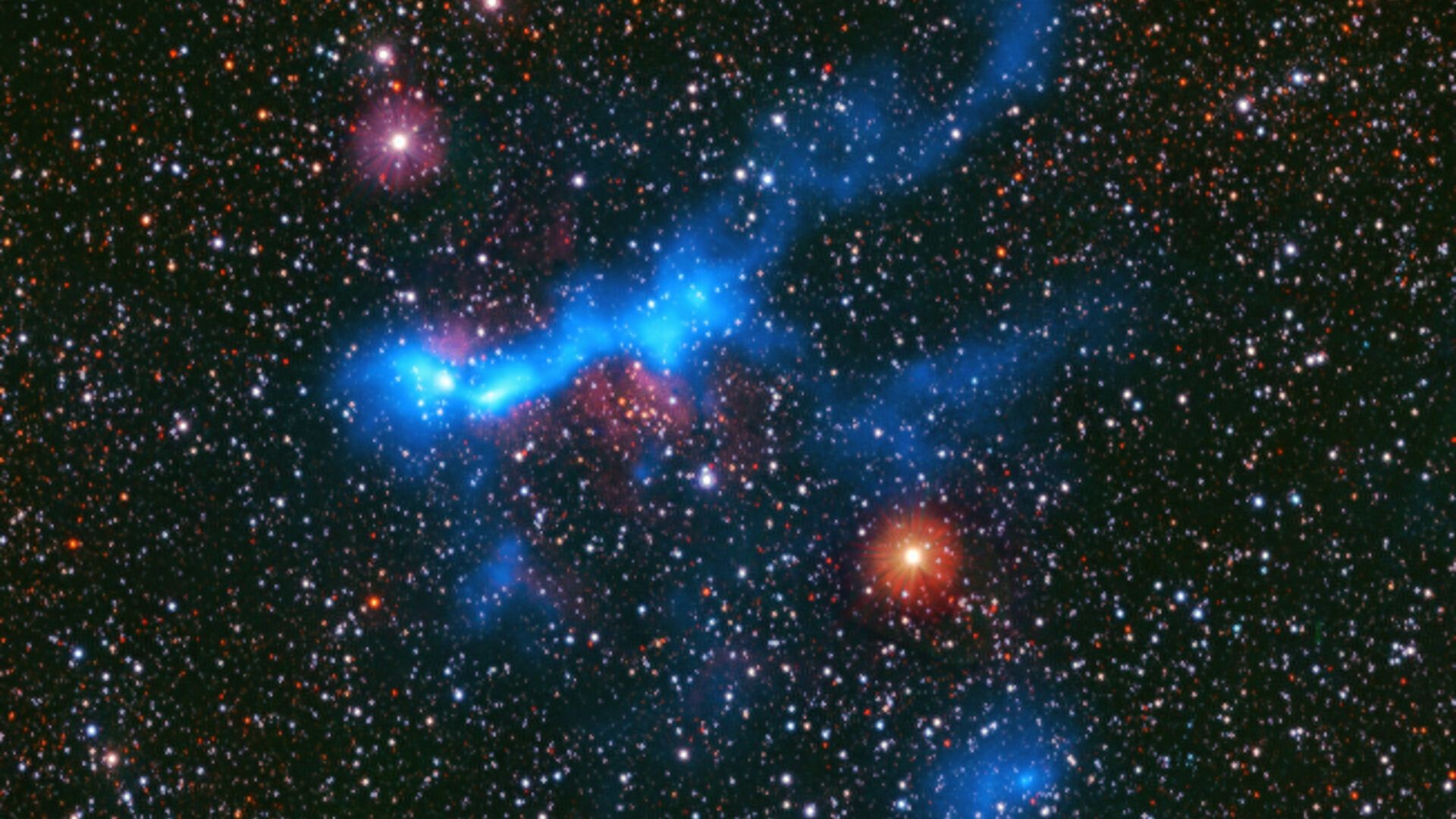
The image released by ESO combines two types of observations. The blue, filamentary structures represent cold gas and dust detected by APEX, which is the raw material for new stars. The background starfield comes from VISTA observations, showing the already existing stars in the Milky Way behind the cloud. This combination provides a clearer picture of how star-forming material interacts with its surroundings.
Counterintuitive Results
The CAFFEINE survey’s initial results are striking: above a certain density threshold, the densest regions observed did not form stars any more efficiently than less dense ones. This means that simply piling on more gas and dust does not guarantee a higher rate of star birth.
This finding has important implications. If the amount of material wasn’t the limiting factor, then other mechanisms must be at play. These include the internal dynamics of the cloud, how material breaks apart into clumps, and the impact of newly formed stars on their environment. The process of star formation is likely more nuanced than previously assumed.
“The idea that simply adding more fuel doesn’t automatically make a stellar nursery more productive suggests we need to rethink some of our assumptions about how stars are born,” says a researcher involved in the study.
The CAFFEINE survey is ongoing, and future observations will further refine our understanding of this complex process. The study underscores that even in the richest regions of space, star formation isn’t just about “enough stuff”; it’s about how that stuff behaves.


