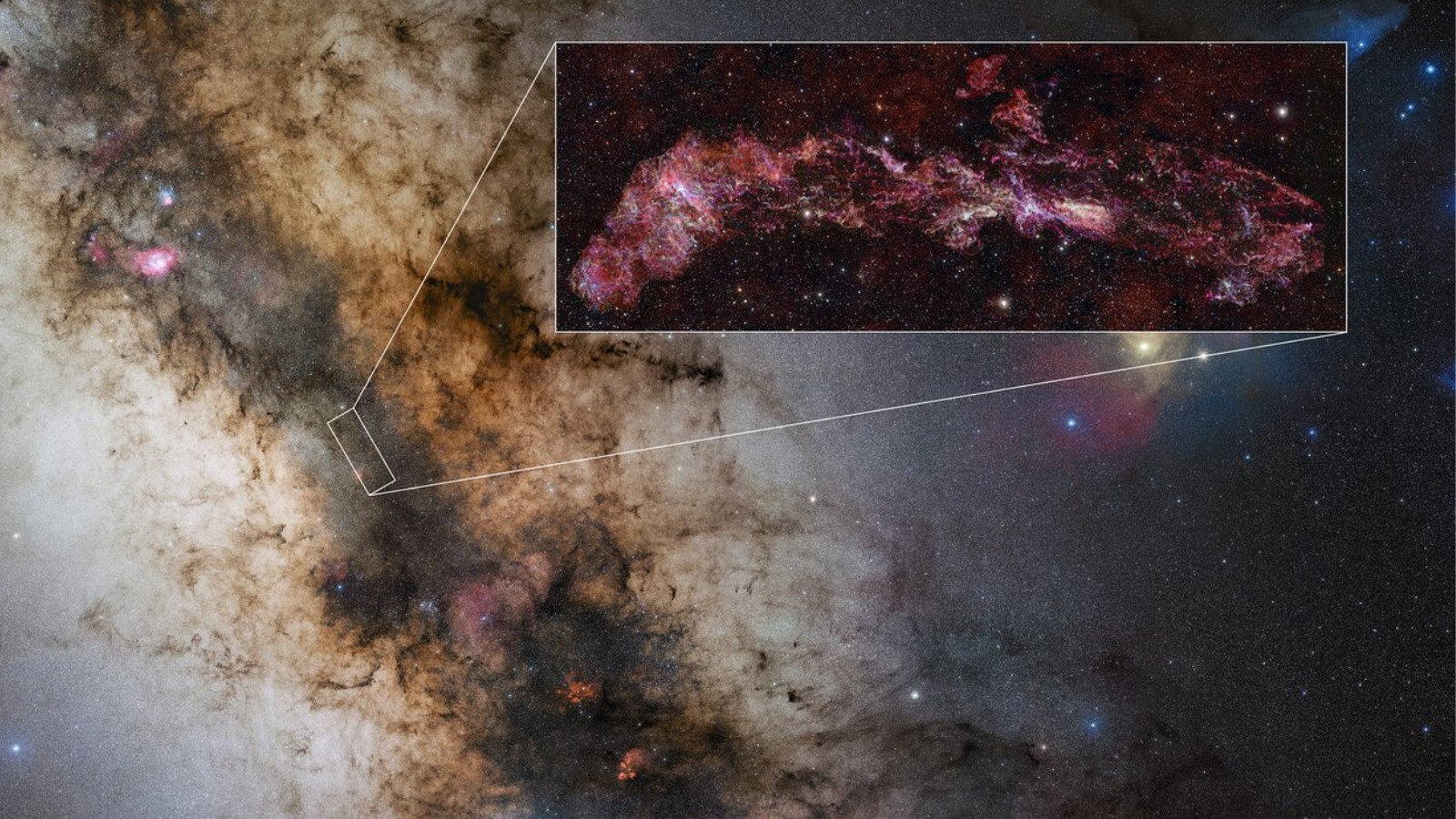
Astronomers have achieved a breakthrough in understanding the heart of our galaxy, capturing the most detailed image ever of the Central Molecular Zone (CMZ) – a turbulent region surrounding the supermassive black hole Sagittarius A*. Using the Atacama Large Millimeter/submillimeter Array (ALMA), the world’s largest radio telescope, researchers have peered through gas and dust to reveal how stars live and die in this extreme environment.
The Central Molecular Zone: A Galactic Nursery
The CMZ is a 650-light-year-wide region packed with dense, cold gas flowing along filaments. Unlike star formation at the galaxy’s edges, the conditions here are far more intense, leading to the birth of massive, short-lived stars that often end in spectacular supernova explosions. This makes the CMZ a unique laboratory for studying galactic evolution.
“It is the only galactic nucleus close enough to Earth for us to study in such fine detail.” – Ashley Barnes, European Southern Observatory (ESO)
Chemical Complexity in Extreme Conditions
The ALMA observations allowed the team to identify dozens of molecules within the CMZ, ranging from simple compounds like silicon monoxide to complex organic molecules like methanol and ethanol. This chemical diversity reveals the rich processes taking place within this zone. The survey, part of the ACES (ALMA CMZ Exploration Survey), provides unprecedented insight into how molecules survive and interact in such extreme conditions.
Echoes of the Early Universe
The CMZ is believed to resemble galaxies in the early universe, where star formation occurred in chaotic environments. By studying how stars are born in the CMZ, scientists can gain a clearer picture of how galaxies grew and evolved over cosmic time. This region offers a glimpse into the past, allowing researchers to understand the conditions that shaped the early cosmos.
Assembling the Mosaic
The CMZ spans an area roughly three times the width of the full moon in the night sky, too large for ALMA to capture in a single observation. Instead, the team stitched together smaller observations from the array’s 66 radio antennas in Chile, creating the largest image ALMA has ever produced. The resulting mosaic revealed complexity that even the researchers did not fully anticipate.
The findings were published in the Monthly Notices of the Royal Astronomical Society on February 25th.
This breakthrough marks just the beginning of understanding the Milky Way’s core. Further research using ALMA and other advanced instruments will continue to refine our knowledge of this dynamic region, revealing more about the universe’s most extreme environments.