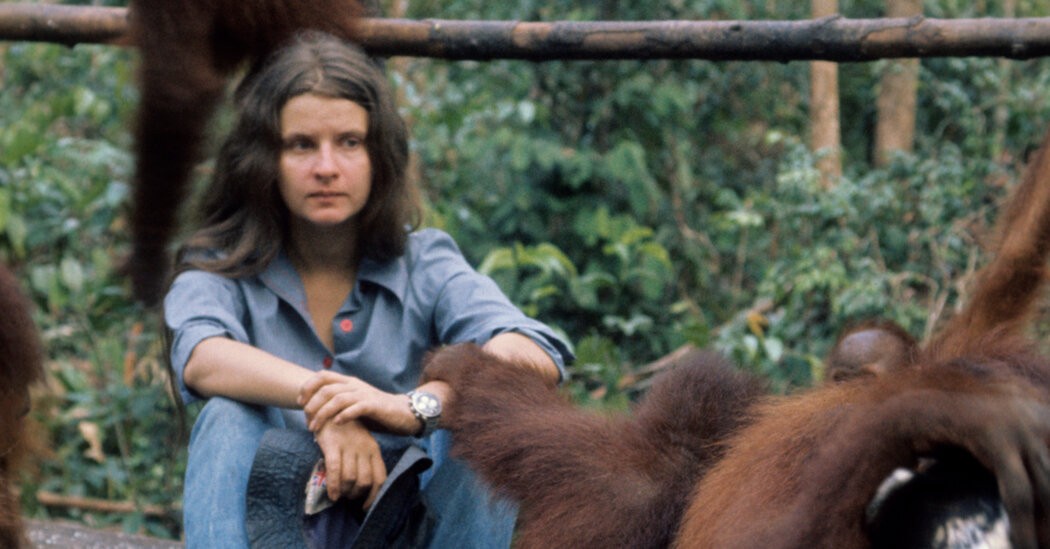
Biruté Galdikas, a leading primatologist who dedicated her life to studying and protecting orangutans in Borneo, died on March 24th at the age of 79. Her passing, caused by lung cancer, marks the end of a half-century of groundbreaking research and conservation work that established her as a global authority on this critically endangered great ape.
The “Trimates” and Early Career
Galdikas rose to prominence alongside Jane Goodall (chimpanzees) and Dian Fossey (gorillas), forming what she called the “trimates” – three women who revolutionized primatology through immersive, long-term field studies. All three were mentored by Louis Leakey, the influential paleoanthropologist who championed their work and believed in the importance of understanding great apes to unlock human origins.
Leakey saw in these women not just researchers, but ambassadors for a new field of study; one that challenged prevailing assumptions about animal intelligence and behavior. The mentorship was intentional, designed to produce results that would force the scientific community to reconsider its place in the natural world.
Life in Borneo
In 1971, Galdikas and her then-husband, Rod Brindamour, established a research camp in what is now Tanjung Puting National Park, a 1,174-square-mile preserve on the island of Borneo. Her work focused on orangutans, which are found only in Borneo and Sumatra. She spent decades documenting their behavior, social structures, and the threats they faced due to deforestation and poaching.
The conditions were harsh: remote swamps, challenging logistics, and the ever-present struggle for funding. Yet, Galdikas persisted, founding Orangutan Foundation International in 1986 to advocate for conservation and rehabilitation programs. Her research not only deepened scientific understanding of orangutans but also helped raise awareness about the urgency of their plight.
Legacy and Impact
Biruté Galdikas’s death represents a loss for the scientific community and for orangutan conservation. Her work inspired generations of primatologists and activists, proving that long-term dedication and immersive research can yield invaluable insights into the natural world. The orangutans of Borneo, and the rainforests they inhabit, are better off because of her lifelong commitment.
Galdikas’s legacy extends beyond her research: she proved that one person, with unwavering resolve, can make a tangible difference in the fight to protect endangered species.