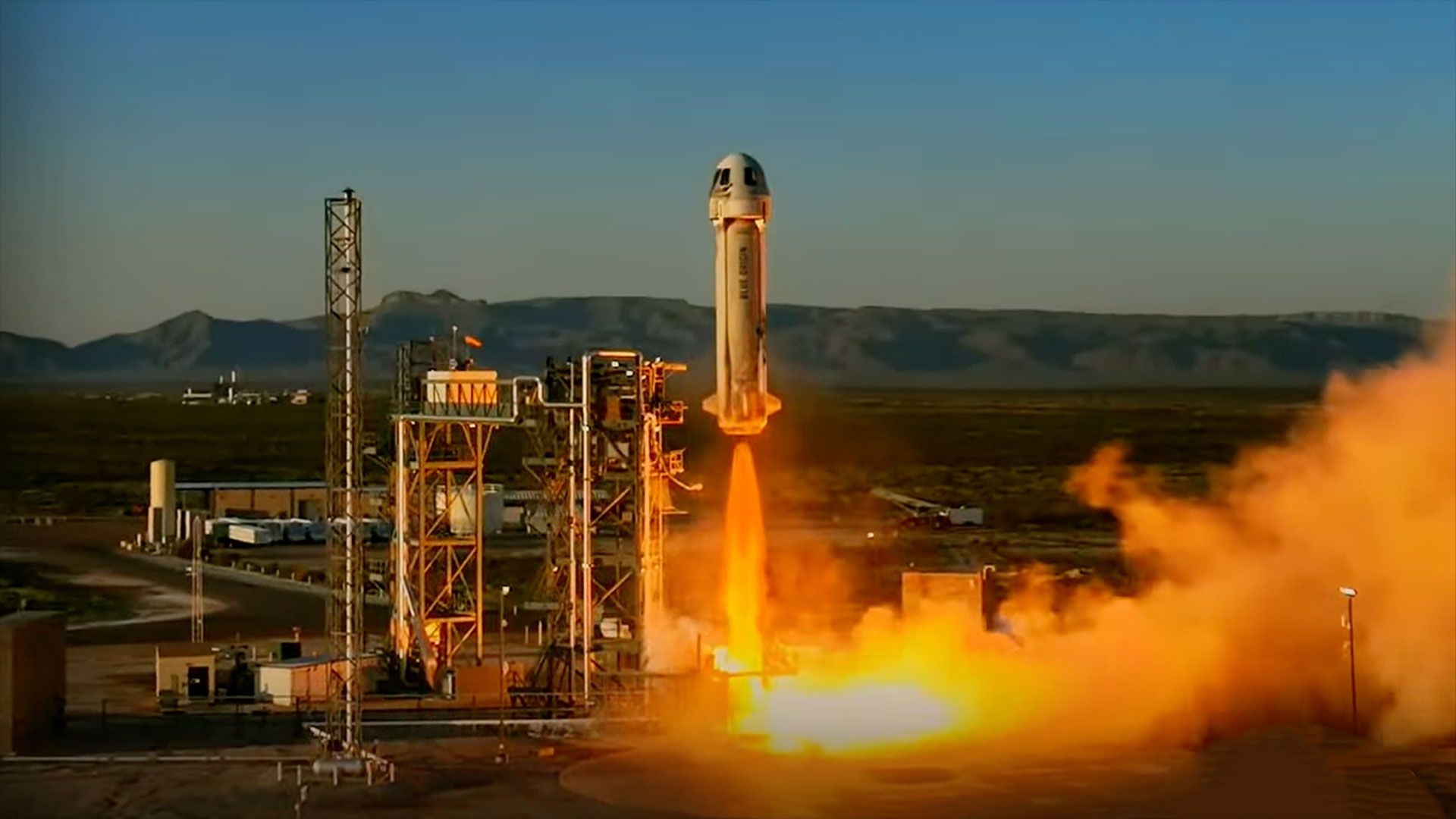
Blue Origin, the aerospace company founded by Jeff Bezos, is suspending its suborbital space tourism flights for at least two years to concentrate fully on developing its lunar landing capabilities. This shift signals a strategic realignment towards NASA’s long-term goals of establishing a sustained human presence on the Moon.
Focus on Lunar Development
The company stated that resources previously allocated to New Shepard, its reusable rocket system used for short spaceflights, will now be directed towards Blue Moon, its planned lunar lander. This decision reflects a growing prioritization of NASA’s Artemis program, which aims to return humans to the Moon by 2029.
Blue Origin has secured a contract with NASA to land astronauts on the Moon with Blue Moon, potentially as early as the Artemis 5 mission. To demonstrate readiness, the company plans a robotic test flight of Blue Moon to the lunar surface later this year, well before crewed missions.
The Artemis Program Context
The Artemis program, a joint effort by NASA and commercial partners like SpaceX and Blue Origin, is structured as follows:
– Artemis 1 (completed) tested the Space Launch System (SLS) rocket and Orion capsule in an uncrewed flight.
– Artemis 2 (launching as early as February 8) will send a crewed mission around the Moon.
– Artemis 3 and 4 will use SpaceX’s Starship lander for the first crewed lunar surface missions.
Blue Origin’s role is to provide the lander for later Artemis missions, competing with SpaceX in this crucial area of space exploration.
New Shepard’s Legacy
New Shepard has completed 38 flights, including 17 crewed missions, carrying a total of 98 individuals into suborbital space since its first launch in 2015. Its most recent flight, NS-38, took place just last week. While space tourism is paused, the data and experience gained from New Shepard will inform Blue Origin’s broader lunar development efforts.
This strategic shift underscores a broader trend in the private space industry : companies are increasingly focused on long-term, high-value contracts with government agencies (like NASA) rather than relying solely on commercial tourism for revenue. The race to establish a permanent lunar presence is now the dominant driver for many aerospace ventures.
Blue Origin’s move is a clear signal: the company is betting big on the Moon, and space tourism will have to wait.