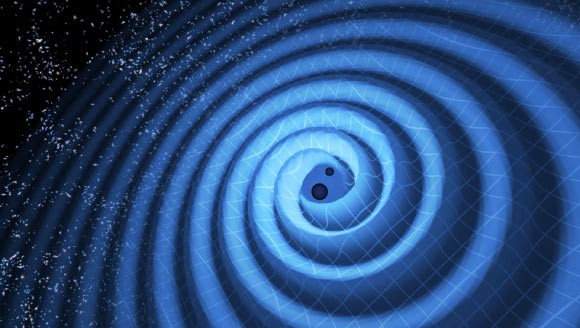
Astronomers have long known that dark matter exists, yet they remain baffled by its true nature. Now, researchers have unveiled a novel method to hunt for this elusive substance by analyzing the gravitational waves emitted when black holes collide. By comparing these cosmic ripples against new theoretical models, scientists can potentially distinguish between black holes merging in empty space and those embedded within dense clouds of dark matter.
This development marks a significant shift in the search for dark matter. While previous efforts focused on direct particle detection or electromagnetic observations, this approach leverages the extreme gravitational environments of black holes as natural laboratories. It transforms gravitational wave astronomy from a tool for observing collisions into a probe for the invisible fabric of the universe.
The Elusive Nature of Dark Matter
Dark matter constitutes approximately 85% of all matter in the universe, yet it remains completely invisible to traditional telescopes. Unlike normal matter, it does not emit, absorb, or reflect light, nor does it interact with magnetic fields. Its presence is inferred solely through its gravitational influence—specifically, how it bends light from distant galaxies (gravitational lensing) and affects the rotation speeds of galaxies.
Despite decades of study, the fundamental composition of dark matter remains one of physics’ greatest mysteries. One leading theory suggests that dark matter may consist of light scalar particles —particles significantly lighter than electrons. Unlike heavy particles, these light scalars are predicted to behave not just as individual entities but also as coordinated waves, particularly in the vicinity of massive, rapidly spinning black holes.
How Black Holes Amplify Dark Matter
The new research, led by MIT physicist Josu Aurrekoetxea and colleagues, focuses on a phenomenon known as superradiance.
When a rapidly spinning black hole is surrounded by a cloud of these light scalar dark matter waves, the black hole’s rotational energy can transfer to the waves. This process amplifies the dark matter, increasing its density to extreme levels. The researchers liken this effect to churning cream into butter: the interaction concentrates the diffuse waves into a dense, structured environment around the black hole.
If such a dense cloud exists, it should leave a distinct “imprint” on the gravitational waves generated when two such black holes eventually merge. These ripples in spacetime carry information about the environment in which the merger occurred. By modeling what these waveforms should look like in a dark matter-rich environment versus a vacuum, scientists can now search for these specific signatures in existing data.
Analyzing the Cosmic Data
To test this theory, the team analyzed gravitational wave signals recorded during the first three observing runs of the LIGO-Virgo-KAGRA (LVK) global network. They examined 28 of the clearest signals from black hole mergers to see if any matched the predicted dark matter imprint.
The results were mostly consistent with standard models:
* 27 signals appeared to originate from black holes merging in a vacuum, showing no signs of dark matter interference.
* One signal, identified as GW 190728, displayed patterns that could indicate the presence of a dark matter cloud.
However, the researchers caution that this single outlier is not a confirmed detection. The statistical significance is currently too low to claim discovery. Instead, GW 190728 serves as a proof-of-concept, demonstrating that the new method can identify potential candidates for further scrutiny.
A New Era of Discovery
The primary value of this study lies in its methodology. Without these new waveform models, scientists might have previously misclassified mergers occurring in dark matter environments as standard vacuum events. This new framework allows physicists to systematically screen data for hints of new physics that were previously invisible.
“Without waveform models like ours, we could be detecting black hole mergers in dark matter environments, but systematically classifying them as having occurred in vacuum,” said Dr. Aurrekoetxea.
As the LVK detectors continue to collect data with increasing sensitivity, the potential for discovery grows. Dr. Soumen Roy of the Université Catholique de Louvain noted that this approach offers an exciting avenue to probe dark matter at scales much smaller than ever before. Dr. Rodrigo Vicente of the University of Amsterdam added that using black holes to search for dark matter allows physicists to explore regions of the universe that are otherwise inaccessible.
Conclusion
While dark matter has not yet been directly detected via gravitational waves, this research provides a powerful new tool for its identification. By refining our ability to interpret the “chirps” of merging black holes, scientists can now listen for the subtle echoes of the invisible universe. As observational data accumulates, these cosmic collisions may finally reveal the hidden structure of dark matter.