


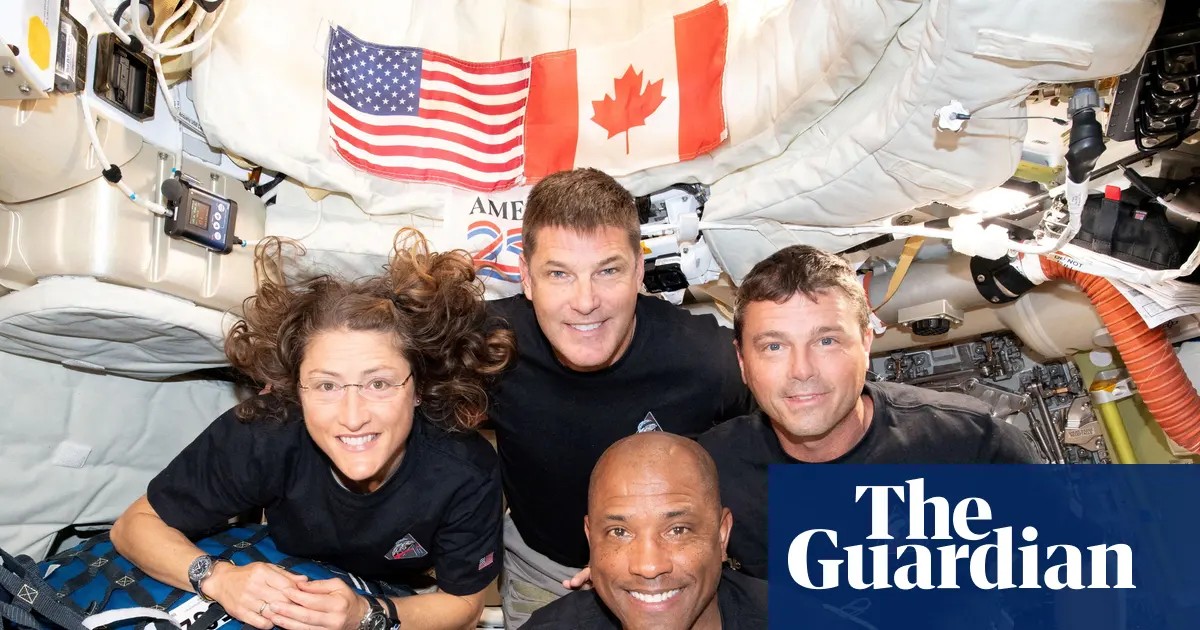
The Artemis II mission is currently marking its ninth day of flight, bringing humanity closer to its first crewed lunar voyage in over fifty years. As the mission nears its conclusion, the crew—comprising three American astronauts and one Canadian—has shared reflections on the profound impact of their journey, emphasizing a mission that transcends mere exploration to serve as a catalyst for global inspiration.
A Legacy Reborn
The Artemis program represents much more than a technical milestone; it is the spiritual and scientific successor to the Apollo program of the Cold War era. While Apollo was defined by the geopolitical tensions of the 20th century, Artemis is framed as a collaborative endeavor aimed at “working on something big for the good of everyone.”
By including international partners, such as the Canadian Space Agency, NASA is signaling a shift in space exploration: moving away from the era of “space races” and toward an era of collective human achievement.
The Mission at a Glance
The crew is currently engaged in a 10-day flight trajectory that involves a complex loop around the Moon before returning to Earth. Key aspects of this mission include:
- Duration: A 10-day orbital journey.
- Crew Composition: A diverse team of three US astronauts and one Canadian astronaut.
- Objective: To test human performance in deep space and pave the way for future lunar landings.
The Road to Splashdown
As the mission enters its final stages, NASA has transitioned its focus toward the critical phase of reentry. The crew is preparing for a safe splashdown, a high-stakes procedure that requires precision to ensure the astronauts return safely from the lunar environment.
The transition from deep-space orbit to Earth’s atmosphere is one of the most dangerous segments of any spaceflight. NASA’s current priority is managing the logistics of the descent to ensure a controlled and secure recovery of the crew and their spacecraft.
Why This Matters
This mission is a litmus test for the next era of space travel. If successful, it proves that humans can live and work in the harsh environment of deep space for extended periods. Beyond the technical data, the crew’s focus on inspiring the next generation highlights the social value of space exploration: it provides a tangible goal for students and scientists worldwide, fostering interest in STEM (Science, Technology, Engineering, and Mathematics) fields.
The Artemis II mission serves as a bridge between the historic achievements of


