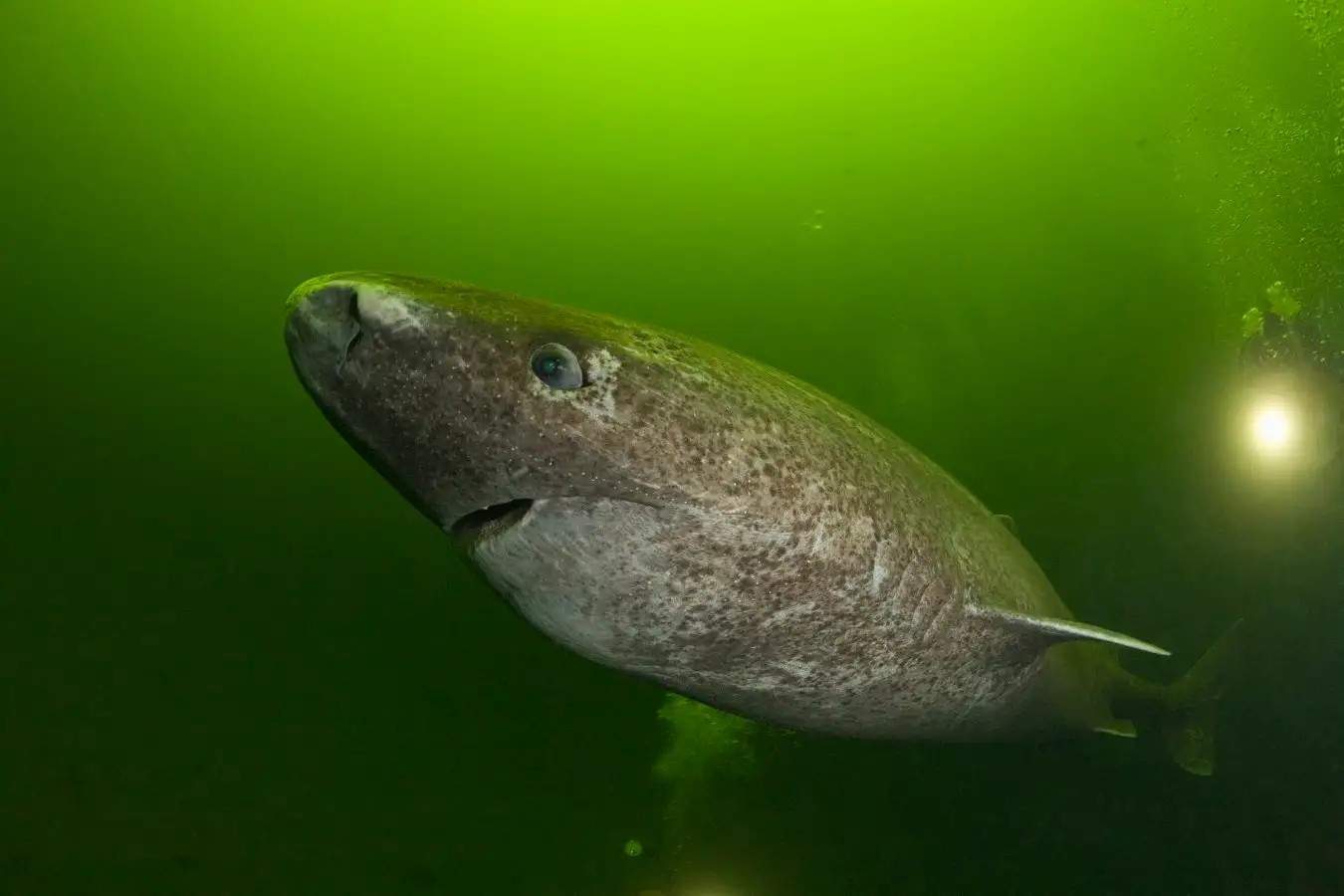
Greenland sharks, known for their extraordinary lifespans of 250 to 500 years, exhibit severe age-related heart disease even at just 150 years old. This discovery challenges conventional understanding of aging and longevity, revealing a unique resilience in these deep-sea predators. Despite clear signs of cardiac deterioration, the sharks do not experience reduced lifespan or impaired function – a paradox that raises fundamental questions about the biology of aging.
The Paradoxical Heart
Researchers from Scuola Normale Superiore in Pisa, Italy, analyzed heart tissue from six Greenland sharks, all exceeding 3 meters in length and estimated to be between 100 and 150 years old. Using advanced microscopy techniques, they found high levels of fibrosis (scarring), lipofuscin (a marker of mitochondrial damage), and nitrotyrosine (indicating inflammation and oxidative stress) within the sharks’ hearts.
In humans, such levels would be a clear indicator of heart failure, but in Greenland sharks, this accumulation does not correlate with functional decline. This suggests the species has evolved mechanisms to tolerate chronic oxidative damage rather than avoid it entirely.
“The fact that there exists a creature on this planet whose heart can coexist with the aging process without apparent decline is remarkable,” says Alessandro Cellerino, a member of the research team.
Comparative Study Highlights Adaptations
To understand this resilience, the researchers compared Greenland shark hearts to those of two other species: the velvet belly lanternshark (lifespan up to 11 years) and the turquoise killifish (lifespan just months). The lanternshark showed no signs of fibrosis, while the killifish, despite its short lifespan, displayed some of the same nitrotyrosine markers as the Greenland shark.
This comparison underscores that the Greenland shark’s heart is not merely aging slowly; it is actively adapting to age-related damage in a way that maintains functionality. The accumulation of these markers appears non-detrimental, defying expectations from studies on shorter-lived organisms.
Implications for Aging Research
The findings suggest that our understanding of molecular aging mechanisms is incomplete. Scientists traditionally focus on short-lived model organisms (worms, mice, rats) but overlook the potential insights from exceptionally long-lived species like Greenland sharks and bowhead whales.
Joao Pedro Magalhaes from the University of Birmingham points out that we still do not fully understand which aging changes are harmful and which are not. The Greenland shark’s heart demonstrates that aging markers do not always equate to functional decline, a critical realization for future aging research.
In conclusion, the Greenland shark’s remarkably resilient heart challenges fundamental assumptions about aging and longevity. This species provides a unique opportunity to study how organisms can tolerate and even thrive with significant age-related damage, potentially unlocking new strategies for promoting healthy aging in other species – including humans.