Humanity’s ambitions for deep-space exploration demand self-sufficiency. Relying on Earth for resources becomes impractical the further we venture. Asteroids, particularly those rich in platinum-group elements, represent a potential solution: localized mining. A recent experiment on the International Space Station (ISS) has demonstrated a surprising capability: fungi and bacteria can extract metals from asteroid-like material in microgravity, offering a promising path towards sustainable space resource utilization.
The BioAsteroid Project
Researchers from the University of Edinburgh, led by Professor Charles Cockell, conducted the BioAsteroid project. They tested Sphingomonas desiccabilis (bacteria) and Penicillium simplicissimum (fungus) against L-chondrite asteroidal material, a common type of space rock. The goal was to determine which elements could be biologically extracted and how microbes behave in the unique environment of space.
This experiment is significant because it’s among the first to analyze microbial interactions with meteorite-like materials under microgravity. As Dr. Rosa Santomartino of Cornell University and the University of Edinburgh explains, “We wanted to keep the approach tailored… but also general to increase its impact.” The researchers deliberately used two distinct species because they extract different elements.
How Microbial Extraction Works
The key to this process lies in carboxylic acids. Both fungi and bacteria produce these carbon molecules, which can bind to minerals in rocks, effectively dissolving them and releasing the metals. The experiment wasn’t just about what elements were extracted, but how the process functions in space. To understand this, the team conducted metabolomic analysis, examining the biomolecules produced by the microbes during the extraction process.
Space vs. Earth: What Changed?
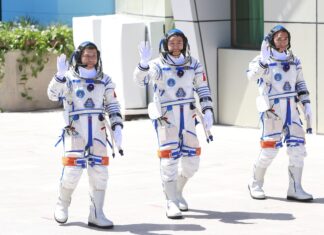
Astronaut Michael Scott Hopkins performed the ISS experiment, while researchers ran a parallel study on Earth to compare results. The analysis of 44 elements revealed that microbial extraction was more consistent in space than non-biological leaching, which decreased in effectiveness in microgravity.
Specifically, the fungus demonstrated an increased production of carboxylic acids, enhancing the release of valuable metals like palladium, platinum, and others. This is critical because it suggests that biological processes may outperform traditional methods in the long run for certain elements. As Dr. Alessandro Stirpe notes, the team identified subtle but important differences in how the microbes behaved in space versus on Earth.
Implications for Future Space Mining
The results show that microbes can maintain consistent extraction rates regardless of gravity, which is a significant advantage for asteroid mining. For some metals, the microbial process doesn’t necessarily improve extraction, but ensures it remains stable even without Earth’s pull. The extraction rate also varies depending on the metal being targeted and the microbe used.
This research, published in npj Microgravity, represents a critical step towards developing sustainable space resource extraction. It proves that biological systems can function effectively in microgravity, offering a potential pathway to independent space exploration and resource utilization.
The ability to locally obtain metals in space is no longer just a theoretical concept. This experiment confirms it is possible and lays the groundwork for further research into refining these methods for future asteroid mining operations.