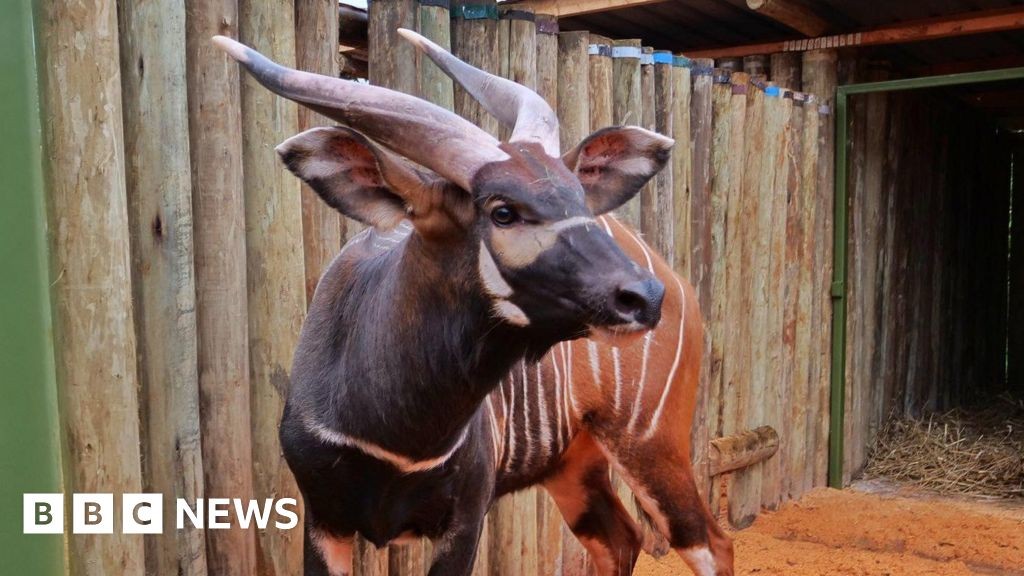
In a significant victory for global conservation efforts, four critically endangered male mountain bongos have arrived in Kenya from the Prague Zoo in the Czech Republic. This arrival marks a vital milestone in the mission to prevent the extinction of one of the world’s rarest large mammals.
Strengthening the Genetic Foundation
The four antelopes, which arrived at Nairobi’s international airport on Tuesday night, have been relocated to a private wildlife reserve in central Kenya. They are destined for the Mount Kenya Wildlife Conservancy (MKWC), where they will join an existing population of 102 bongos.
The primary objective of this transfer is genetic diversification. Because the wild population is so small, inbreeding poses a massive risk to the species’ survival. By introducing these new males into the breeding program, conservationists aim to:
– Strengthen the gene pool.
– Produce more resilient offspring.
– Increase the likelihood of successful reintroduction into the wild.
The Race Against Extinction
The mountain bongo is a specialized antelope native to Kenya’s highland forests, but its numbers have plummeted over the last few decades.
The Scale of the Crisis: In the 1970s, an estimated 500 mountain bongos roamed the wild. Today, fewer than 100 remain in their natural habitat—a number even smaller than the total population held in zoos globally.
This scarcity makes every successful breeding cycle and every repatriated animal a critical component of the species’ survival strategy.
A Pattern of Repatriation and Recovery
This is not an isolated event, but rather part of a long-term, coordinated international effort to restore the species. Kenya has a history of successful, albeit challenging, repatriation projects:
– 2004: The first major repatriation saw 18 bongos returned to Kenya.
– Last Year: Approximately 17 bongos were sent from the Rare Species Conservation Foundation in Florida.
– Current Status: While around 400 bongos live in captivity in North America and others are held in European zoos, the goal is to move these animals from controlled environments back into the Kenyan highlands.
The Challenges of Reintroduction
Transitioning an animal from a zoo to the wild is a delicate, multi-stage process. The Kenya Wildlife Service (KWS) and its partners must manage several biological hurdles to ensure the animals don’t just survive, but thrive:
- Acclimatization: Animals must be gradually introduced to the local climate and environment.
- Immunity Building: Before full release, bongos undergo phases to build the necessary immunity to local pathogens.
- Disease Management: This remains a significant threat; past efforts have seen some bongos perish due to tick-borne diseases, highlighting the difficulty of protecting captive-bred animals once they enter the wild ecosystem.
Conclusion
The arrival of these four males represents a “moment of hope” for the mountain bongo. While the road to full wild recovery is fraught with biological and environmental challenges, this strategic boost to the breeding population is a decisive step toward securing the future of the species.