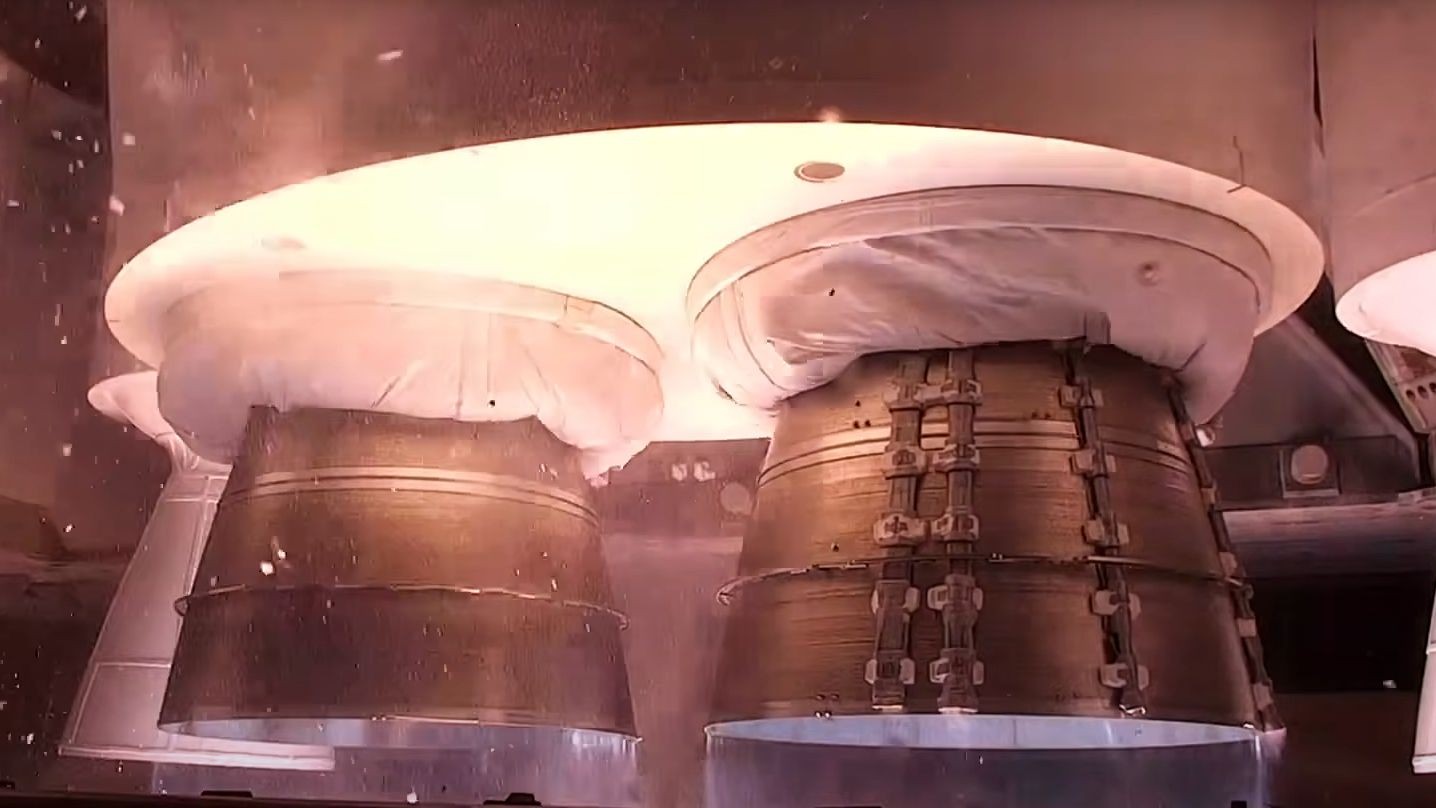
The U.S. Space Force has temporarily suspended all national security launches using the United Launch Alliance (ULA) Vulcan Centaur rocket due to a recurring malfunction in its solid rocket boosters. This decision comes after the issue resurfaced during the rocket’s fourth mission, USSF-87, raising serious concerns about reliability for critical payloads.
Recurring Anomaly Raises Red Flags
The Vulcan Centaur, first launched in January 2024, has now experienced booster anomalies on two separate national security missions. Despite the rocket successfully completing its objectives in both cases – thanks to compensating performance from its core engines – the Space Force is prioritizing safety and reliability over speed.
According to Space Force Col. Eric Zarybnisky, resolving the issue will take “many months.” This pause signals that the problem isn’t a minor quirk, but a fundamental flaw that requires thorough investigation and corrective action. The delays impact national security launches, which are designed to maintain U.S. dominance in space-based intelligence, surveillance, and communications.
Details of the USSF-87 Incident
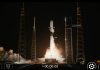
The latest incident occurred approximately 20 seconds into the Feb. 12 launch of USSF-87, which carried two reconnaissance satellites for the Geosynchronous Space Situational Awareness Program (GSSAP). While one of the four solid rocket boosters exhibited a visible anomaly, the rocket’s BE-4 engines managed to stabilize the flight. The payloads were successfully delivered to their intended geosynchronous orbit.
This echoes a similar issue from October 2024, where a manufacturing defect caused a nozzle on one of the boosters to detach mid-flight, briefly disrupting the rocket’s trajectory. The exact cause of the more recent problem remains under investigation by ULA.
Implications for U.S. Space Capabilities
The Space Force’s decision underscores the critical importance of launch reliability for national security missions. Space-based assets are essential for early warning systems, missile defense, and real-time intelligence gathering. Repeated failures, even if corrected mid-flight, erode confidence in the launch system and force a reassessment of risk tolerance.
The pause in Vulcan launches will likely strain U.S. space capabilities in the short term, potentially requiring reliance on other launch providers or delaying critical deployments. The incident also highlights the challenges of transitioning to new rocket systems, even with extensive testing; unexpected issues can still arise in operational conditions.
“Until this anomaly is solved we will not be launching Vulcan missions,” stated Zarybnisky, clearly signaling that the Space Force will not compromise on safety despite the pressing need for continued space operations.
The long-term impact will depend on how quickly ULA can identify and fix the underlying cause. If the issue proves systemic, it could lead to costly redesigns or even the abandonment of the Vulcan program altogether.