
Cryogenic biology, at its core, is the study of life at extremely low temperatures. While this field encompasses many complex concepts, understanding fundamental terms is key to grasping its implications. This article defines essential vocabulary in the context of biological science and related technologies.
Core Biological Concepts
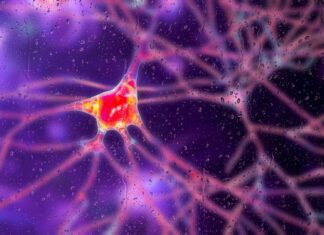
Cell: The fundamental unit of life. All living organisms, from bacteria to humans, are built upon cells. These microscopic structures, typically invisible to the naked eye, are the smallest functional components of any living being.
DNA: The blueprint of life. Deoxyribonucleic acid carries genetic instructions that dictate how cells function and develop. Its structure—a double helix—contains the code for all biological processes.
Species: A classification of organisms that can reproduce with one another to create viable offspring. The survival of a species depends on its ability to adapt and reproduce.
Clone: An exact genetic copy of an organism. Cloning, whether natural (like identical twins) or artificial, involves replicating an organism’s DNA.
Genetic: Relating to genes, DNA, and heredity. The field of genetics studies how traits are passed down through generations.
Environmental and Chemical Terms
Conservation: The active protection of living things and their habitats. This includes endangered species, ecosystems, and natural resources.
Endangered: A status assigned to species at high risk of extinction. Conservation efforts are vital for preventing the loss of biodiversity.
Fuel: Any substance capable of releasing energy through a chemical or nuclear reaction. Fossil fuels, like coal and gas, are common but have environmental drawbacks.
Hydrogen: The simplest element, critical for life and energy production. It is highly flammable and a major component in fuels and biological tissues.
Methane: A potent greenhouse gas emitted by decaying organic matter and livestock. Its impact on climate change is significant, as it traps far more heat than carbon dioxide.
Physical States and Forces
Liquid: A substance that flows freely while maintaining a constant volume. Water, oil, and blood are examples.
Solid: A material with a fixed shape and volume. Ice, bone, and wood are solids.
Thrust: A force propelling an object forward. Rockets use thrust to achieve liftoff.
Systems and Functionality
System: An interconnected set of components working together to achieve a function. Biological systems, like the circulatory system, rely on coordinated parts.
Tissue: Groups of similar cells performing a specific function. Organs are composed of different tissues working in unison.
Sensory Perception
Taste: One of the five basic senses, allowing organisms to detect chemicals in food and the environment.
Context and Implications
The terms outlined above are foundational to multiple fields, including biotechnology, medicine, and environmental science. Understanding these concepts is crucial for navigating discussions about genetic engineering, conservation efforts, and sustainable energy solutions. These definitions provide a baseline for further exploration into the complex world of cryogenic biology and its implications for the future.
In essence, these definitions highlight the fundamental building blocks of life and the forces that shape it. They are not just words but keys to unlocking deeper understanding of the natural world.