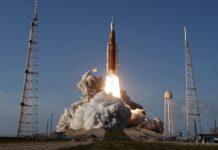
The upcoming Artemis missions to the Moon represent more than just a technological achievement; they are a rare opportunity for international collaboration and a potential catalyst for renewed global unity. Over half a century after the Apollo missions first revealed Earth as a fragile, finite sphere, humanity is poised to revisit that perspective. This time, however, the endeavor is intentionally inclusive, involving contributions from 11 nations and agreements from 61 through the Artemis Accords.
The Power of Distance: A Shift in Perception
The Apollo photographs of Earth, taken from lunar orbit, had a profound impact on society in the 1960s and 70s. For the first time, people saw their home planet not as an infinite resource but as a delicate oasis suspended in the vastness of space. This perspective directly spurred the creation of Earth Day, environmental advocacy groups like Friends of the Earth, and landmark environmental legislation. The astronauts’ achievement was framed not as an American victory but as a collective human one.
However, that emotional resonance has faded. Modern technology, such as Google Earth, provides detailed planetary imagery but lacks the visceral impact of seeing Earth from afar. As one visitor at the British Library’s “Secret Maps” exhibition remarked dismissively, it’s “just Google Earth.” This complacency is troubling because the unifying effect of the Apollo view – the realization that we all share a single, vulnerable home – could have fostered greater international cooperation on environmental issues.
A Divided World, A United Mission
Instead, social media algorithms and political polarization have driven many further apart. While the world fights over borders and ideologies, an international crew is preparing to venture beyond our divisions. The Artemis II mission, scheduled to orbit the Moon this week, will carry astronauts from diverse backgrounds, including the first woman and first African American to do so. Their mission embodies a message of unity: “We are going as humanity.”
This crew understands the transformative power of seeing Earth from such a distance. Unlike the Apollo astronauts who were caught off guard by the experience, they are deliberately planning to photograph and potentially livestream the view. The goal is not just exploration but also to share a perspective that may reignite a sense of collective responsibility for our planet.
A Legacy of Hope
The Artemis missions are not merely about reaching the Moon; they are about reminding ourselves of our shared existence and our interconnected fate. The crew will pass over a silicon disc left by Apollo 11 carrying messages from world leaders, including one from Trinidad and Tobago’s then-Prime Minister Eric Williams: “It is our earnest hope of mankind that while we gain the moon, we shall not lose the world.”
As the Artemis astronauts look back at Earth from beyond the Moon, they will experience something sacred. Whether or not that experience translates into meaningful change remains to be seen, but the opportunity for a renewed sense of planetary awareness is undeniable. The mission offers a stark reminder that we are all “riders on the Earth together, on that bright loveliness in the eternal cold.”