As the Artemis II crew draws closer to the lunar surface, NASA has transitioned from purely technical communication to a new, more emotional brand of storytelling. The agency has officially embraced the term “moon joy” —a phrase that has rapidly evolved from an organic social media moment into a defining sentiment for the mission.
Defining the Sentiment
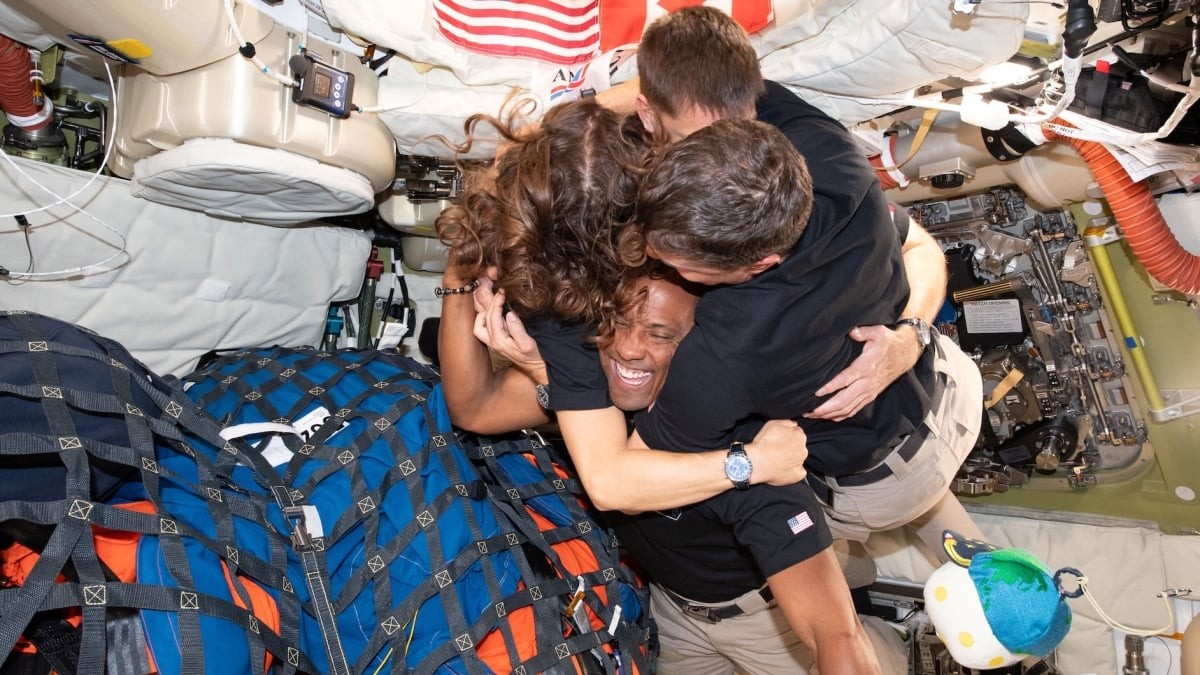
NASA has provided an official definition for the term on its social media platforms: “The feeling of intense happiness and excitement that only comes from a mission to the moon.”
While space exploration is often characterized by rigorous protocols and stoic professionalism, “moon joy” captures the human element that often gets lost in technical data. The term first gained traction during a mission control exchange on April 5, when a communicator responded with a chuckle to an excited series of lunar location updates from astronaut Reid Wiseman. Rather than a standard technical acknowledgment, the response was a simple: “Copy. Moon joy.”
A Viral Phenomenon Across Space
The phrase has proven to be infectious, bridging the gap between mission control, the orbiting crew, and even those on the International Space Station (ISS).
- In Orbit: During a live broadcast, ISS Commander Jessica Meir noted that the excitement from the Artemis II crew was palpable even from the station. “We can tell that you guys are definitely experiencing moon joy,” she remarked, noting that the sentiment was being felt by the ISS crew as well.
- The ISS Response: The ISS crew celebrated Orion’s record-breaking distance from Earth with a bit of “nerdy” humor, moving to the far end of the station to jokingly claim they were the “farthest humans away” from the Artemis crew at that moment.
- Mission Branding: NASA has leaned into the trend, utilizing the phrase in official posts, featuring the crew in promotional imagery, and even involving the mission’s mascot, Rise.
Why This Matters: The Human Side of Science
In an era where space news can often feel distant or overly bureaucratic, NASA’s adoption of “moon joy” represents a strategic shift in how the agency connects with the public.
By labeling these moments of intense wonder, NASA is doing more than just creating a meme; they are humanizing the high-stakes, highly technical process of lunar exploration. This emotional branding helps transform complex scientific milestones—such as setting distance records or viewing unique solar eclipses—into shared human experiences that are easily understood and celebrated by a global audience.
“Moon joy” serves as a rare moment of uninhibited optimism, providing a positive focal point amidst a complex year of global news.
Conclusion
“Moon joy” has transitioned from an understated reaction to a central theme of the Artemis II mission. Whether it remains a permanent part of the NASA lexicon or fades as the mission progresses, it has successfully brought a sense of infectious, shared wonder to the forefront of space exploration.