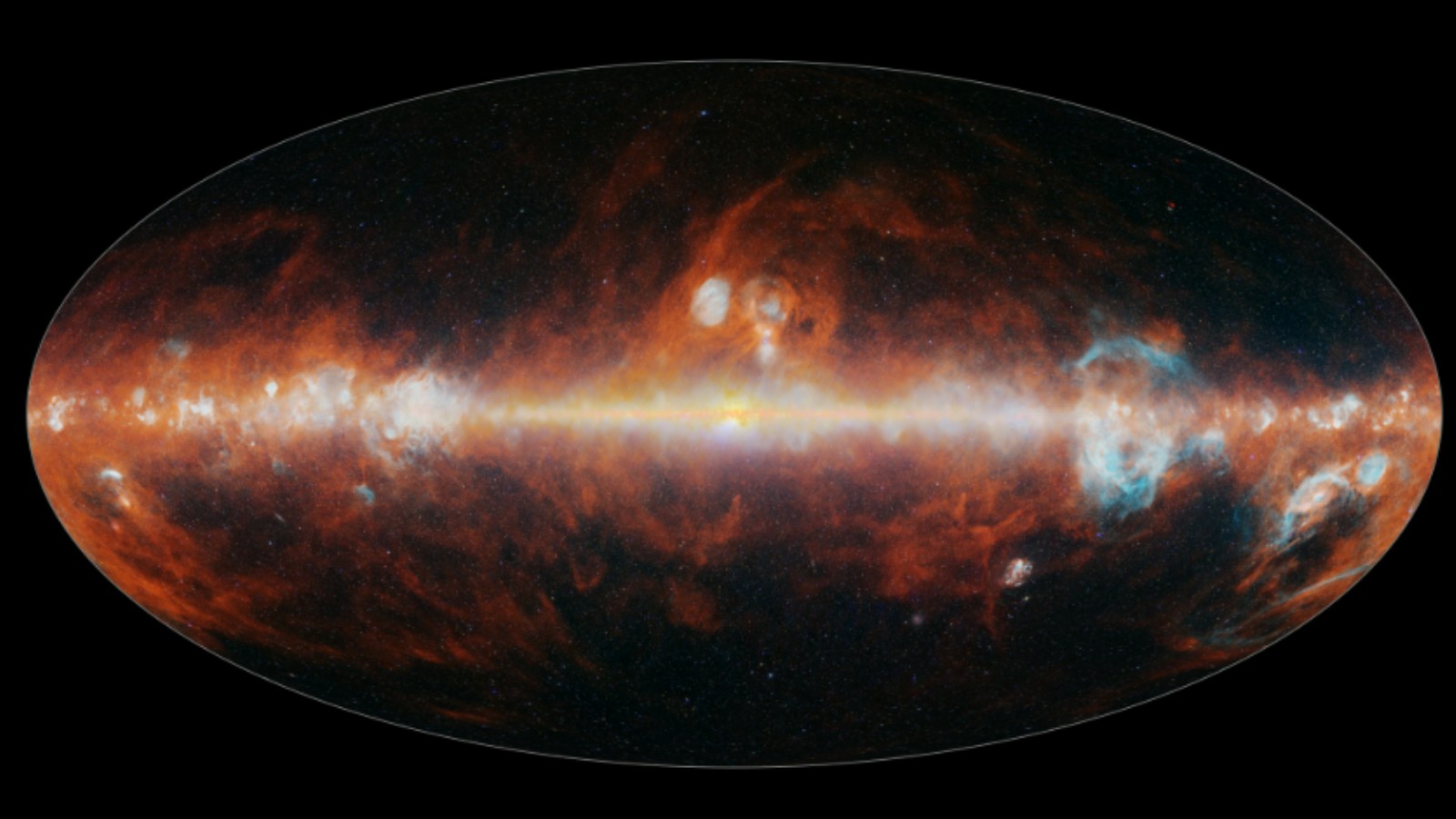
NASA’s SPHEREx (Spectro-Photometer for the History of the Universe, Epoch of Reionization, and Ices Explorer) telescope has successfully completed its inaugural scan of the entire sky, offering a breathtaking and scientifically invaluable dataset. Launched in March 2024, the observatory is already providing unprecedented insights into the universe’s earliest moments and the evolution of galaxies.
Unveiling the Early Universe
The primary goal of SPHEREx is to peer back to the first trillionth of a trillionth of a second after the Big Bang. This period is critical because it shaped the distribution of matter in the universe, ultimately influencing where galaxies formed. By mapping the sky across 102 different wavelengths, scientists hope to understand how these initial conditions led to the 3D arrangement of hundreds of millions of galaxies we observe today.
Galactic Evolution and the Seeds of Life
SPHEREx isn’t just focused on the distant past. The data will also track how galaxies have evolved over the 13.8 billion years since the Big Bang. A key aspect of this research is understanding how essential elements for life—such as carbon, oxygen, and nitrogen—were spread throughout the cosmos. This knowledge could shed light on the conditions that allowed life to emerge on Earth.
How SPHEREx Works
The telescope operates by orbiting Earth in a unique conical path, scanning from the North to South Pole approximately 15 times daily. Each orbit captures 3,600 images, and the combined effect of Earth’s orbit around the sun creates a shifting field of view, ensuring full sky coverage. The initial map took six months to complete, with SPHEREx expected to perform three more all-sky scans during its two-year primary mission.
“It’s incredible how much information SPHEREx has collected in just six months—information that will be especially valuable when used alongside our other missions’ data to better understand our universe,” said Shawn Domagal-Goldman, director of the Astrophysics Division at NASA Headquarters.
Impact and Future Outlook
The SPHEREx mission represents a significant leap forward in astrophysics. NASA officials believe that every astronomer will find value in this data, which will complement existing datasets from other missions.
The observatory’s ability to deliver “big science” from a mid-sized mission underscores NASA’s commitment to bold exploration and discovery. As SPHEREx continues its scans, the combined data will create an increasingly detailed picture of the universe, potentially answering some of humanity’s most fundamental questions about our cosmic origins.