This week in science highlights a diverse range of discoveries, from a milestone birthday for a global icon to groundbreaking findings in neuroscience and astronomy. Key developments include the identification of antibodies against the widespread Epstein-Barr virus, the repurposing of an antibiotic for panic disorder, and the detection of an atmosphere on a distant, icy world.
The Science of Longevity and Luck
Sir David Attenborough, the renowned natural historian, celebrated his 100th birthday on May 8. While many attribute longevity to strict diets or rigorous exercise regimes, Attenborough has consistently credited his long life to sheer luck.
Recent scientific evidence supports the idea that genetics and chance play a significant role in human lifespan, challenging the notion that lifestyle choices are the sole determinants of longevity. This perspective offers a more nuanced understanding of aging, suggesting that while healthy habits are beneficial, biological variance remains a powerful factor.
Ancient Mysteries: A Mummy Wrapped in Homer
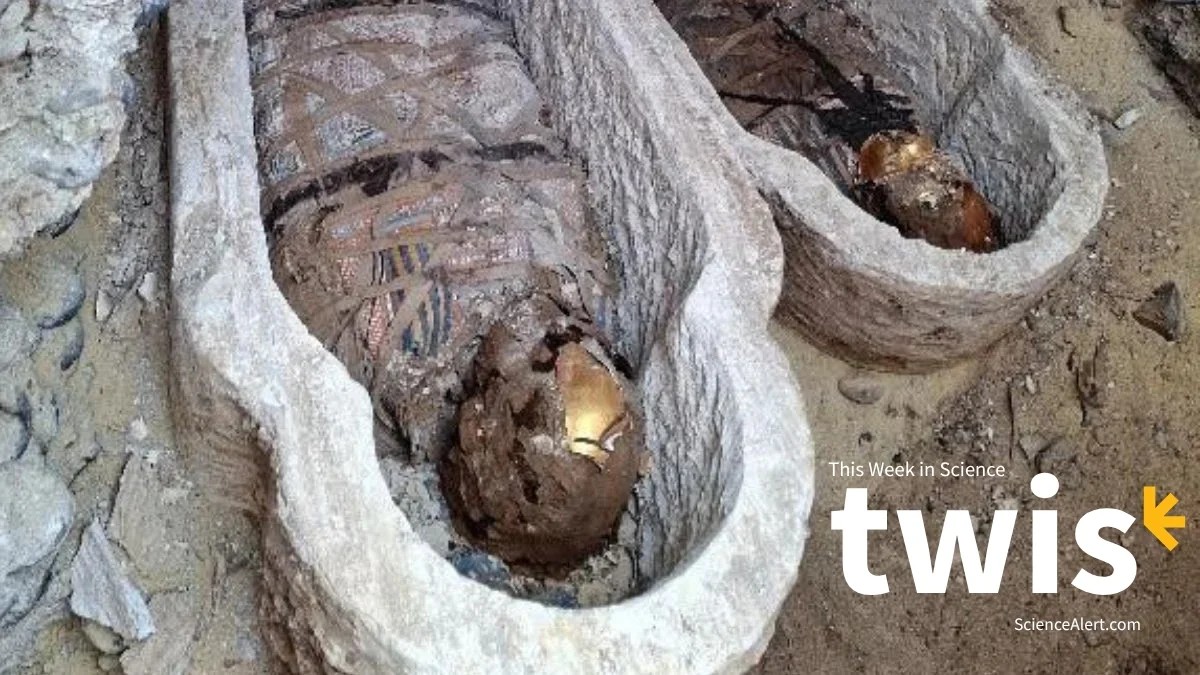
In a rare archaeological find, researchers have identified a 1,600-year-old Egyptian mummy wrapped in papyrus containing text from Homer’s Iliad. The papyrus, though in poor condition, includes an excerpt from Book 2, specifically the “Catalog of Ships.”
This discovery is significant for several reasons:
* Cultural Intersection: It highlights the enduring influence of Greek literature in Egypt centuries after its composition.
* Funerary Practices: It provides new insights into the materials used in mummification, suggesting that valuable literary texts were sometimes repurposed for burial rites.
* Historical Context: The use of a 2,700-year-old text for a 1,600-year-old burial underscores the longevity and reverence of classical works in the ancient world.
Health Breakthroughs: From Viruses to Panic Attacks
Two major studies in medicine offer new hope for treating common yet impactful conditions.
Epstein-Barr Virus Antibodies
Researchers have developed new antibodies against the Epstein-Barr virus (EBV), which infects approximately 95% of adults. While often asymptomatic, EBV can lead to serious complications, including certain cancers and autoimmune disorders. Pathobiologist Crystal Chhan noted that this discovery not only provides a potential therapeutic tool but also validates an innovative approach for identifying protective antibodies against other pathogens.
Repurposing Minocycline for Panic Disorder
A study in mice suggests that minocycline, a common antibiotic, may help alleviate panic attacks. After 14 days of treatment, mice exposed to carbon dioxide—a trigger for panic responses—showed reduced anxiety, calmer breathing, and metabolic changes. This finding opens the door to repurposing existing drugs for mental health treatments, potentially offering a faster path to clinical application than developing new pharmaceuticals from scratch.
Neuroscience: Movement Cleans the Brain
Neuroscientists have uncovered a direct link between physical movement and brain health. The study reveals that movements of the abdominal muscles trigger a mechanism that flushes the brain with fluid, helping to wash away metabolic waste.
This finding challenges the traditional separation between brain and body functions, demonstrating that physical activity is not just beneficial for cardiovascular health but also plays a critical role in neurological maintenance. It serves as a tangible reminder that regular movement, in whatever form it takes, is essential for cognitive health.
Astronomy: An ‘Impossible’ Atmosphere Beyond Neptune
Astronomers have detected an atmosphere on a tiny, icy world located beyond Pluto, in the region of the solar system known as the Kuiper Belt. This object, a trans-Neptunian object (TNO), is significantly smaller than Pluto, making the presence of an atmosphere scientifically unexpected.
The discovery suggests that:
* Small celestial bodies can retain atmospheres under certain conditions.
* Advanced detection methods can identify atmospheres even when they are extremely thin or “next to nonexistent.”
* Our understanding of planetary formation and evolution in the outer solar system may need to be revised.
Conclusion
From the cellular level to the cosmic scale, this week’s scientific advances underscore the complexity of life and the universe. Whether it’s understanding the genetic luck behind longevity, uncovering ancient cultural practices, or finding new ways to treat common illnesses, these discoveries highlight the ongoing quest to understand our world and our place within it.