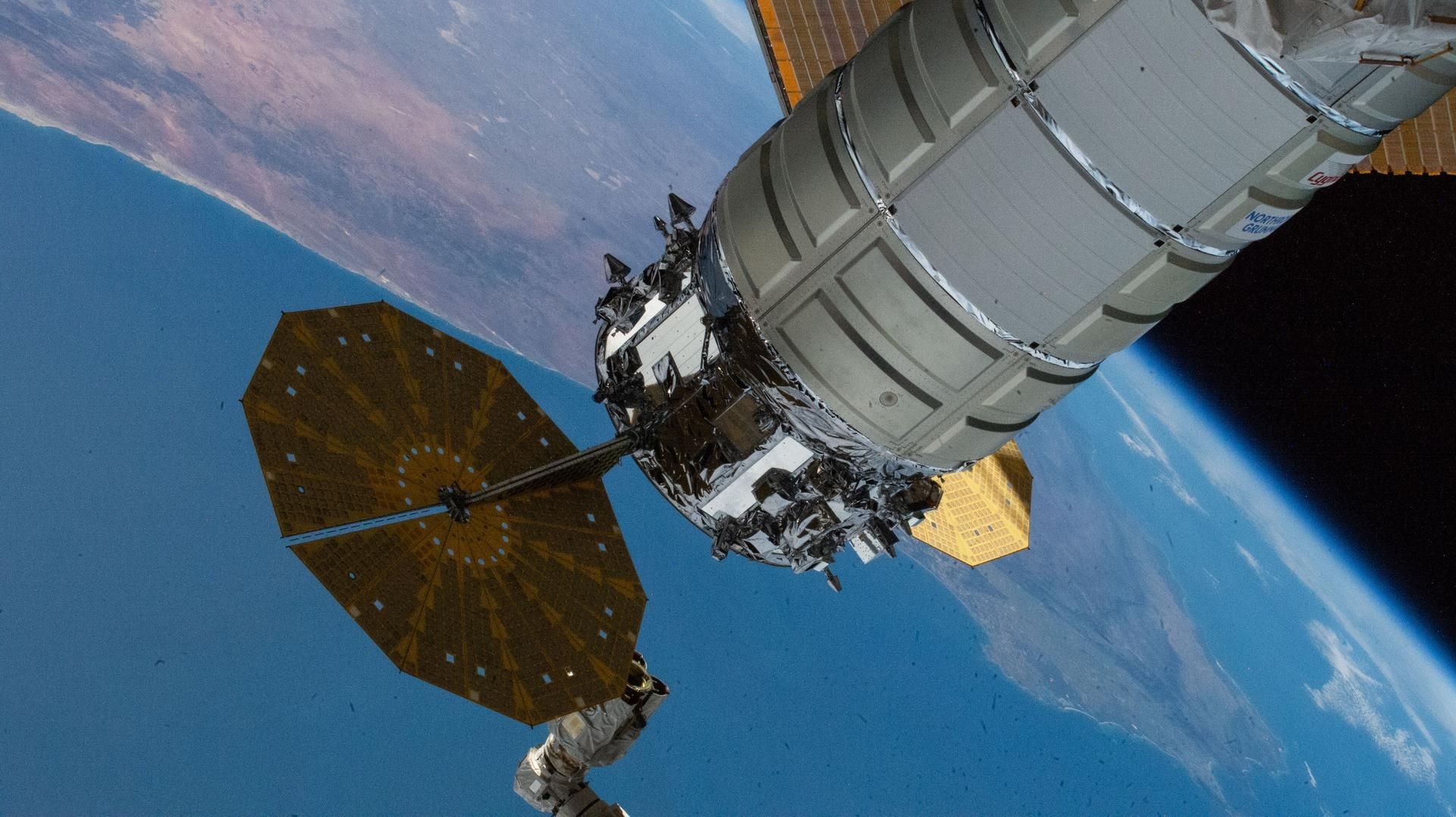
Northrop Grumman’s upgraded Cygnus XL cargo spacecraft is concluding its first mission with a scheduled departure from the International Space Station (ISS) on Thursday, March 12th. The event marks the end of a nearly six-month stay in orbit, during which the spacecraft delivered approximately 11,000 pounds (4,990 kilograms) of vital supplies and scientific equipment to the station.
Mission Overview and Schedule
The departure is slated for 7:05 a.m. EDT (1105 GMT). NASA will broadcast the event live on Space.com and its own channels, with coverage beginning at 6:45 a.m. EDT (1045 GMT). The Cygnus XL, named the S.S. William “Willie” McCool in honor of the Columbia disaster victims, launched on September 14th via a SpaceX Falcon 9 rocket.
Enhanced Cargo Capacity and Initial Hiccups
This mission showcased the larger cargo capacity of the XL variant, which can carry roughly 2,500 pounds (1,134 kg) more than previous Cygnus models. Despite an early engine anomaly during its journey to the ISS, the spacecraft successfully docked on September 18th, only a day behind schedule. The Canadarm2 robotic arm will again be employed to unberth the S.S. William “Willie” McCool from the Unity module before releasing it into Earth orbit.
Planned Reentry
NASA officials confirmed that the Cygnus XL will undergo a controlled, destructive reentry into Earth’s atmosphere over the South Pacific Ocean approximately two days after its release. Unlike SpaceX’s Dragon capsule, which is reusable, the Cygnus spacecraft is designed for single-use, burning up entirely upon reentry.
Role in ISS Logistics
Cygnus XL is one of four key robotic cargo vehicles servicing the ISS, alongside SpaceX’s Dragon, Russia’s Progress, and Japan’s HTV-X. These spacecraft are critical for maintaining the station’s operations, delivering essential resources for long-term research and astronaut support. The continued reliability of these missions is fundamental to the ISS program.
The departure of the Cygnus XL demonstrates a seamless continuation of ISS resupply operations, ensuring a steady flow of materials to the orbiting laboratory.