Tonight, February 24th, stargazers will be able to spot a striking half-lit moon rising in the southern sky. The lunar disk, sharply divided between sunlight and shadow, will appear near the stars of the Taurus constellation.
Lunar Alignment with Taurus and Gemini
The moon’s right half will be brightly illuminated, while the left remains cloaked in darkness. Nearby, the Pleiades star cluster – a dazzling group of over 1,000 blue-white stars – shines approximately 10 degrees below the moon. Further to the moon’s lower left, the “V” formation of the Hyades cluster marks the face of Taurus, with the red giant Aldebaran as its eye.
To the west, Jupiter appears as a steady point of light within Gemini, and closer to the horizon, Sirius – the brightest star in the night sky – blazes in Canis Major, with Orion positioned between it and the moon.
A Glimpse into Lunar History
The moon’s surface is not just beautiful, but a record of billions of years of cosmic collisions. The dark basaltic plains, known as lunar maria, are ancient lava flows that filled the craters left by asteroid impacts. Through binoculars, these features appear even more pronounced.
Observing with Telescopes
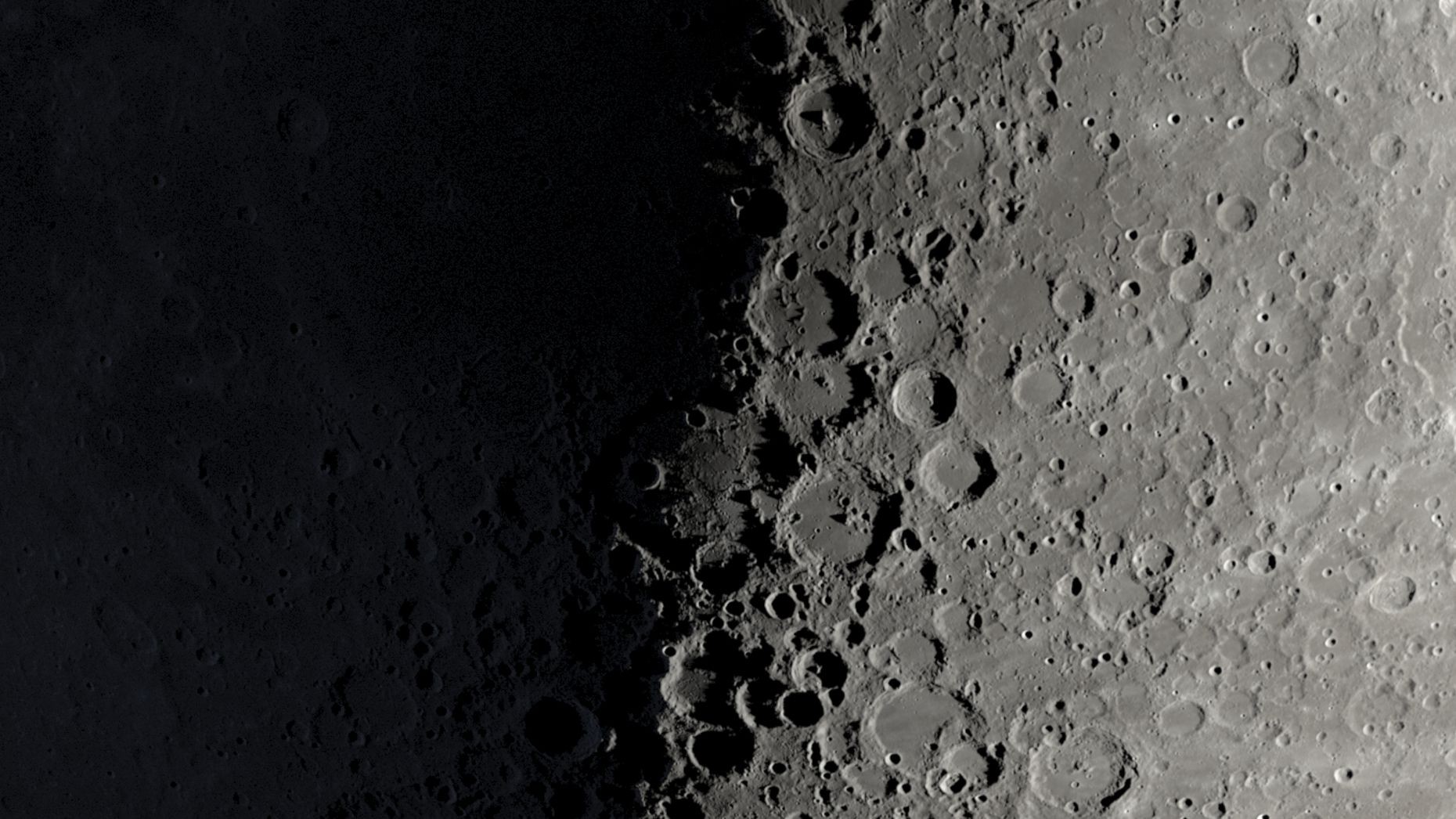
For those equipped with a 6-inch telescope, the terminator – the line separating light and shadow – reveals a wealth of detail. Impact craters like Ptolemaeus, Alphonsus, and Arzachel stand out along this boundary. The Ptolemaeus crater, named after the ancient astronomer Claudius Ptolemaeus, measures 95 miles in diameter.
Further south, Purbach, Regiomontanus, and Walther craters cast dramatic shadows from their central peaks. These triangular shadows provide a unique view of the moon’s violent past.
The first quarter moon offers an accessible opportunity to explore the lunar landscape with even basic equipment, making it a compelling sight for both casual observers and experienced astronomers.