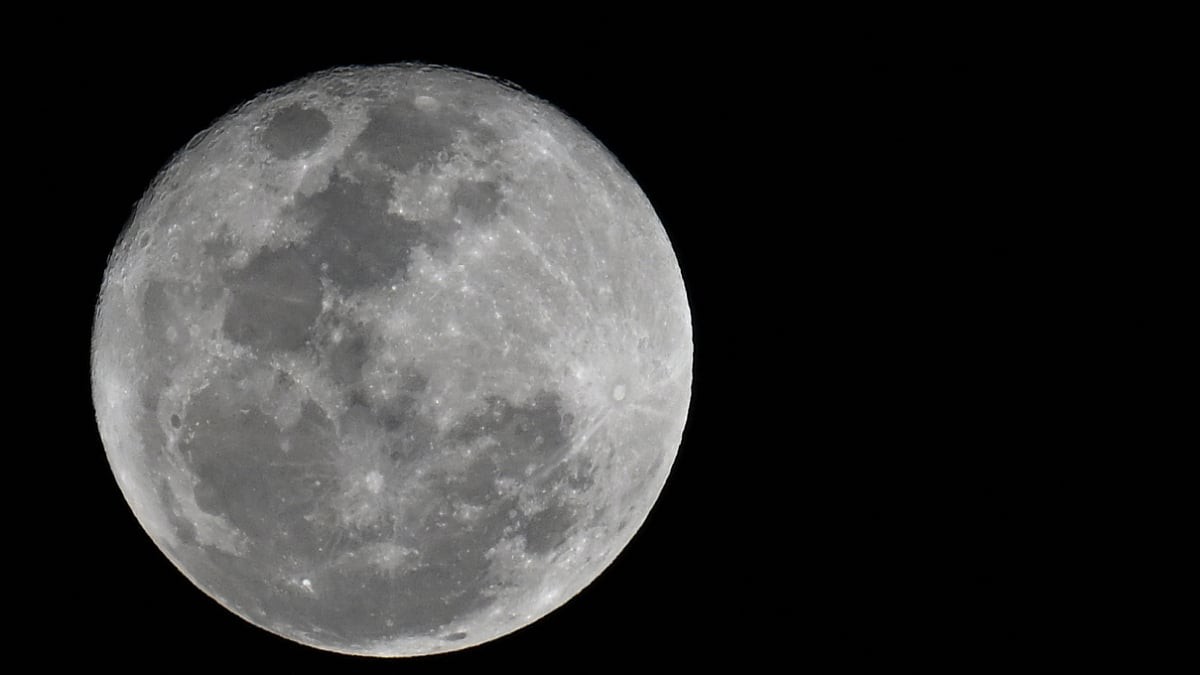
May 2026 is set to be a significant month for stargazers, featuring a rare celestial occurrence: two full moons within a single calendar month. This phenomenon provides two distinct opportunities to observe the Moon at its peak brightness, each carrying its own unique name and astronomical significance.
The “Flower Moon” and the “Blue Moon”
The first full moon of the month arrives on Friday, May 1. Traditionally known as the Flower Moon, this name reflects the seasonal transition of spring. As wildflowers and daffodils begin to bloom across much of the Northern Hemisphere, this lunar cycle has historically served as a celestial marker for the arrival of more vibrant life.
The second full moon occurs at the end of the month, on May 30 (though depending on your time zone, it may fall on May 31). Because this is the second full moon in a single month, it earns the title of a Blue Moon.
Note on terminology: Despite the name, a Blue Moon does not actually appear blue. The term is a purely astronomical designation used to describe the second full moon in a month, a rarity caused by the slight discrepancy between our calendar months and the lunar cycle.
Understanding the Lunar Cycle
To appreciate these events, it is helpful to understand why the Moon appears to change shape. The Moon orbits the Earth roughly every 29.5 days. During this orbit, the Moon’s position relative to the Sun and Earth changes, altering how much of its illuminated surface we can see from our vantage point.
The Moon moves through eight distinct phases:
- New Moon: The Moon is between the Earth and the Sun; its illuminated side faces away from us, making it invisible.
- Waxing Crescent: A small sliver of light becomes visible on the right side.
- First Quarter: Exactly half of the Moon is illuminated on the right.
- Waxing Gibbous: Most of the Moon is lit, but it has not yet reached full illumination.
- Full Moon: The entire face of the Moon is illuminated and visible from Earth.
- Waning Gibbous: The illumination begins to decrease from the right side.
- Third Quarter: Half of the Moon is illuminated on the left side.
- Waning Crescent: A thin sliver of light remains on the left before the cycle resets.
Summary
May 2026 offers a dual lunar spectacle, beginning with the seasonal Flower Moon on May 1 and concluding with a rare Blue Moon on May 30. These events highlight the rhythmic, predictable nature of our lunar cycle and provide a unique window into the mechanics of our solar system.