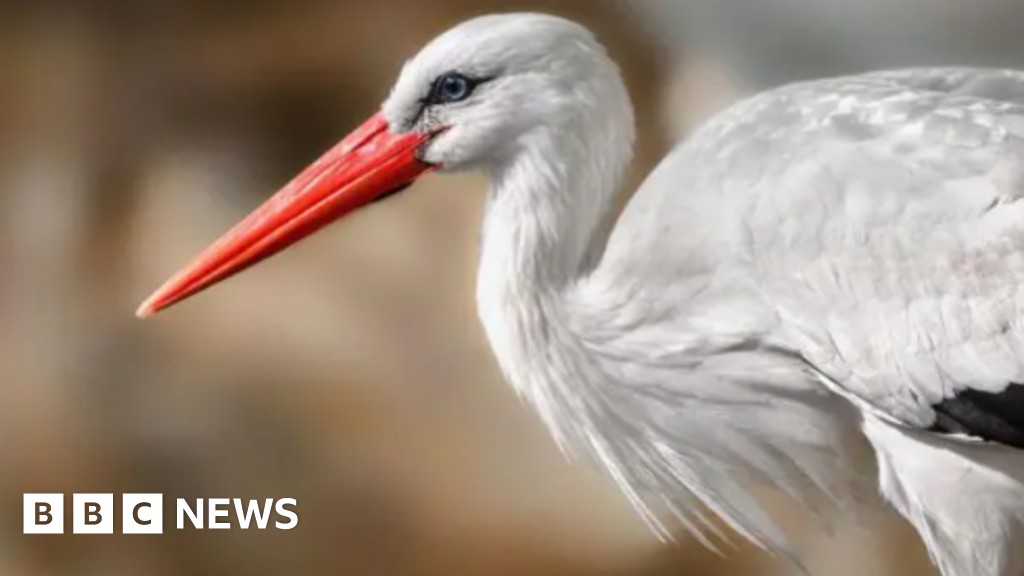
A significant study is underway to gauge public and professional support for reintroducing white storks to Britain. For the first time since their disappearance in the 1400s, these historically native birds are being considered for a large-scale return, driven by efforts to reverse decades of ecological decline.
Sophie Rabone, an ornithologist and PhD student at Harper Adams University in Shropshire, is leading this research. Her work focuses on the feasibility of reintroducing white storks across the UK, examining both the biological adaptability of the species and the social acceptance among farmers, landowners, and the general public.
Why Storks Matter
The white stork is more than just a bird; it is an indicator species. Historically associated with wetlands and farmland—two habitats that have suffered severe degradation in the UK—their presence signals a recovering landscape.
“Reintroducing species like the white stork is one piece of reversing that decline,” Rabone noted.
The UK is currently ranked as one of the most nature-depleted countries in the world. Decades of intensive agriculture, habitat loss, and urban expansion have taken a heavy toll on biodiversity. Rabone argues that restoring species like the white stork is not merely about saving a single bird, but about healing the broader ecosystem, which in turn benefits human populations sharing that space.
Recent Reintroduction Efforts
While the idea may seem novel to many, practical steps have already been taken in recent months:
- North Devon: In June, ten white storks were released as part of a long-term rewilding initiative.
- London: In December, plans were announced to establish a breeding colony at Eastbrookend Country Park in Dagenham. This would mark the first presence of white storks in London in 600 years.
These pilot projects serve as critical test beds. Rabone’s research aims to understand how well the birds adapt to these varied environments and, crucially, how the local communities respond to their arrival.
The Human Element
Reintroduction is not just a biological challenge; it is a social one. Farmers and land managers play a pivotal role in the success or failure of such projects. Their attitudes can determine whether storks find safe nesting sites and sufficient food sources, or face conflict and persecution.
To capture these perspectives, Rabone has launched a survey as part of her doctoral research. She is calling on the public, agricultural workers, and land managers to share their views. The data collected will help determine if a large-scale reintroduction is viable and how best to manage the relationship between these returning birds and the people living alongside them.
Conclusion
The potential return of the white stork to Britain represents a tangible step toward ecological restoration. By combining scientific research with community engagement, this initiative seeks to prove that rewilding can coexist with modern land use, offering a path forward for a depleted natural heritage.