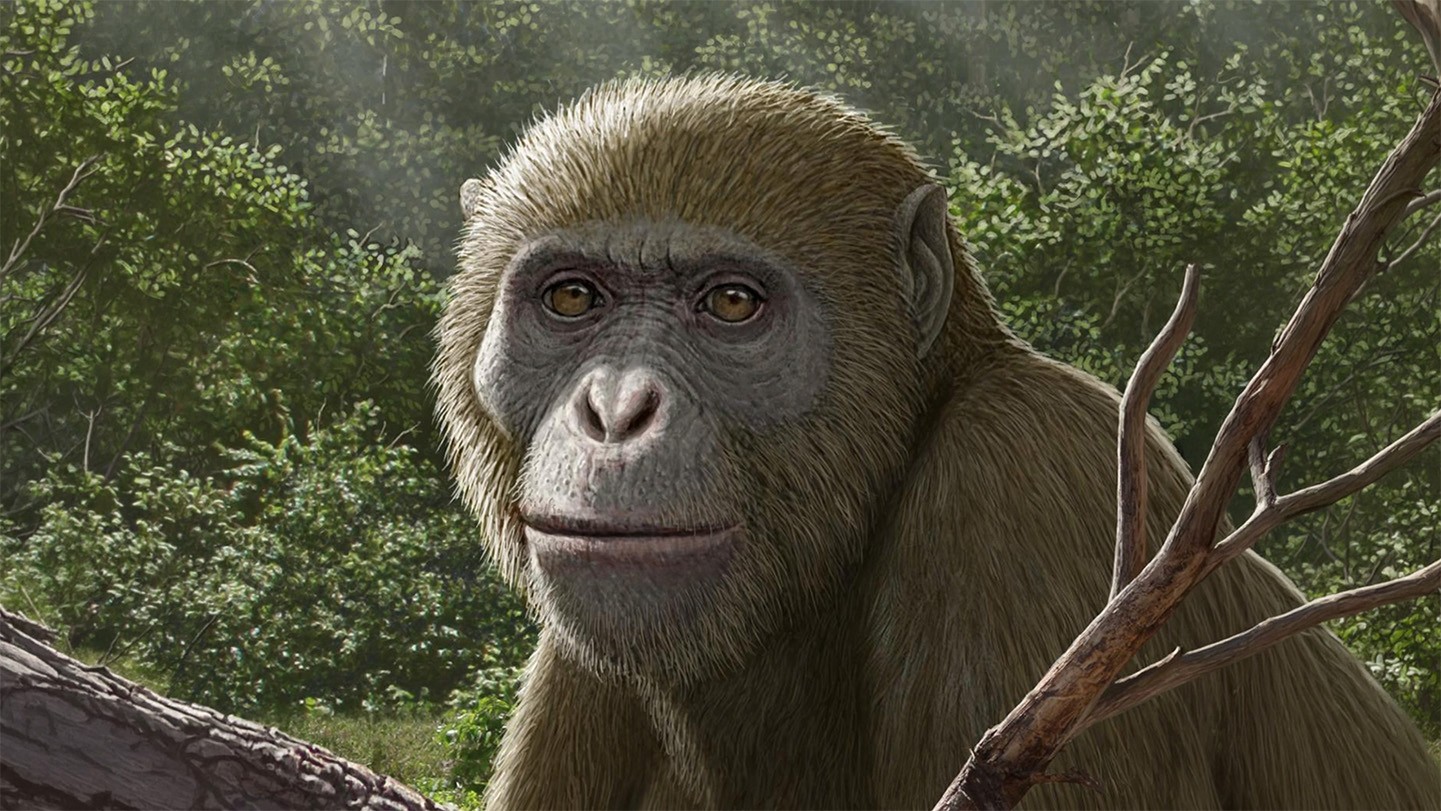
Recent fossil discoveries challenge the long-held belief that modern apes evolved exclusively in East Africa. A newly identified species, Masripithecus moghraensis, unearthed in Egypt, pushes the earliest known ape ancestry further north. This finding, published in Science on March 26, suggests that the evolutionary story of humans, chimpanzees, and gibbons may have unfolded differently than previously assumed.
The Missing Piece in Africa’s Ape Puzzle
For decades, the fossil record has painted East Africa as the primary cradle of ape evolution. However, paleontologist Shorouq Al-Ashqar of Mansoura University in Egypt points out that this view was based on a geographically limited sample. Fossil evidence of monkeys from North Africa and the Middle East dates back to the same Early Miocene period (around 20 million years ago), but apes were notably absent… until now.
The discovery of Masripithecus fills a critical gap. The fossil, a lower jaw with a wisdom tooth, displays distinct ape characteristics: flat teeth and similarly sized molars, unlike those of monkeys. Genetic and physical analyses confirm that this 17-million-year-old ape was closely related to the last common ancestor of modern apes, including gorillas and orangutans. This raises the possibility that apes originated in North Africa or the Middle East before migrating into Eurasia and back into Africa.
Reconstructing the Ape Family Tree
The team combined genetic data with fossil characteristics to refine the ape evolutionary tree. Apes, generally larger than monkeys and tailless, share common ancestry. Masripithecus suggests a more complex migration pattern than previously thought. Statistical analysis indicates that early apes may have first evolved in the north, then spread across Eurasia, with some populations eventually returning to Africa.
Why This Matters
This discovery isn’t just about adding another species to the fossil record; it highlights a fundamental bias in paleontological research. Many regions outside East Africa remain poorly sampled, meaning the true distribution of early apes could be far wider than currently understood. As paleontologist James Rossie of Stony Brook University notes, “This verifies that our view of ape evolution in Afro-Arabia still has huge blind spots.”
Further exploration in North Africa—Morocco, Tunisia, and Libya—may yield additional ape fossils, rewriting the narrative of primate evolution. Al-Ashqar and her team are just beginning. The current fossil only represents the lower jaw of the creature. Its body shape, size, and behavior remain unknown.
In conclusion, Masripithecus challenges the dominance of East Africa in ape evolution, demonstrating that the story is far from complete. The fossil record suggests that early apes may have had a broader distribution than previously imagined. More research is needed to fill the gaps in our understanding of these ancient primates.