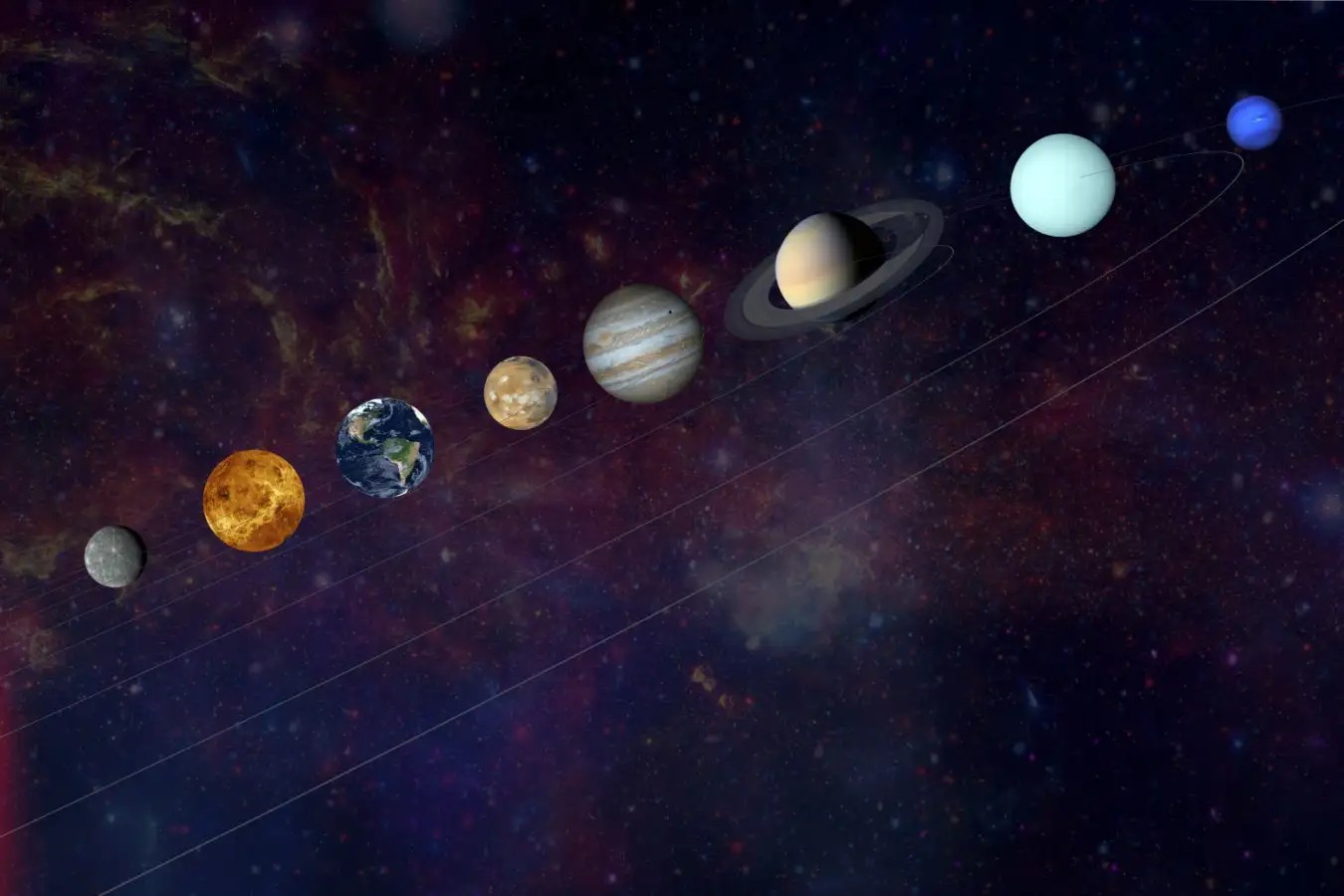
A spectacular celestial event is unfolding: nearly all the planets in our solar system are lining up in the night sky. This “planet parade,” excluding Mars (which is currently hidden on the far side of the sun), will be visible from Earth between February 28th and March 1st, offering a rare opportunity for stargazers.
Why This Alignment Matters
Planetary alignments aren’t common, happening only every few years. The reason is simple geometry: planets orbit at different speeds (Mercury in 88 days, Neptune in 165 years) and sometimes, by chance, they all end up on the same side of the sun. From our perspective, this creates a striking visual line-up.
It’s crucial to understand this isn’t a physical line in space. The planets orbit in roughly the same plane, but their individual tilts prevent perfect alignment. The effect is an optical illusion caused by our viewpoint.
How to View the Alignment
The best viewing days are February 28th and March 1st. Find a dark location with minimal light pollution and look towards the western sky shortly after sunset. The planets will appear in order:
- Mercury: Closest to the sun, it sets quickly after sunset.
- Venus: Visible low on the horizon alongside Mercury.
- Saturn & Neptune: Slightly higher up, requiring binoculars for Neptune.
- Uranus: Best viewed with binoculars.
- Jupiter: The brightest and most visible planet, near the full moon.
While Mercury, Venus, Saturn, and Jupiter are visible to the naked eye, Uranus and Neptune will need optical assistance.
A Lucky Coincidence
This alignment is a reminder of the dynamic, yet predictable nature of our solar system. While rare, these planetary gatherings highlight the beautiful orbital mechanics that govern the cosmos.
Whether you’re a seasoned astronomer or a casual observer, this is an event worth looking up for. The chance to witness six planets in a single glance doesn’t come often.