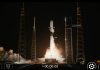
Rocket Lab is set to launch a dedicated mission for Synspective, a Japanese Earth observation company, sending their Strix radar satellite into orbit on Friday, March 20th. The launch, dubbed “Eight Days a Week,” highlights a growing trend in specialized satellite constellations for targeted data collection.
Mission Details and Timeline
The launch is scheduled for 2:10 PM EDT (1810 GMT; 7:10 AM local time in New Zealand) from Rocket Lab’s New Zealand launch site. The Electron rocket will carry the latest Strix satellite, designed for synthetic aperture radar (SAR) imaging. The launch will be streamed live approximately 20 minutes before liftoff, with coverage expected on Space.com.
Strategic Importance of the Strix Constellation
Synspective’s Strix constellation is being built to provide high-resolution radar data over Japan. This capability is crucial for urban planning, infrastructure monitoring, disaster response, and construction projects. Radar satellites are particularly valuable because they can see through clouds and operate day or night, unlike optical imaging systems.
Long-Term Partnership and Future Launches
This mission marks the eighth launch for Synspective conducted by Rocket Lab, solidifying a strong partnership. The company has contracted for an additional 20 Electron launches through 2029 to complete the constellation. This long-term commitment underscores the rising demand for dedicated, responsive space access from companies like Rocket Lab.
Electron’s Track Record and Versatility
The “Eight Days a Week” mission will be the 77th launch for the Electron rocket, which first flew in 2017. Rocket Lab also operates a suborbital version called HASTE for hypersonic testing, demonstrating the versatility of their launch systems.
The increasing number of specialized satellite launches emphasizes a shift towards smaller, more frequent missions tailored to specific commercial and government needs. This contrasts with older, larger satellite programs that were often multi-purpose but slower to deploy. The trend suggests a more agile and data-driven approach to space-based Earth observation.