



As antibiotic resistance surges, researchers are turning to innovative and sustainable antimicrobial strategies. A new study reveals that zinc oxide nanoparticles (ZnONPs) created from desert plant extracts exhibit broad-spectrum antimicrobial activity against bacteria, yeasts, and fungi in laboratory tests. This “green” synthesis approach, using readily available desert flora, offers a potentially eco-friendly alternative to conventional nanoparticle production methods.
Harnessing Desert Resilience
The study, published in Biomolecules and Biomedicine, focused on four plant species native to Tunisia’s harsh arid environments: Thymelaea hirsuta, Aloe vera, Retama monosperma, and Peganum harmala. These plants, often overlooked or even considered invasive, possess rich phytochemical profiles that contribute to both nanoparticle stability and antimicrobial potency. Researchers found that transforming these plants into nanoscale zinc oxide particles yielded surprisingly effective antimicrobial agents.
Why This Matters: Conventional nanoparticle synthesis can be energy-intensive, costly, and environmentally damaging. Green synthesis offers a more sustainable route, using plant extracts as natural reducing and stabilizing agents, avoiding toxic chemicals and often resulting in more uniform particles. This approach taps into underutilized resources while addressing growing concerns about environmental impact.
The Green Synthesis Process
The process involved extracting aqueous solutions from the dried and ground plant material, then mixing them with zinc acetate under controlled heating. This simple reaction yielded ZnONPs uniquely identified by their plant source. The resulting nanoparticles were then characterized for size, surface chemistry, and antimicrobial activity.
Key Findings: The plant-derived compounds coating the nanoparticles, including phenolic acids and flavonoids, not only stabilized the particles but also likely contributed to their biological effects. The phytochemicals appear to play a dual role: driving the formation of zinc oxide nanoparticles and enhancing their antimicrobial properties.
Broad-Spectrum Antimicrobial Activity
The plant-based ZnONPs demonstrated notable inhibitory effects against a panel of clinically relevant microbes, including Gram-positive and Gram-negative bacteria, Candida yeasts, and Aspergillus fungi.
- Bacteria: Aloe vera -derived nanoparticles produced the largest inhibition zones against certain Gram-positive bacteria, while those from the other plants also suppressed growth, particularly of Staphylococcus aureus and Micrococcus luteus.
- Yeasts: Aloe vera ZnONPs inhibited all Candida species tested, and Peganum harmala ZnONPs showed strong activity against Cryptococcus neoformans.
- Filamentous fungi: ZnONPs from Peganum harmala and Aloe vera were especially effective against Aspergillus species, including A. fumigatus, a significant cause of invasive fungal disease.
Notably, the corresponding plant extracts and zinc acetate alone exhibited weak or negligible antimicrobial effects, suggesting that the nanoscale transformation significantly enhances potency.
Computational Insights into Mechanism
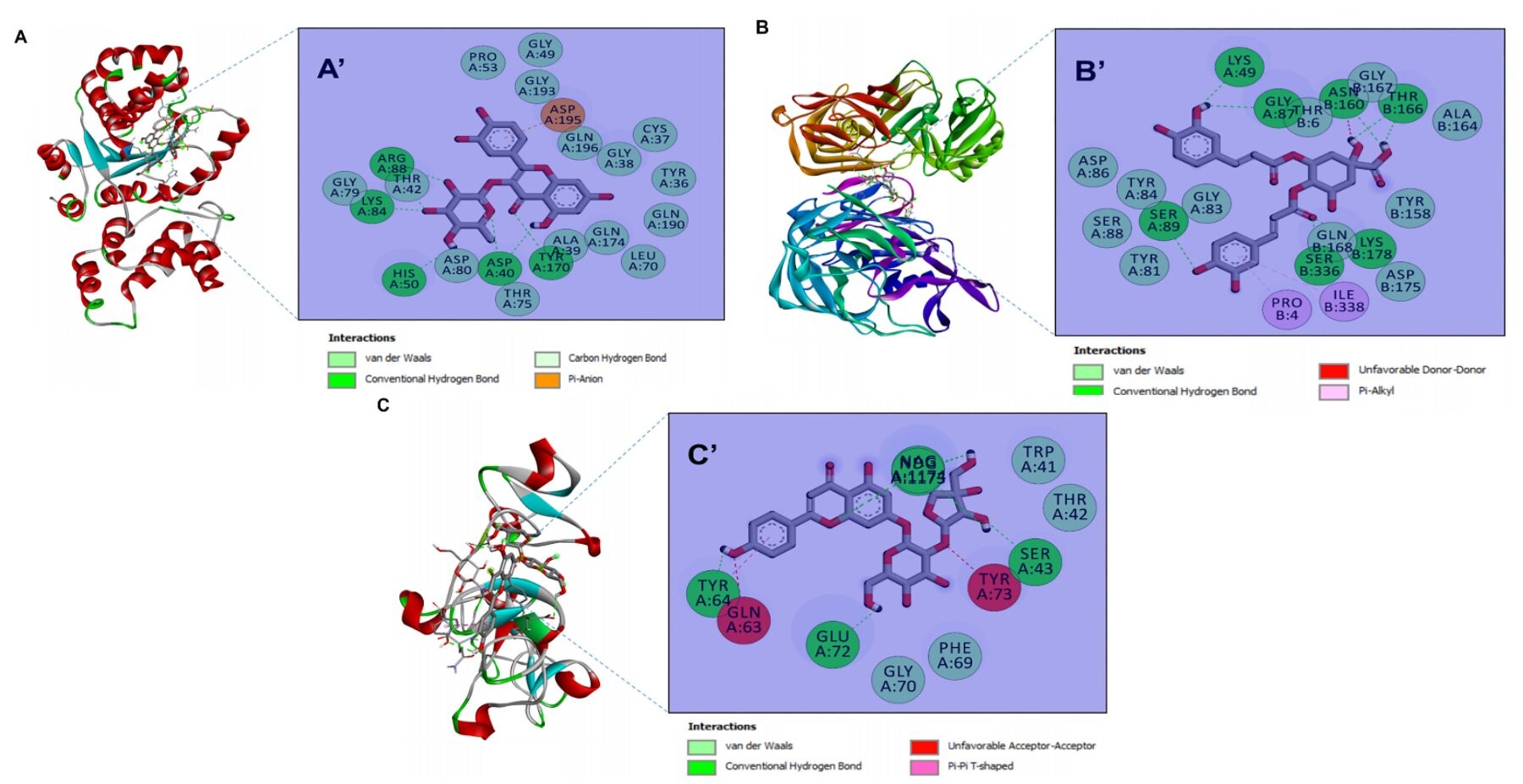
To explore potential mechanisms, researchers used molecular docking to model how plant-derived compounds might interact with microbial protein targets. Several phytochemicals showed strong predicted binding to bacterial and fungal enzymes, forming multiple hydrogen bonds within active site pockets. These compounds also displayed favorable drug-likeness and bioavailability profiles, suggesting they could be chemically accessible for synthesis.
Implications: While experimental validation is still needed, these findings support the idea that both the zinc oxide core and the plant-derived surface molecules contribute to the observed antimicrobial effects. The compounds appear to engage key microbial targets, potentially disrupting essential functions.
Future Directions and Cautions
The study highlights several advantages of plant-based ZnONPs: sustainable production, broad-spectrum activity, and opportunities to tune stability and biological activity. However, further research is crucial.
Key Areas for Future Study:
- Optimizing nanoparticle size and uniformity.
- Evaluating long-term stability.
- Assessing safety, including cytotoxicity toward human cells and environmental impacts.
- Conducting in vivo studies and developing real-world formulations.
Even with these cautions, the results provide a foundation for exploring green-synthesized zinc oxide nanoparticles as part of a broader toolkit against microbial infections, particularly in an era of rising antimicrobial resistance and growing demand for sustainable technologies