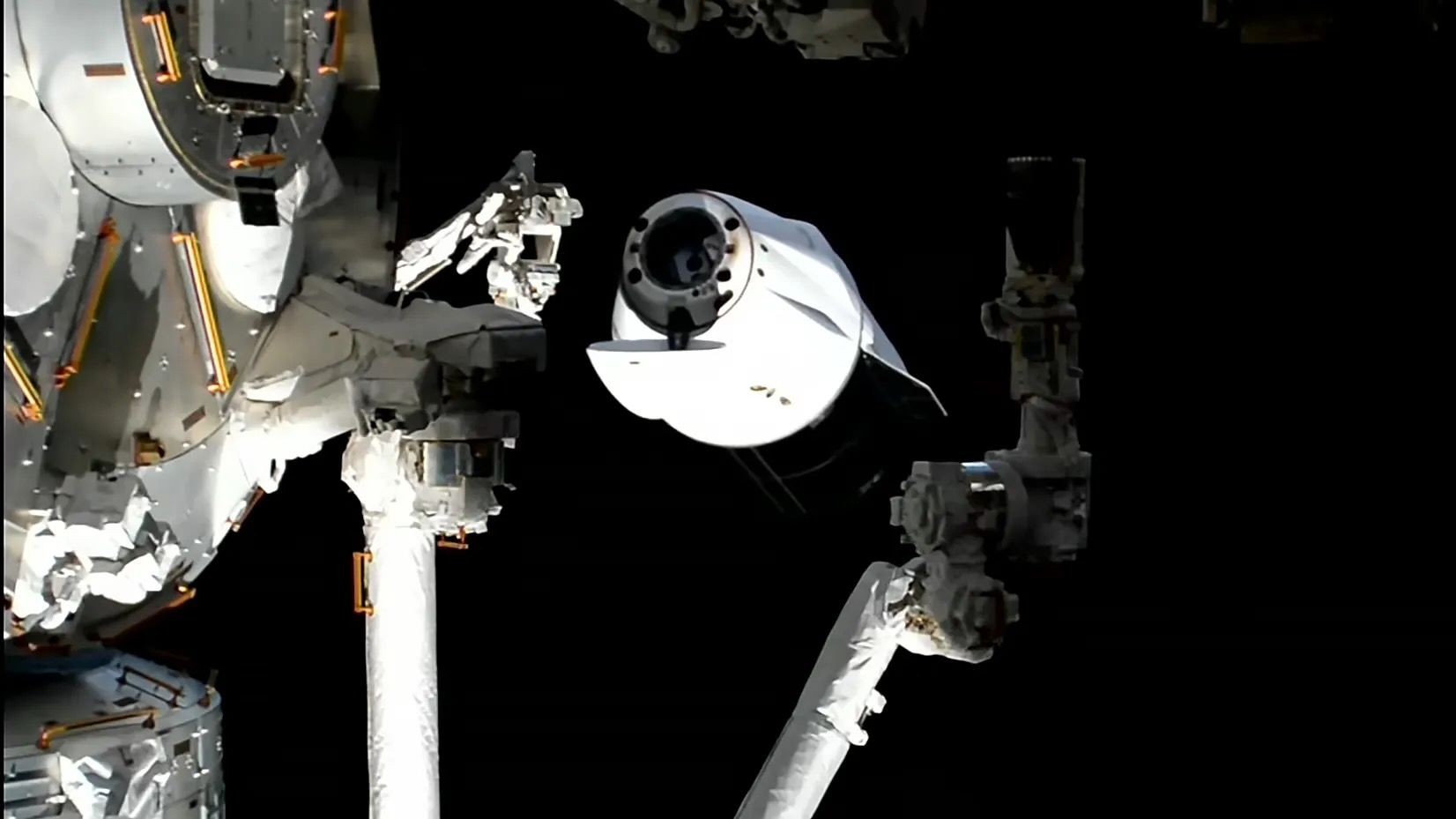
A SpaceX Dragon cargo capsule successfully splashed down in the Pacific Ocean off the California coast early Friday, February 27th, completing its six-month stay at the International Space Station (ISS). This mission marked a significant step forward for commercial space operations, as the Dragon capsule not only delivered over 2,270 kilograms of supplies but also demonstrated a crucial new capability: independently reboosting the ISS to maintain its orbit.
What Happened?
The capsule undocked from the ISS on February 26th at 12:05 p.m. EST, concluding the 33rd Commercial Resupply Services (CRS-33) mission for NASA. SpaceX confirmed the splashdown at approximately 2:44 a.m. EST, marking the 33rd successful return of a Dragon capsule. The mission included six orbital reboosts performed between January and February, countering the natural atmospheric drag that gradually lowers the station’s altitude.
Why This Matters
Historically, Russia’s Progress spacecraft have been the primary means of ISS reboosting. However, with Russia’s long-term participation in the ISS program uncertain beyond its planned deorbiting in 2030, alternative methods are critical. SpaceX’s Dragon – and Northrop Grumman’s Cygnus – have now proven they can perform this essential function, ensuring the station’s operational longevity. This diversification reduces reliance on any single partner and safeguards the ISS’s future.
Scientific Payload & Reusability Advantage
The Dragon isn’t just returning empty; it carries valuable scientific experiments back to Earth, including samples from the Euro Material Aging study, which assesses the long-term degradation of materials in space, and data from Thailand’s Liquid Crystals experiment, which examines the behavior of electronic films in microgravity. These studies are aimed at improving spacecraft durability and advancing display technologies.
Unlike other ISS cargo craft (like Progress, Cygnus, and Japan’s HTV-X) designed to burn up upon re-entry, Dragon is reusable. This allows SpaceX to continue hauling both cargo to and from the station efficiently, maximizing its value.
“Dragon performed six reboosts…before preparations for its departure began,” NASA officials stated, highlighting the capsule’s successful demonstration of a vital ISS maintenance capability.
The successful return of the Dragon confirms SpaceX’s growing role in sustaining the ISS and paves the way for further commercial contributions to orbital operations. This mission underscores the increasing importance of private space companies in maintaining a critical international scientific asset.