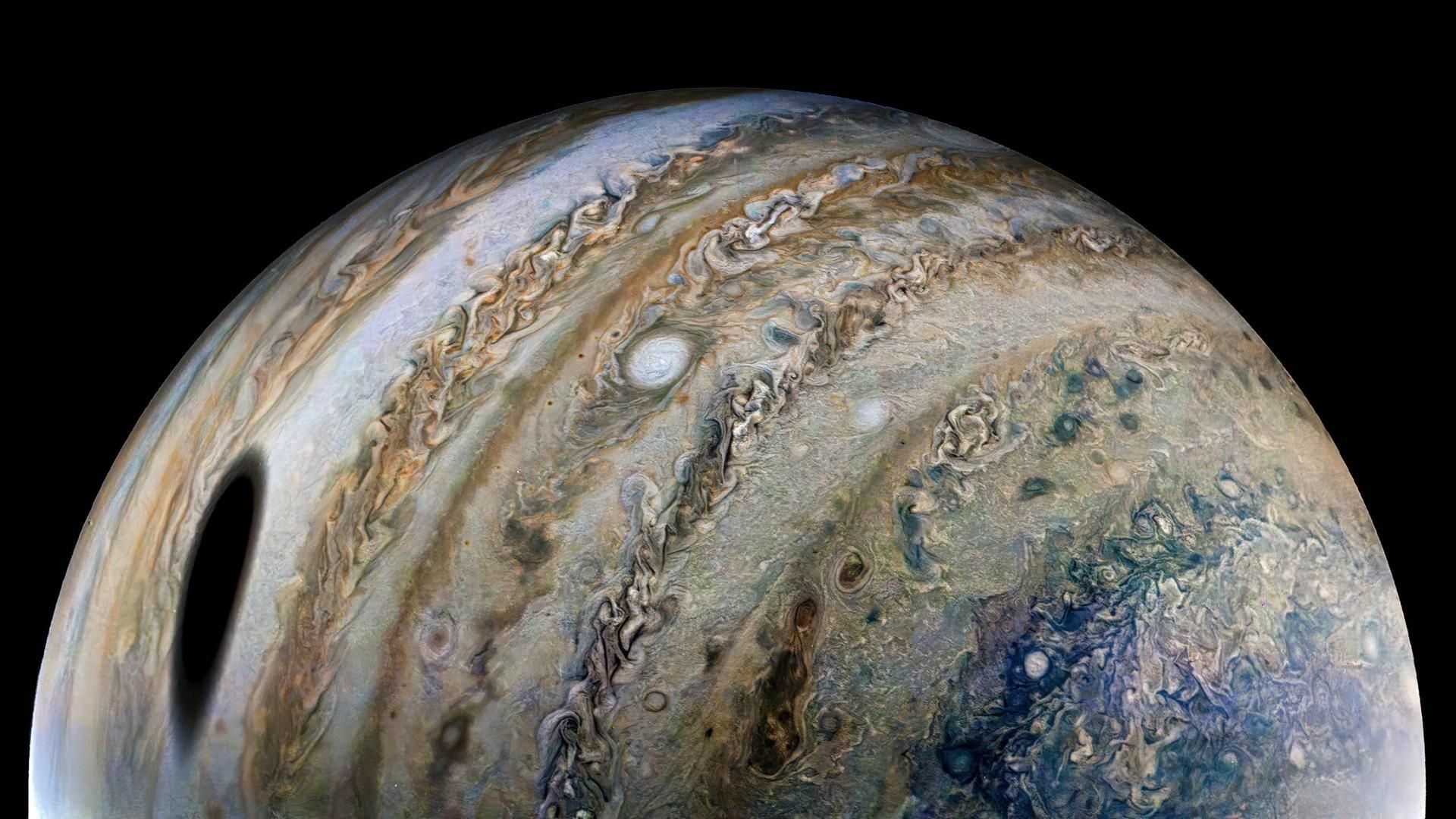
For decades, scientists have relied on outdated measurements of Jupiter’s size and shape. Now, thanks to the Juno spacecraft, it’s clear the gas giant is slightly smaller and flatter than previously believed – a difference that, while subtle, will require updates to astronomy textbooks and refine models of planetary formation.
The Shift in Measurement
The new data comes from analyzing radio signals transmitted from Juno as it orbits Jupiter. The signals bend as they pass through the planet’s atmosphere, a phenomenon that scientists used to refine Jupiter’s dimensions. Previous measurements, dating back 50 years to the Voyager and Pioneer missions, were less precise and didn’t account for the planet’s atmospheric effects as thoroughly.
The revised figures show Jupiter’s polar radius is 41,534 miles (66,842 km) – about 7.5 miles (12 km) smaller than earlier estimates. At the equator, the radius measures 44,421 miles (71,488 km), roughly 2.5 miles (4 km) less than the standard value.
Why These Kilometers Matter
While the differences seem small, they have significant implications. Accurate measurements of a planet’s size directly influence our understanding of its internal structure and composition. This is crucial not just for Jupiter, but for modeling other gas giants both within and outside our solar system.
“Shifting the radius by just a little lets our models of Jupiter’s interior fit both the gravity data and atmospheric measurements much better,” explained study co-author Eli Galanti. The improved data helps reconcile gravitational readings with atmospheric observations, leading to a more complete picture of the planet’s inner workings.
Implications for Planetary Science
Jupiter is thought to be the first planet to form in our solar system. Studying its structure provides vital clues about the early stages of planetary formation and evolution. By refining our understanding of Jupiter, scientists gain insight into how other planets, including Earth, came to be.
“This research helps us understand how planets form and evolve… Jupiter was likely the first planet to form in the solar system, and by studying what’s happening inside it, we get closer to understanding how the solar system, and planets like ours, came to be.” – Yohai Kaspi, study co-author.
The updated measurements aren’t just academic; they represent a leap forward in our ability to interpret data from distant exoplanets, pushing the boundaries of astronomical knowledge.
The updated data confirms that even seemingly small refinements to planetary measurements can have a substantial effect on the broader field of planetary science, and will force revisions to existing models.