Paleontologists have unearthed a groundbreaking fossil in Utah that pushes back the origins of spiders, scorpions, horseshoe crabs, and their relatives by 20 million years. The creature, named Megachelicerax cousteaui, lived during the Middle Cambrian period – roughly 500 million years ago – and is the oldest known member of the chelicerate subphylum. This discovery challenges previous timelines and clarifies how these iconic arthropods evolved.
The Fossil and Its Significance
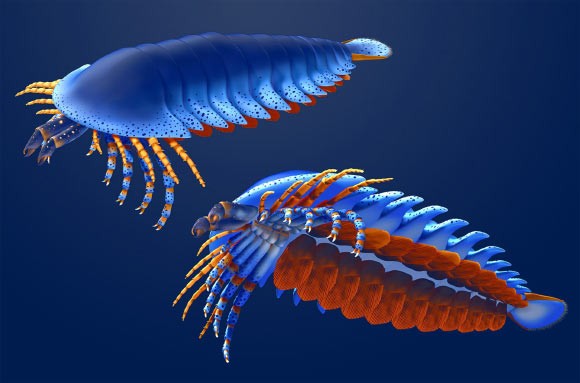
The fossil was found in the Wheeler Formation of Utah’s House Range, a region known for its exceptional Cambrian-era fossils. Megachelicerax was a soft-bodied predator approximately 8 centimeters (3.1 inches) long. Its preserved exoskeleton shows a distinct head shield and nine body segments, bearing six pairs of limbs specialized for feeding and sensing. Beneath the body are plate-like structures reminiscent of the book gills found in modern horseshoe crabs – suggesting early respiratory adaptations.
However, the most crucial feature is its unmistakable chelicera: the pincer-like appendages that define chelicerates and separate them from insects. Insects use antennae for sensing, while chelicerates wield grasping tools that often deliver venom. This makes Megachelicerax the earliest unambiguous example of a chelicerate in the fossil record.
Filling a 20-Million-Year Gap
Before this find, the oldest confirmed chelicerates dated to around 480 million years ago, from the Early Ordovician Fezouata Biota of Morocco. The new fossil closes that gap, indicating that chelicerate anatomy was already forming 500 million years ago.
The discovery clarifies how chelicerates fit into the broader arthropod family tree. Megachelicerax represents an early branch, bridging the gap between Cambrian arthropods that appeared to lack chelicera and the more familiar horseshoe crab-like chelicerates.
Evolutionary Puzzle Pieces Falling into Place
“Megachelicerax shows that chelicera and the division of the body into two specialized regions evolved before the head appendages lost their outer branches and became like the legs of spiders today,” explains Dr. Javier Ortega-Hernández of Harvard University. The fossil supports multiple earlier hypotheses, resolving some long-standing debates about chelicerate evolution.
The timing is also significant. The Cambrian Explosion was a period of rapid evolutionary change, and Megachelicerax demonstrates that complex anatomy was already present soon after this burst of innovation. Despite this early complexity, chelicerates didn’t immediately dominate. They remained relatively obscure for millions of years, overshadowed by trilobites and other groups, before eventually colonizing land.
Timing and Context Matter in Evolution
The fossil reinforces a critical lesson: evolutionary success isn’t just about innovation; it’s about timing and environmental context. Other animal groups have followed similar patterns, developing advanced features that didn’t lead to immediate dominance. The fossil shows that the anatomical blueprint for spiders and scorpions was already emerging half a billion years ago, but the ecological conditions weren’t right for them to thrive until much later.
The findings are published in the journal Nature.
The discovery of Megachelicerax cousteaui fundamentally alters our understanding of arthropod evolution, proving that key features of spiders, scorpions, and their kin were present far earlier than previously believed. This fossil offers a rare glimpse into the Cambrian oceans, where complex predators were already testing the boundaries of life on Earth.