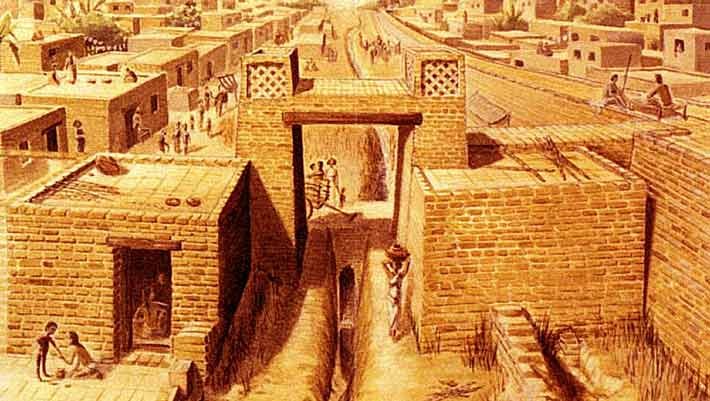
New research confirms that severe, multi-decadal droughts played a key role in the slow collapse of the Indus Valley Civilization, one of the world’s earliest urban societies. The study, published in Communications Earth & Environment, highlights the vulnerability of complex societies to long-term environmental stress, particularly water scarcity.
The Rise and Fall of a Riverine Civilization
The Indus Valley Civilization flourished from around 5,000 to 3,500 years ago in modern-day Pakistan and northwest India, centered around the Indus River and its tributaries. At its peak (4,500–3,900 years ago), it featured advanced urban planning, intricate water management, and a unique writing system. However, around 3,900 years ago, this civilization began a long decline that ultimately led to its collapse. The causes have been debated for decades.
Climate Simulations Reveal the Truth
Researchers used climate modeling combined with paleoclimate data (stalactites, lake records) to reconstruct conditions in the Indus Valley between 5,000 and 3,000 years ago. They found evidence of a slight temperature increase (0.5°C) and a rainfall reduction (10–20%) over the period. More critically, they identified four prolonged droughts, each lasting over 85 years, between 4,450 and 3,400 years ago. These droughts affected between 65% and 91% of the region.
How Droughts Reshaped Society
Early settlements (5,000–4,500 years ago) concentrated in wetter areas. But as droughts intensified after 4,500 years ago, populations shifted closer to the Indus River itself, likely in response to dwindling rainfall. The most severe drought, lasting 113 years between 3,531 and 3,418 years ago, coincided with archaeological evidence of widespread abandonment of urban centers.
“The Indus Valley Civilization likely did not collapse suddenly, but rather declined slowly, with prolonged droughts being a major factor.”
The Long View: Environmental Stress and Societal Resilience
The study suggests that the civilization didn’t fall due to a single catastrophic event but succumbed to sustained environmental pressures. This research underscores a critical lesson for modern societies: even advanced civilizations are not immune to the impacts of prolonged climate change, especially when it affects essential resources like water. Understanding these ancient vulnerabilities can help us better prepare for the challenges of a changing climate today.
H. Solanki et al. 2025. River drought forcing of the Harappan metamorphosis. Commun Earth Environ 6, 926; doi: 10.1038/s43247-025-02901-1