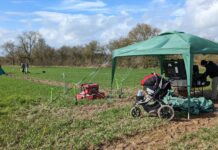
Archaeological excavations in eastern Senegal have unearthed a remarkably well-preserved iron-smelting workshop dating back over 2,400 years, challenging conventional timelines for iron production in Africa. The site at Didé West 1 shows continuous activity from the 4th century BCE to the 4th century CE – nearly eight centuries – providing unprecedented insight into early ironworking practices in West Africa.
A Unique Find in the Falémé Valley
The workshop itself is striking in its scale and preservation. Researchers uncovered a massive heap of approximately 100 tons of slag (waste product from smelting), 30 clay tuyères (air pipes), and 35 circular furnace bases. This indicates a long-term, localized iron production facility likely serving nearby agricultural communities.
Why this matters: The Iron Age is typically framed as a European phenomenon, but this discovery firmly establishes iron metallurgy’s independent development in Africa centuries earlier than previously believed.
The FAL02 Tradition: Innovation in Design
The smelting technique employed at Didé West 1 falls into a tradition known as FAL02. This method features small, circular furnaces with removable chimneys and large clay tuyères with a unique multi-hole design.
Instead of a single air outlet, these tuyères have multiple small openings that distribute air evenly across the furnace base. This suggests an advanced understanding of airflow management for efficient smelting.
Palm Nut Seeds: An Unusual Discovery
Further analysis revealed another unusual element: palm nut seeds packed at the base of the furnaces. This practice has not been previously documented in other metallurgical contexts, suggesting a localized innovation.
The stability of this technique is notable. Despite operating for eight centuries, the workshop underwent only minor technical adjustments, contrasting with other metallurgical sites across Africa. This suggests a deliberate cultural and technical continuity.
Implications for Historical Understanding
The longevity and stability of this workshop provide a rare opportunity to study iron production over the long term. The findings highlight the importance of recognizing the independent technical and cultural choices made by early African metallurgists, rather than imposing external frameworks.
“This site is truly unique… It offers a rare opportunity to study the continuity and adaptation of an iron smelting technique over the long term,” says Dr. Mélissa Morel, the lead archaeologist from UNIGE.
The research, published in the African Archaeological Review, underscores the need to re-evaluate existing timelines for iron metallurgy and acknowledge its diverse origins. This discovery is a powerful reminder that technological development occurred independently across the globe, shaped by local resources and ingenuity.