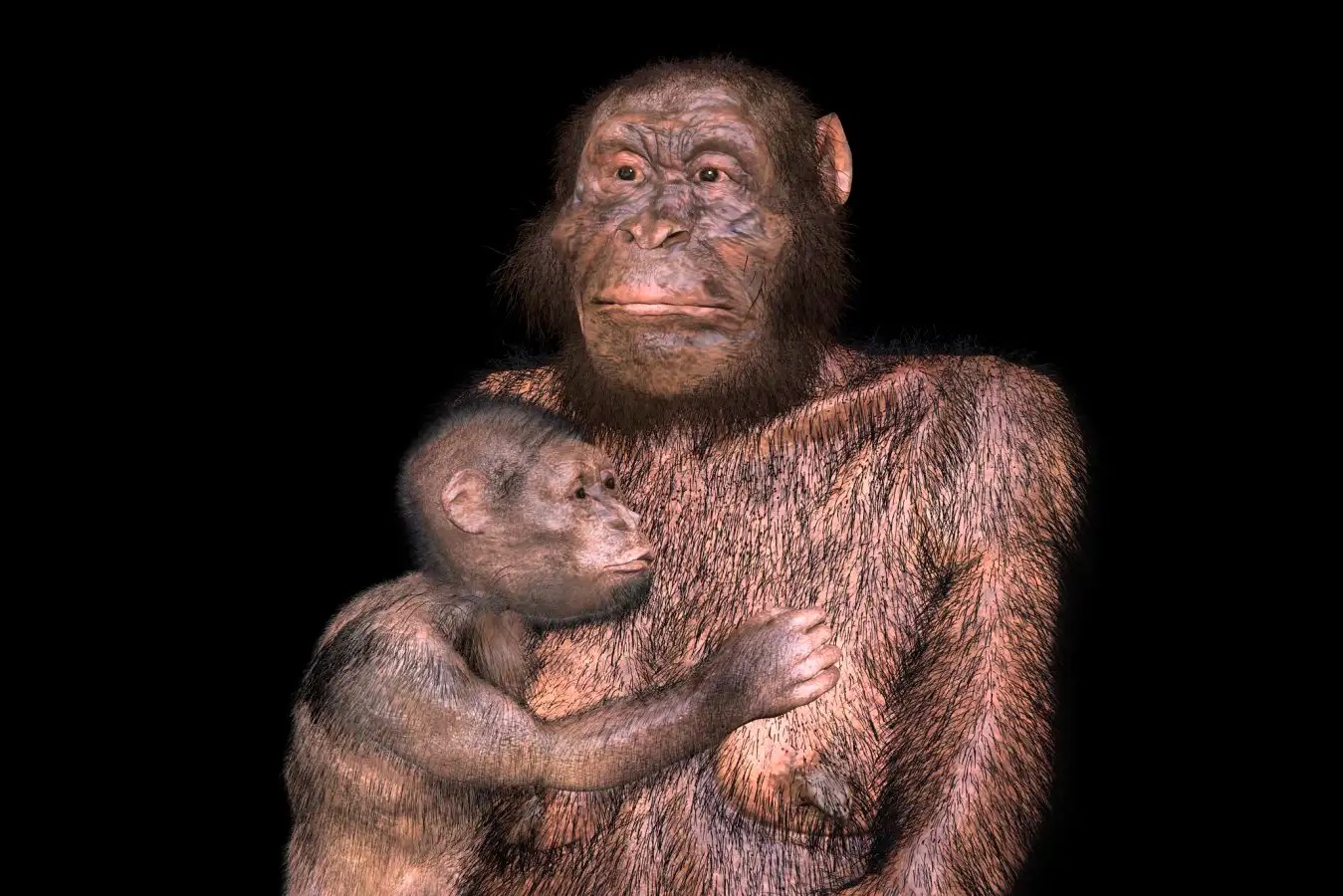
The challenges of childbirth were not exclusive to modern humans. New research suggests that our extinct relatives, Australopithecus, likely experienced similarly difficult and potentially damaging deliveries. A study analyzing the structure of Australopithecus pelvises reveals that labor exerted significant force on their pelvic floors, increasing the risk of perineal tearing—a problem still faced by many women today.
The Evolutionary Trade-Off
The study, led by Pierre Frémondière at Aix-Marseille University, underscores a fundamental biological constraint: giving birth to a large-brained infant through a relatively narrow pelvic opening is inherently stressful. This isn’t a modern problem; it’s a deep-rooted evolutionary reality. Many women today tear their pelvic floor during childbirth, with roughly one in four experiencing long-term disorders like incontinence or organ prolapse. The question was whether our extinct ancestors faced the same risks.
Australopithecus, which roamed Africa between 2 and 4 million years ago, walked upright but retained adaptations for arboreal life. These hominins represent a crucial step in human evolution, potentially being direct ancestors of the Homo genus. Their pelvic structure held the key to understanding their birthing experience.
Modeling Ancient Labor
Researchers focused on three Australopithecus species—afarensis, africanus, and sediba —leveraging the limited fossil evidence available. They used MRI scans of a pregnant woman to model pelvic floor muscles, adapting the anatomy to fit the Australopithecus pelvises. Simulations then estimated the forces exerted during childbirth.
The results were striking: the Australopithecus pelvic floor experienced pressures of 4.9 to 10.7 megapascals, comparable to the 5.3 to 10.5 MPa recorded in modern human births. This suggests that the physical challenges of childbirth have been consistent for millions of years.
Caveats and Future Research
While the study is robust in its methodology, it’s not without limitations. The dataset remains small, with only three Australopithecus pelvises analyzed. Moreover, there’s uncertainty about whether the pelvic floor muscles of these hominins differed from ours. The simulations also simplify some aspects of labor, such as fetal rotation, potentially affecting accuracy.
“We are just at the beginning of this kind of study,” says Frémondière.
Further research, including more fossil discoveries and refined biomechanical modeling, will be crucial for a complete understanding. However, this work offers a powerful glimpse into the ancient struggles faced by our ancestors, reminding us that some biological challenges transcend time.
The findings reinforce the idea that childbirth has long been a physically demanding process for hominins, shaped by the evolutionary pressures of brain size and bipedalism.