It gets dark. Really dark.
May’s new moon drops on Saturday, May 16. 4:01 p.m. EDT. The moon slides right past the sun. Disappears during the day. This means the weekend skies will be nearly black. Perfect conditions for hunting down the Milky Way, catching planets that usually hide in the twilight, and actually seeing spring constellations without that pesky lunar glare getting in the way.
Chasing Planets
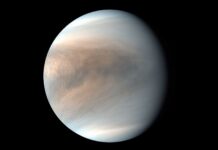
Look west as the sun sets. You’ll find Venus.
It shines as a hard “evening star,” sitting roughly 20 degrees up from the horizon. About two fist-widths held at arm’s length. To its upper left, Jupiter glows another twenty degrees over. Look higher and you’ll spot Castor and Pollux in Gemini. Grab some binoculars if you have them—10×50 works best—and aim at Jupiter. You’ll see a cluster of pinpoints surrounding the giant planet.
These aren’t random stars. They’re the Galilean moons: Io, Europa, Ganymide, and Callisto. Galileo discovered them, so they got the naming rights.
Early birds win more than just coffee.
If you can handle the early rise, the east side has Saturn waiting. It hovers above the eastern horizon in that last hour before dawn. Mars rises just below it to the left. They are chased by the approaching sunlight. Both planets stay low, clinging to the sky less than 20 degrees high. You need a clear view to the horizon. No buildings. No trees. Or they vanish into the sunrise glare.
Spring’s Celestial Zoo
The new moon makes the fainter stars pop.
Start with Leo. The Lion’s head is marked by that sickle-shaped pattern of stars. It sits high over the southwest after sunset, with Regulus hanging at the bottom of the curve. Ptolemy drew this out 2,000 years later than he lived, identifying it with the Nemean Lion of Hercules.
Look about ten degrees up from the Sickle’s tip. There’s a fainter constellation there. Leo Minor. The “little lion.” Johannes Hevelius invented this one in 1690. It doesn’t have a myth attached. It just exists quietly between the big players like Leo and the Great Bear.
Down and right from there sits Lynx. It’s a messy string of eight stars, often hidden by the moon’s brightness. Alpha Lyncis marks one end, a dim magnitude +3.25 point. In these dark May skies, the snake-like shape is traceable.
The Galaxy Rises
Here’s the main event.
Between midnight and dawn, the core of the Milky Way climbs over the southeast. It’s thick, crowded, and stunning.
Find the Summer Triangle first. Altair. Vega. Deneb. Three bright stars forming a massive triangle over the eastern sky. The Milky Way’s dense band runs right through it, slicing near Deneb and arcing between the other two as it tumbles toward the horizon.
Why struggle with light pollution if you don’t have to?
Leave the city lights behind. Use sites like DarkSky.org to find a real black spot. Apps like Stellarium or Star Walk can help you navigate if you get turned around, but try looking up without them first.
And if your phone has a decent camera… why not try taking a picture? It’s easier than it looks. The guide to doing it is out there, ready to help.
Just remember, the view won’t stay this clean forever. The moon will return. The stars will fade into daylight again. But for a few nights… it’s yours.