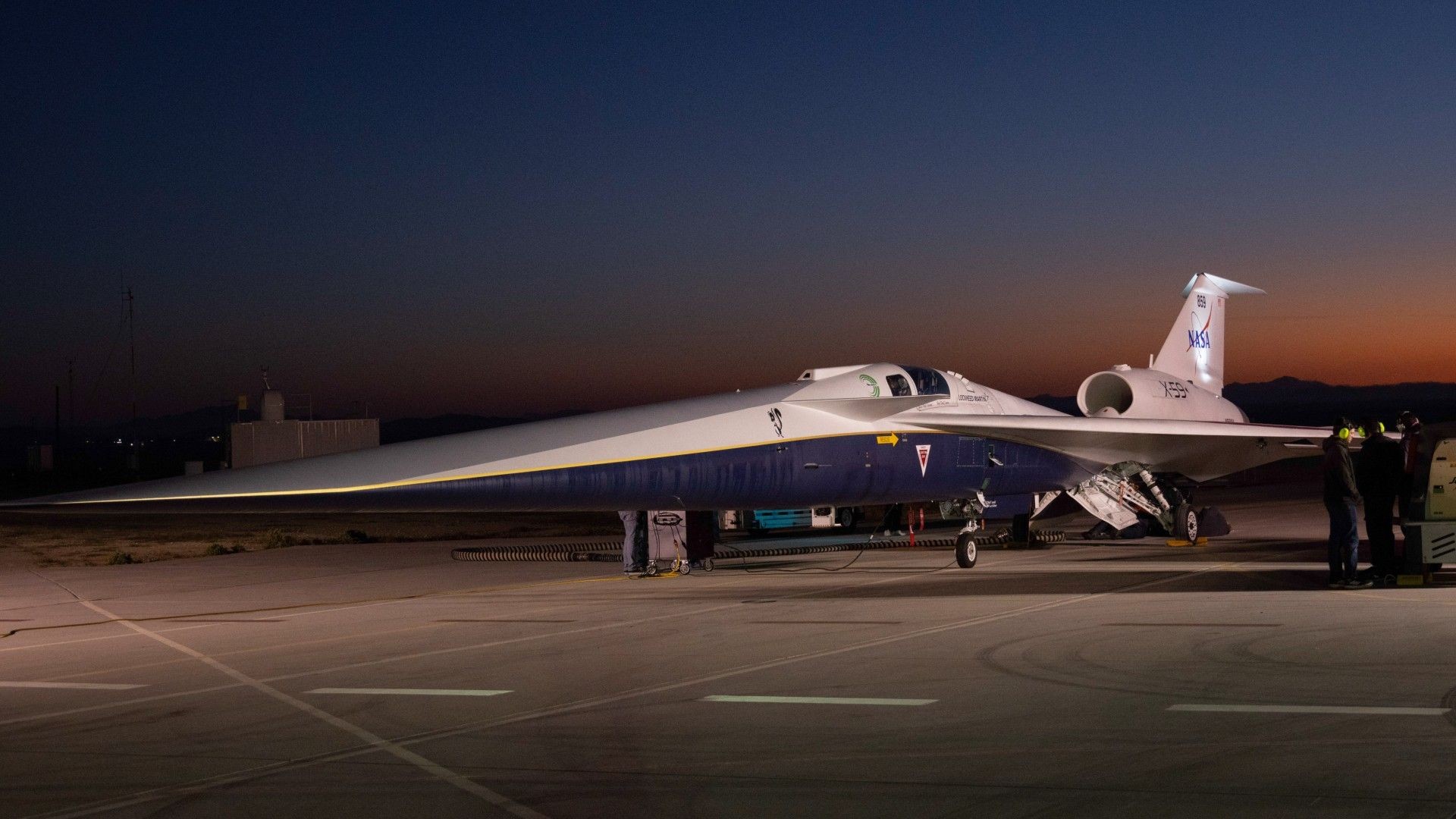
NASA’s experimental X-59 jet is gearing up for its second test flight, a key step toward potentially lifting the U.S. ban on supersonic flight over land. The aircraft, developed in collaboration with Lockheed Martin, is designed to break the sound barrier without creating the jarring sonic booms that currently restrict high-speed air travel.
The Problem with Sonic Booms
For decades, supersonic flight has been largely limited over populated areas due to the disruptive nature of sonic booms. These booms aren’t just loud; they can be felt as intense pressure waves, leading to noise complaints and concerns about structural damage. The U.S. banned supersonic flight over land in 1973 because of these disturbances. The X-59 project is an attempt to solve this problem, so that supersonic travel can resume.
How the X-59 Differs
The X-59 isn’t just another fast plane; it has a radically different design. The aircraft features an elongated shape and uniquely positioned engines that reshape airflow to spread out shockwaves. Instead of a sharp, explosive boom, NASA aims to produce a quieter “thump” that resembles a car door slamming.
This matters because the goal is to reduce the perceived noise level enough to make supersonic flight acceptable over land.
Upcoming Test Flight Details
The second test flight, scheduled to depart from NASA’s Armstrong Flight Research Center near Edwards Air Force Base in California, will last approximately one hour. The X-59 will reach 20,000 feet and a maximum speed of 260 mph. Future tests will incrementally increase speed and altitude, ensuring the aircraft’s safety while evaluating performance.
These gradual tests are crucial because NASA needs to collect data and refine the X-59’s design before more ambitious supersonic flights are attempted.
What’s Next?
If successful, the X-59 could pave the way for a new era of faster air travel. By demonstrating that supersonic flight can be made quieter and more acceptable, NASA hopes to influence regulatory changes and bring high-speed commercial flights back to U.S. skies. The program’s success hinges on proving that the X-59 can deliver on its promise: supersonic speeds without the disruptive boom.