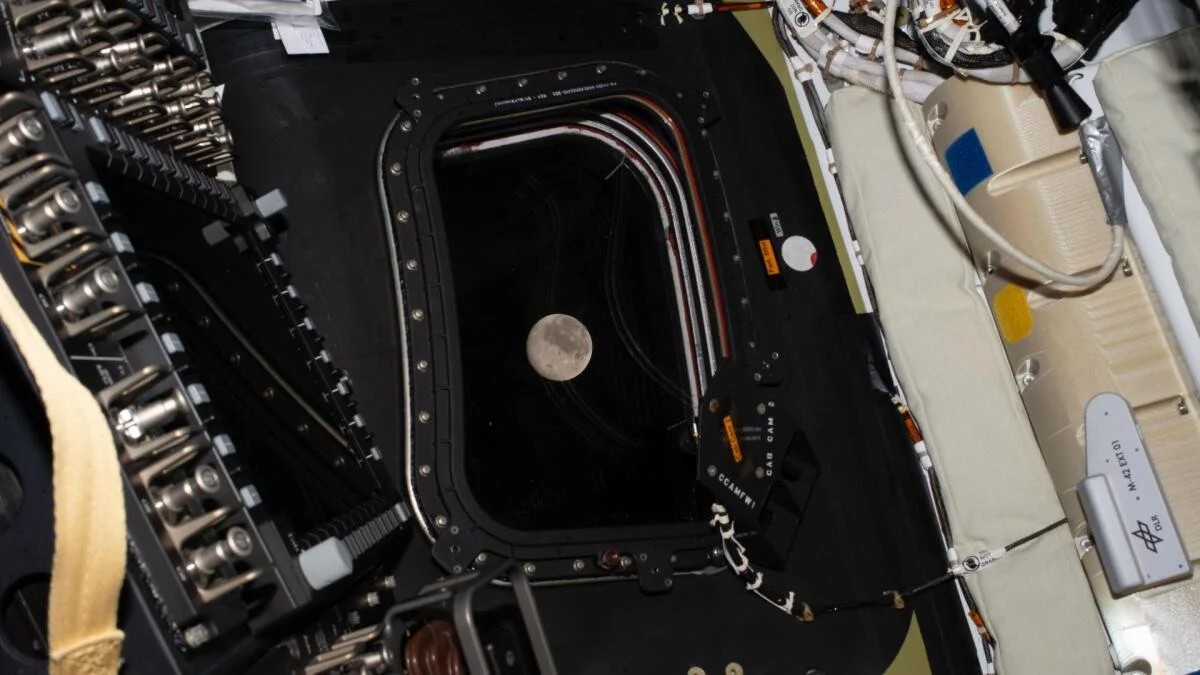
The Artemis II mission is pushing the boundaries of human exploration, marking the first time humans have ventured beyond Earth’s orbit since 1972. As the Orion spacecraft maneuvers around the far side of the moon, it is not just carrying cutting-edge aerospace engineering; it is also carrying a piece of consumer technology that has never been used this way before: the iPhone 17 Pro Max.
A New Era of Space Documentation
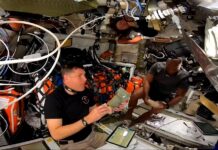
While NASA utilizes highly specialized, ruggedized equipment for mission-critical operations, the crew of Artemis II is using personal smartphones to capture the human side of spaceflight. Mission specialists Christina Koch and Commander Reid Wiseman have already shared striking “selfies” taken with the iPhone’s front-facing camera, capturing the brilliant glow of Earth against the darkness of space.
These images—captured with a 2.715mm lens and f/1.9 aperture—offer a perspective that traditional, bulky space cameras often miss. By using the iPhone, the crew can document their journey with a level of intimacy and ease that was previously impossible in deep space.
Breaking the Tech Barrier
The presence of these devices is more than just a novelty; it represents a significant shift in how space agencies approach hardware.
- Hardware Qualification: Apple noted that this is the first time an iPhone has fully qualified for extended use in orbit and beyond.
- Streamlined Processes: NASA Administrator Jared Isaacman highlighted that the agency “challenged longstanding processes” to qualify modern consumer hardware on an expedited timeline.
- Limited Connectivity: Because of the extreme environment and safety protocols, the iPhones cannot connect to the internet or Bluetooth. They function strictly as high-quality local recording devices.
“We are giving our crews the tools to capture special moments for their families and share inspiring images and video with the world,” explained Jared Isaacman.
How the “Social Media” Works from Moon Orbit
A common question arises: if the astronauts have no internet access, how are these photos reaching the public? The process is a coordinated effort between the crew and Earth-based teams.
The astronauts act as the creative directors, capturing the footage and writing the content. These files are then transmitted down to Earth via NASA’s communication arrays. Once received, a dedicated social media coordinator—Camille, from the NASA astronaut office—manages the actual posting to platforms like Instagram on behalf of the crew.
Why This Matters
The inclusion of consumer electronics in deep-space missions signals a trend toward democratizing space imagery. In the past, space photography was the domain of highly specialized scientists and engineers. By integrating modern, intuitive technology, NASA is bridging the gap between high-level exploration and public engagement, allowing the world to see the moon and Earth through a lens that feels familiar and personal.
Conclusion: The Artemis II mission is proving that even in the most extreme environments, human connection remains a priority. By bringing the iPhone 17 into deep space, NASA is not just testing new hardware, but finding new ways to bring the awe of space exploration directly to the public.