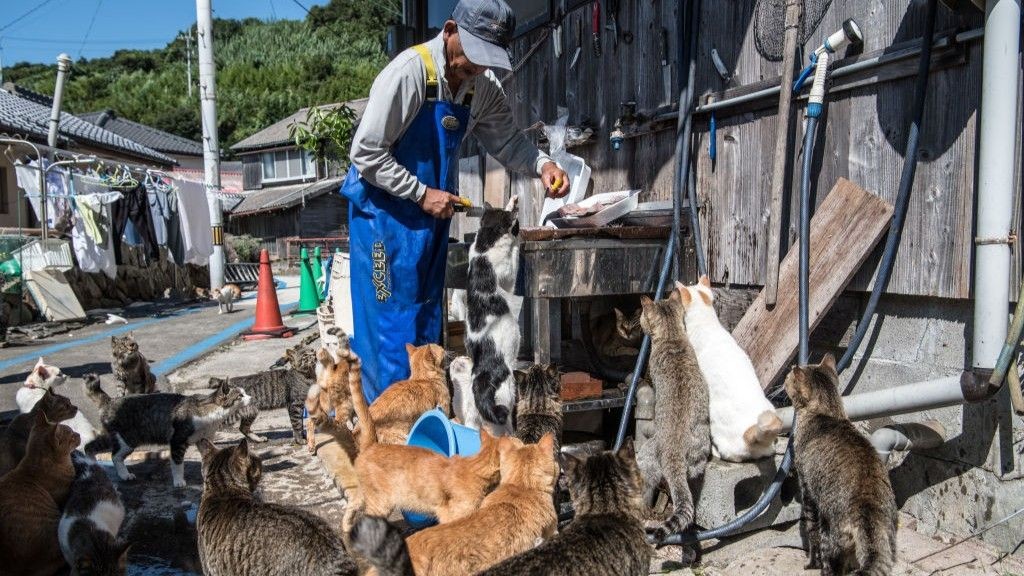
Aoshima, a tiny island in Japan’s Seto Inland Sea, has become a global phenomenon. Known for its overwhelming feline population, the 0.2-square-mile island serves as a unique case study of how human migration, economic shifts, and wildlife management intersect. However, beneath its charm as a tourist destination, the island is facing a quiet crisis of depopulation and biological decline.
A Community in Transition
Once a thriving sardine fishing village with nearly 900 residents, Aoshima has undergone a dramatic transformation. As the fishing industry declined throughout the 20th century, the human population migrated to the mainland in search of economic stability.
This exodus left behind a vacuum that was filled by the cats originally brought to the island to protect fishing nets from rodents. Today, the demographic reality is stark: approximately 80 cats live alongside only three elderly residents.
The Biological Reality of an Isolated Colony
While visitors often flock to the island to see the cats, the reality of their existence is more complex than social media images suggest. The island’s feline population is currently shaped by three major factors:
- Controlled Population Growth: A massive spaying-and-neutering program launched in 2018 successfully reduced the population from roughly 200 cats to the current number. Notably, no kittens have been recorded on the island since the program began.
- Genetic Isolation: A 2023 genetic study revealed that Aoshima’s cats possess distinct coat-color genes, primarily ginger or tortoiseshell. This confirms they descended from a small “founder population,” a phenomenon that often leads to inbreeding.
- Health Challenges: Due to this lack of genetic diversity, roughly one-third of the current cats suffer from diseases linked to inbreeding. Most of the remaining cats are over seven years old, and many struggle with blindness or malnutrition.
The Looming End of an Era
The future of Aoshima is a microcosm of a broader trend seen across rural Japan: the “vanishing” of remote communities. As the remaining human residents age, the island faces the very real possibility of complete abandonment.
Local resident Naoko Kamimoto, often referred to as the “cat mama,” provides a sobering perspective on the island’s lifecycle. Despite the influx of food donations from across Japan, the island’s infrastructure—including abandoned houses and crumbling buildings—is slowly being reclaimed by nature and weathered by typhoons.
“The day will come when there are no people left, and no cats,” says Kamimoto. “All we can do is make sure we look after them for as long as we’re here.”
Conclusion
Aoshima stands at a crossroads between being a celebrated tourist attraction and a dying ecosystem. Whether the cats will be relocated to shelters or vanish alongside the last of the island’s human residents remains an open question, marking the end of a centuries-old relationship between a community and its animals.