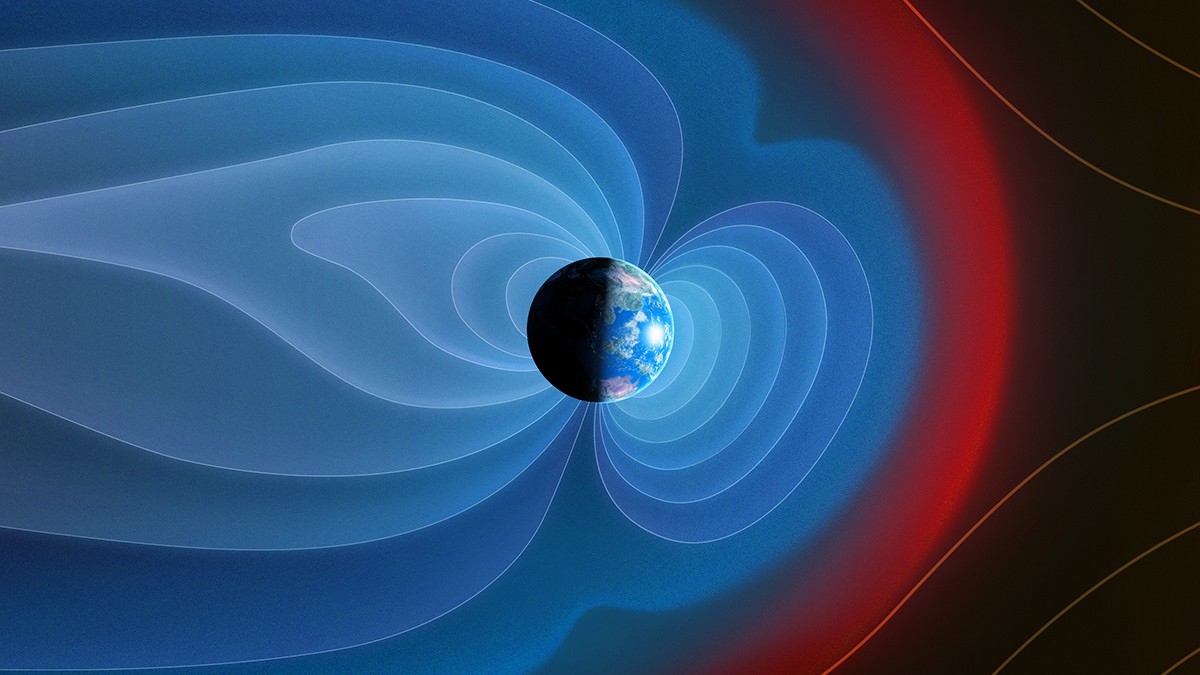
Recent research reveals that Earth’s magnetic field reversals 40 million years ago were far more prolonged and erratic than previously understood, challenging existing assumptions about how these events unfold.
The study, led by paleomagnetist Yuhji Yamamoto, analyzed sediment cores from the North Atlantic, identifying two reversals that took approximately 18,000 and 70,000 years to complete. These durations are significantly longer than the conventional estimate of around 10,000 years.
Why This Matters
Earth’s magnetic field is a crucial shield against harmful cosmic radiation. When it weakens during a reversal, it leaves the planet vulnerable. Longer reversal times mean prolonged exposure to this radiation, potentially impacting climate, animal species, and even human technology.
Understanding these past events is vital for preparing for the next inevitable reversal, which could disrupt modern infrastructure and ecosystems.
The Findings in Detail
Researchers examined an 8-meter sediment core representing a period in the Eocene epoch. Magnetic signals within the core indicated a clear shift in Earth’s polarity, but over an unexpectedly vast span of sediment.
The prolonged reversals included multiple “rebounds,” where the magnetic field hesitated before settling into its new orientation—a pattern also observed in the most recent flip, the Brunhes-Matuyama reversal about 775,000 years ago.
Computer models suggest some reversals could stretch across 130,000 years, though no event of that length has yet been confirmed in the geological record.
The Science Behind It
Earth’s magnetic field is generated by the movement of molten iron and nickel in its outer core, approximately 2,200 kilometers thick. This dynamic process occasionally becomes unstable, causing the magnetic poles to swap positions.
During a reversal, magnetic north and south exchange places, but the transition isn’t instantaneous. Instead, the field weakens, becomes distorted, and then slowly re-aligns over thousands of years.
What This Means for the Future
The discovery reinforces that magnetic reversals are not clean, predictable events. They can be messy, prolonged, and unpredictable.
The Brunhes-Matuyama reversal, which took 22,000 years to complete, supports the notion that drawn-out reversals may be the norm rather than the exception.
“It’s basically saying we are exposing higher latitudes in particular, but also the entire planet, to greater rates and greater durations of this cosmic radiation,” says paleomagnetist Peter Lippert.
Extended exposure to cosmic radiation could lead to higher mutation rates and atmospheric erosion, requiring further research to fully assess the risks.
Prolonged magnetic field reversals present a significant challenge to our understanding of Earth’s geodynamo and pose potential threats to life on Earth. The more we know about these events, the better prepared we can be for the next inevitable shift.