The American Southwest is facing a fundamental shift in its environmental reality. Despite decades of aggressive water conservation efforts in major metropolitan areas, a growing body of research suggests that cities like Phoenix, Las Vegas, and Denver cannot solve the looming water crisis alone.
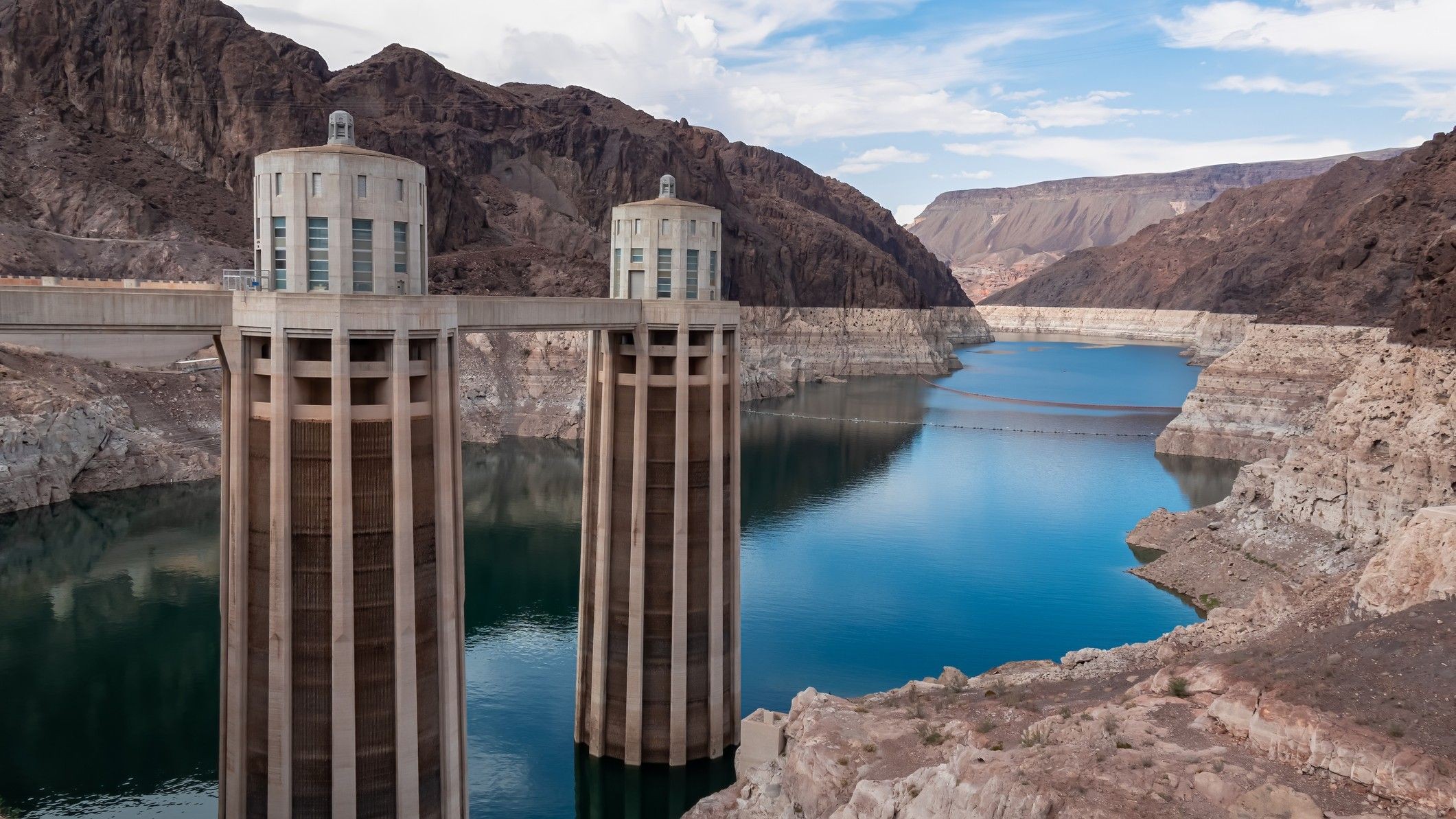
As the Colorado River—the lifeblood for 40 million people—continues to dwindle, experts warn that even dramatic reductions in urban water use may fail to offset the catastrophic impact of rising temperatures and shrinking snowpacks.
The Limits of Urban Conservation
For years, cities in the Colorado River basin have been leaders in “demand management.” Programs in Las Vegas, for example, provide rebates for replacing lawns with desert landscaping and recycle nearly 40% of used water back into Lake Mead. Between 2002 and 2025, many of these cities slashed their per capita water consumption by as much as 58%.
However, a recent study published in Water Resources Research reveals a sobering truth: urban efficiency has hit a ceiling.
Researchers analyzed various climate scenarios, ranging from moderate warming to extreme heat. Their findings showed that for most cities, these conservation wins are being swallowed by the sheer scale of water loss caused by climate change. As temperatures rise, evaporation increases and precipitation decreases, meaning the “savings” made by residents are effectively neutralized by the drying environment.
The 70% Problem: Agriculture vs. Cities
The most critical takeaway from current research is the disparity between who uses water and who is expected to save it. While cities often dominate the political conversation regarding water shortages, they are far from the primary consumers.
- Urban usage: Accounts for only about 18% of the region’s water.
- Agricultural usage: Consumes more than 70% of the basin’s water.
“You can’t solve this problem without dealing with agriculture in a major way,” says Sharon Megdal, director of the Water Resources Research Center at the University of Arizona. “Because agriculture is 70% of the problem, it needs to be at least 70% of the solution.”
This creates a profound economic and political tension. Many farmers hold “senior water rights,” legally guaranteeing them their allocation regardless of shortages. However, much of the water used in agriculture goes toward thirsty, high-export crops like alfalfa, cotton, and leafy greens.
While transitioning to drip irrigation or low-water crops (like wheat or barley) could reduce agricultural water use by up to 50%, these changes must be economically viable for farmers who are often bound by long-term contracts.
A System Out of Sync
The crisis is compounded by an outdated legal framework. The Colorado River Compact, a century-old agreement governing water distribution among seven states, is currently facing a period of intense friction.
The “Upper Basin” states (Colorado, New Mexico, Utah, and Wyoming) and the “Lower Basin” states (Arizona, Nevada, and California) are locked in a standoff. The Lower Basin is facing immediate, acute shortages, while the Upper Basin argues that any new cuts should be borne exclusively by those downstream.
Experts argue that this “zero-sum” mentality is dangerous. To prevent a total collapse, water reductions must be distributed across the entire basin rather than placed on a single group of states or users.
The Threat of “Dead Pool”
The urgency of this situation cannot be overstated. Recent years have seen record-low snowpacks and minimal spring runoff, pushing major reservoirs toward a terrifying threshold known as “dead pool.”
If water levels in Lake Mead or Lake Powell drop too low, the water can no longer flow downstream. This would not only cut off water supplies to millions but could also halt electricity production at facilities like the Glen Canyon Dam, which powers over 350,000 homes.
Adding to the complexity is the rise of data centers. These massive facilities require millions of gallons of water daily for cooling, creating a new, rapidly growing demand in an era of shrinking supply.
Looking Ahead: Adapting to a New Normal
While the outlook is grim, the capacity for adaptation remains. Municipalities are already exploring:
– Buying water rights from rural areas and farmers.
– Investing in desalination through agreements with Mexico and California.
– Modernizing irrigation and shifting crop patterns.
Ultimately, the survival of the Southwest depends on moving past the illusions of the 20th century. As Brad Udall of the Colorado Water Center notes, the region must stop pretending it lives in a world of abundance and instead build a system that reflects a “completely new reality of much less water flow.”
Conclusion: The Colorado River crisis is no longer a problem that can be solved by individual conservation alone; it requires a massive, systemic overhaul of how agriculture, industry, and urban centers share a shrinking resource.