


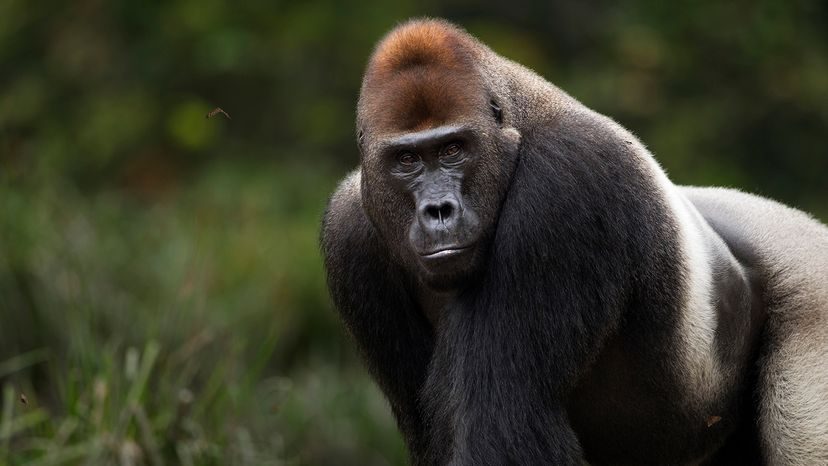
The idea of a silverback gorilla locking horns with a grizzly bear is pure fantasy. It’s a clash of titans that will never happen in nature, but it makes for a compelling thought experiment. Both animals represent the apex of physical power in their respective domains, and comparing them forces us to look closely at what makes them dangerous.
In one corner, you have the grizzly bear. It is a heavyweight machine built for destruction. It has claws designed to rip, muscles built to crush, and a bite force capable of shattering a human skull. In the other corner stands the dominant male gorilla. He is an athlete of raw strength, armed with powerful arms, opposable thumbs, and enough muscle density to lift objects that would baffle human strength records.
But size is just the starting point. To understand who would win in this hypothetical scenario, we have to look beyond just who is heavier. We need to dissect their physiology, their weapons, and their instincts.
Are Gorillas or Grizzly Bears Bigger?
When people ask which is stronger gorilla or bear, they often start with size. And on that front, the bear has a clear, overwhelming advantage.
An adult male grizzly can weigh between 400 and 800 pounds. Some massive specimens even tip the scales closer to 1,000 pounds. They are dense, heavy, and built like tanks.
A large male silverback gorilla typically weighs between 300 and 450 pounds. While that is massive for a primate, it pales in comparison to the bear’s bulk. The grizzly isn’t just bigger; it is significantly heavier, with a layer of fat and muscle that provides both insulation and protection.
But does size equal victory? Not necessarily. Strength is complex. It involves leverage, technique, and the ability to deliver damage without getting damaged in return.
The Bite: Bone-Crushing vs. Bone-Gnawing
Let’s talk about weapons. The grizzly’s bite is its most terrifying asset. A bear’s jaws are designed to crush bone. Studies suggest their bite force can exceed 1,000 pounds per square inch. That is enough force to pulverize a human skull instantly. In a fight, that bite is a one-hit kill.
A gorilla’s bite is also powerful, estimated at around 1,300 PSI. Wait. Is a gorilla’s bite stronger? Yes, technically, the pressure is higher. But gorillas eat tough vegetation, fibrous plants, and hard nuts. Their jaws are built for grinding, not crushing bone. They lack the canine size and jaw structure of a bear. Their bite can break bones, but it isn’t designed to snap them like kindling.
The bear’s teeth are weapons. The gorilla’s teeth are tools.
Claws: Scissors vs. Chainsaws
Then there are the hands. The silverback gorilla has hands. Human-like opposable thumbs. This gives him dexterity. He can grab, hold, and throw. He can grapple. In a close-quarters struggle, his ability to hold on might give him an edge in controlling an opponent.
The grizzly bear does not have grasping hands. It has paws with
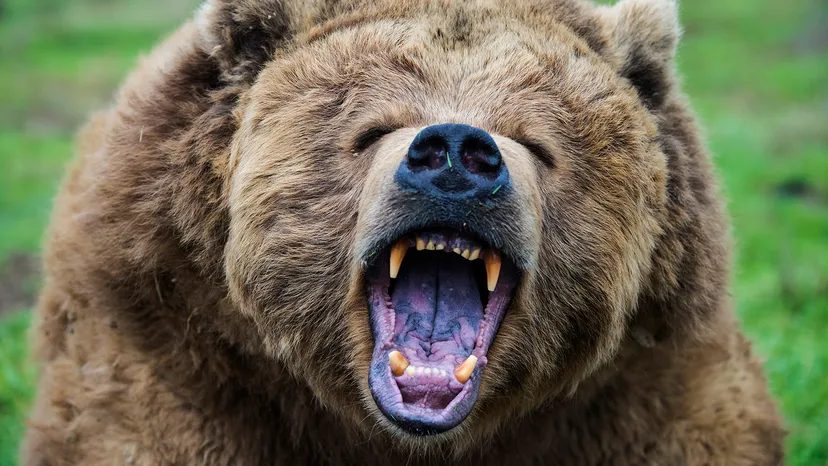

Let’s look at the numbers first because they set the stage for a one-sided conclusion. A massive silverback gorilla pushes past 400 pounds. That’s heavy for a primate. A grizzly bear, however, easily clears 600 pounds. Some Kodiak bears, which are just a specific subspecies of brown bear, hit 1,300 pounds. That is nearly three times the mass of the largest gorilla. Weight matters when you are trying to crush bones or withstand a beating.
The Grizzly’s Brutal Physics
Grizzlies fight differently than they hunt. They walk on all fours but can rear up on their hind legs to deliver devastating strikes. You do not want to see the force of a grizzly’s blow. The thick neck muscles absorb impact that would shatter other animals. With hind feet planted firmly, the bear becomes an immovable object that can overpower almost any threat.
The bite force is another key metric. It sits around 975 PSI. That pressure snaps bones. It crushes the average human skull. Add in retractable-style claws that act like daggers, a dense skull structure, and sharp teeth. This is a predator built for combat. Even polar bears, often cited as the most powerful solitary fighters, do not match the grizzly’s raw aggression in a close-quarters brawl.
The Gorilla’s Mechanical Edge
The silverback brings serious strength to the table. Adult males have staggering muscle density. Their arms are long and deliver crushing blows. They lack wolverine-like claws, but their bite is stronger than many big cats.
That bite registers between 1,200 and 1,300 PSI. Evolution shaped those jaw muscles to chew through tough vegetation. The gorilla also has opposable thumbs. Intelligence gives it an edge. It can assess threats. It can strategize. A bear cannot do this.
But strategy has limits. Gorillas defend against leopards or mountain lions. Confirmed accounts of such victories are rare. Mostly they are speculative. What happens when the opponent weighs three times as much and has claws designed for tearing?
Who Wins the Fight?
Most stats point to the bear. The size difference is overwhelming. The durability is superior. The raw aggression tips the scale. When a grizzly fights on two legs, it becomes a terrifying opponent. It rips flesh easily. It outmuscles other animals. That gives it a lethal edge.
Fans of King Kong might argue the gorilla has the smarts. They might say intelligence wins in certain scenarios. But against a rampaging grizzly with nature on its side, the odds are terrible. In the wild, such a fight would end quickly. Brutally.
These matchups are fun to imagine. But both animals are best admired from a distance. They rule their own domains. They never cross paths. That is probably for the best.
We created this article in conjunction with AI technology, then made sure it was fact-checked and edited by a HowStuffWorks editor.


