


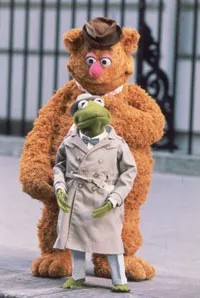
You look at Kermit and see a frog. You see the flutter of his eyelids, the slight tilt of his head, the way his mouth moves. What you don’t see is the engineering.
The first Muppets were just Jim Henson and a pile of household junk. He drew rough sketches, then built the thing himself. The original Kermit looked more like a lizard than a frog. It had a cardboard body covered in material cut from a fuzzy green coat belonging to Henson’s mother. Those eyes? Two halves of a spherical toy called Wacky Stax. It was scrappy. It was weird. It worked.
As the team grew, so did the complexity. Henson couldn’t build everything alone, so he brought in people like Don Sahlin. Henson kept doing the sketching. The team did the rest. Today, the process is strict. A new Muppet starts as a sketch. It becomes a detailed concept drawing. If the workshop’s creative supervisor approves it, a builder creates the head and body.
The material science of Muppeteers
Most modern Muppets are made of reticulated polyfoam. It is light. It is flexible. It is durable. The older originals used foam rubber, which eventually crumbles to dust. So those are gone.
The builder cuts and sculpts the foam block or glues layers together with contact cement. Then comes the “skin.” The builder makes patterns, pins them to the foam, adjusts them, and cuts the material.
Many Muppets are covered in antron fleece, often just called “Muppet fleece.” It can be dyed any color. Others use flocking, fake fur, or feathers. The choice of material and color isn’t just aesthetic. It defines the character’s personality. A fuzzy texture feels softer than a slick one.
The material makes a big difference in the Muppet’s personality.
How the mechanics work
Muppeteers are the humans inside the suits. They control the puppet’s emotions. Kermit’s head is essentially a fabric shell over the Muppeteer’s hand. Move the fingers, and the eyes change. Tilt the hand, and the head tilts.
There are two main types of Muppets: hand-and-rod and live-hand.
- Hand-and-rod : The arms are tubes of stuffed fabric. The hands are stiff, made of thin plywood, foam, and armature wire. Thin black metal rods attach to the hands and run down to wooden dowels held by the puppeteer.
- Live-hand : The arms are hollow. The Muppeteer inserts their own hand into a four-fingered glove. There is usually extra fabric between the body and the right hand to make room for a second Muppeteer.
The Swedish Chef is the odd one out. He has actual human hands, not gloves. One Muppeteer controls the head (originally Jim Henson). Another controls the hands (originally Frank Oz).
Why the seams don’t show
Filming in close-up is dangerous. If you see a seam, the illusion breaks. That’s why Don Sahlin perfected the Henson stitch. It is a specific technique that hides the join. The fuzzy pile of antron fleece also helps. Kermit has a seam running down the center of his nose. You can’t see it on camera.
Who owns the Muppets?
It is complicated. Three different entities hold the rights.
- The Muppets Holding Company (a division of Walt Disney) owns the “classic” Muppets from The Muppet Show.
- Sesame Workshop (formerly the Children’s Television Workshop) owns the Sesame Street characters.
- The Jim Henson Company owns the rest, including the Fraggle Rock cast.
So when you see Kermit on screen, you are watching a product of foam, fleece, and specific stitch techniques, owned by a massive media conglomerate. The magic is real. The ownership is messy.


