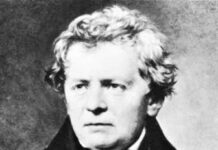
Horace Bénédict de Saussure was not your typical 18th-century academic. Born in Geneva on February 17, 1740, he spent his life glued to the mountains that dominated his view. He died there on January 22, 1799. But before he became a legend in the Alps, he was a serious physicist and philosopher who taught at the Academy of Geneva starting in 1762.
The man who effectively coined the term geology did not sit in an ivory tower. He climbed.
The Birth of a Scientific Word
The term “geology” entered scientific nomenclature through Saussure’s massive work, Voyages dans les Alpes. Published between 1779 and 1796, these volumes were not just travelogues. They were the distilled results of over three decades of rigorous field study. If you want to know how to explain complex geological concepts simply, look no further than his writing. He made the earth’s history readable for a curious public.
But his curiosity wasn’t limited to rocks. Saussure was obsessed with measuring the invisible.
Measuring the Unseen
Saussure’s contributions to science were practical and precise. In 1766, he likely developed the first electrometer, a device designed to measure electric potential. That’s a lot of static for the 1700s.
More famously, he engineered the first hygrometer that used a human hair in 1783. Why a hair? Because human hair expands and contracts with changes in atmospheric humidity. It was an elegant, low-tech solution to a high-stakes problem. For early Alpine explorers, knowing the moisture in the air wasn’t just a scientific curiosity. It was a matter of survival.
“The word geology was introduced into scientific nomenclature by Saussure with the publication of the first volume of his Voyages dans les Alpes.”
Granite and Origins
Saussure didn’t just measure the atmosphere. He looked at the ground beneath his boots. He conducted early laboratory experiments to determine the origin of granite. This was a contentious topic in the 18th century. Was granite igneous (formed from cooling magma) or sedimentary (formed from layers of compressed material)? Saussure’s work helped steer the conversation toward the correct understanding, laying groundwork for modern petrology.
He was a polymath in an era that prized specialization. A physicist who climbed. A philosopher who measured static electricity. A man who gave us the word for the study of the earth itself.
We still use his tools. We still use his word. The mountains remain, indifferent to our attempts to name them.