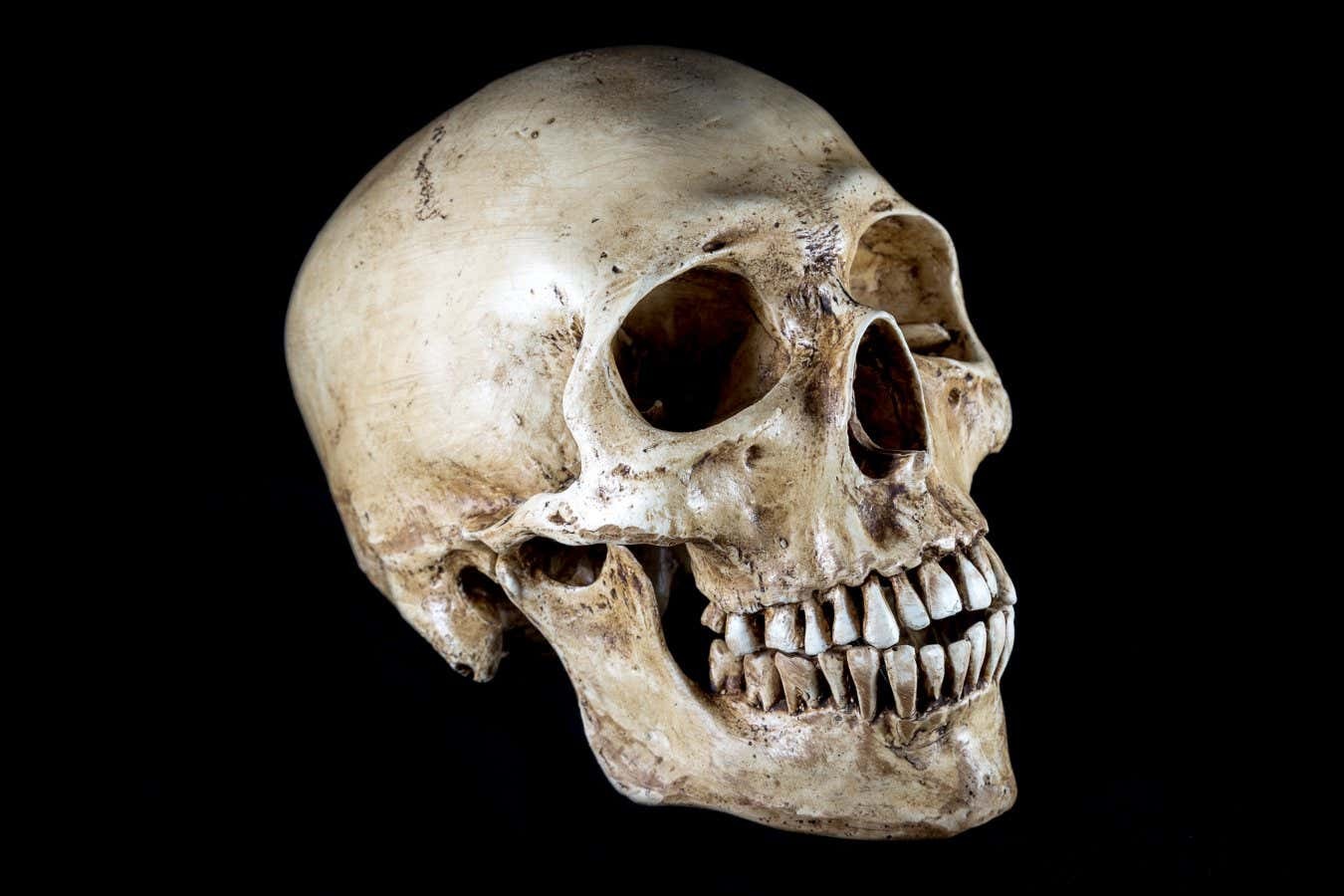
Recent scientific research suggests that human facial structures are undergoing a rapid transformation. A study led by Shiori Usui at the National Research Institute of Police Science in Japan has revealed that, over the last century, human skull shapes have shifted significantly—moving away from the elongated forms of the early 1900s toward rounder, more compact structures.
The Study: Comparing Two Eras
To track these changes, researchers utilized advanced computed tomography (CT) scans to compare two distinct groups of individuals:
– The Historical Group: 56 individuals (34 men, 22 women) who died between 1900 and 1920.
– The Modern Group: 56 individuals (29 men, 27 women) who died between 2022 and 2024.
By analyzing 161 specific landmarks on 3D skull images, the team identified subtle but consistent morphological shifts.
Key Physical Changes
The most prominent finding is that humans have become more brachycephalic. In simpler terms, whereas skulls a century ago were often oval-shaped (longer from front to back), modern skulls have become rounder and wider.
Beyond the overall shape, several specific features have changed:
* Facial Structure: Cheekbones have become narrower, upper jaws wider, and noses slimmer and more prominent.
* The Forehead: Foreheads have become shorter and slightly more “dished” or recessed.
* The Mastoid Process: The bony protrusions located behind the ears have become larger and more pronounced.
Why is this happening?
Scientists believe these changes are not the result of genetic evolution, which typically takes much longer to manifest in a population. Instead, these are likely environmental and lifestyle adaptations.
Two primary factors are driving this:
1. Nutrition and Health: Improved childhood nutrition and better overall health allow for larger, different bone growth patterns.
2. Dietary Shifts: The consumption of softer, processed foods means modern humans require less heavy chewing, which reduces the mechanical stress on the jaw and facial bones that shaped our ancestors.
The Surprising Increase in Sexual Dimorphism
One of the most unexpected findings was the trend in sexual dimorphism —the physical differences between males and females.
The researchers initially hypothesized that as lifestyles become more similar for both genders, facial structures would become more “neutral” or similar. Instead, they found the opposite: differences between men and women have actually increased. Male skulls in the modern era show stronger brow ridges, larger mastoid areas, and more projecting faces compared to female skulls than they did a century ago.
Global Context and Scientific Implications
While this study focused on Japanese populations, experts suggest this is likely a global trend driven by rapid modernization. However, discrepancies exist in international research; for instance, some US studies have suggested different trends, which may be due to technological limitations in older studies or the impact of large-scale immigration altering ethnic demographics.
This research carries significant weight for several scientific fields:
* Forensic Anthropology: If human bone morphology changes this quickly, current methods for identifying human remains may need to be updated to remain accurate.
* Biological Evolution: The study challenges the idea that skeletal structures are “fixed” traits, proving that even our bones respond dynamically to our environment.
“This raises important questions about the interplay between genetics and environment—especially in traits that have traditionally been considered relatively stable.” — Francesco Cappello, University of Palermo
Conclusion
The rapid shift in human skull morphology demonstrates that our physical bodies are not static; they are constantly being reshaped by our diet, health, and modern environment. As these changes continue, scientists must recalibrate how they study and identify human remains to account for a changing biological norm.