The Dallas-based biotech startup Colossal has captured the global imagination—and significant venture capital—with its promise to “bring back” lost species. Backed by high-profile investors including Peter Thiel and even the CIA, the company’s mission is centered on “de-extinction.” However, as the company moves from the theoretical to the practical, a fierce debate has emerged: is Colossal pioneering life-saving conservation tools, or is it merely creating high-tech distractions?
The Reality of “De-Extinction”
Despite the evocative branding, Colossal is not actually resurrecting ancient DNA. Instead, their process involves a sophisticated form of genetic engineering. To “recreate” a species, researchers sequence the genome of an extinct animal, identify its unique traits, and splice those genes into the genome of a closely related living relative.
A recent example of this was the 2025 announcement regarding “dire wolves.” The animals presented were not true dire wolves, but rather gray wolves modified with specific genetic traits to resemble their extinct ancestors. This distinction has led critics to argue that the company is creating hybrid “mutants” rather than true de-extinction, raising questions about the scientific integrity of their marketing.
A Shift in Strategy: The Bluebuck Project
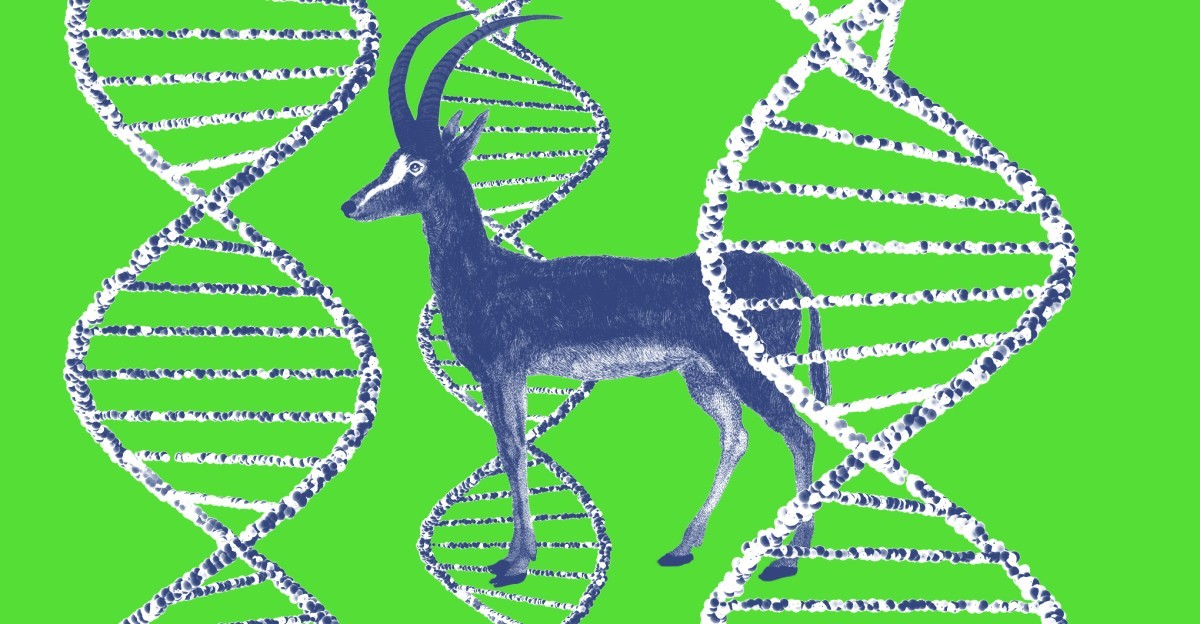
In April, Colossal announced a new focus: the bluebuck, a South African antelope that vanished around 1800. This move appears to be a strategic pivot toward more practical, conservation-oriented applications.
CEO Ben Lamm emphasizes that the technological breakthroughs required for these ambitious projects have immediate utility for living species. Specifically, Colossal is developing:
– Advanced Reproductive Technologies: A novel “ovum pickup” technique using ultrasound and specialized needles to harvest immature egg cells from live animals.
– Global Biobanking: An initiative to create genetic repositories that preserve the DNA of at-risk species for future study.
– Open-Source Research: Lamm claims that any technology with direct conservation applications will be shared freely with the scientific community.
The Conservationist’s Dilemma: Progress vs. Distraction
The core of the controversy lies in how these projects affect the broader fight against biodiversity loss. The debate is best summarized by the conflicting views of Colossal and leading ecologists.
The Argument for “De-Extinction”
Ben Lamm argues that the “splashy” nature of de-extinction is a strategic necessity. By pursuing high-profile, difficult goals, the company:
1. Forces Innovation: Building a “synthetic biology pipeline” capable of such tasks creates tools that are resilient and versatile.
2. Attracts Funding and Interest: The spectacle acts as a “lightning rod,” drawing in capital and inspiring the next generation of scientists to enter the field.
The Argument for Traditional Conservation
Ecologists, such as Douglas McCauley, express deep skepticism. While McCauley acknowledges that Colossal’s reproductive technologies—like the egg-harvesting method—are “very useful, exportable tools” that could save species before they vanish, he fears the broader impact of the company’s branding.
“The challenge with so-called ‘de-extinction’ efforts is that they actually pull the spotlight away from one of the gravest crises on the planet: the accelerating decline and extinction of nature.” — Douglas McCauley, Ecologist
For many in the field, the concern is that political attention and financial resources will be diverted toward “mutant creations” and scientific spectacles, rather than the urgent, boots-on-the-ground work required to protect currently endangered ecosystems.
Conclusion
Colossal sits at a crossroads between cutting-edge biotechnology and scientific showmanship. While their technical innovations in reproduction and biobanking offer genuine hope for modern conservation, the company must navigate the thin line between inspiring scientific progress and distracting from the immediate crisis of vanishing wildlife.