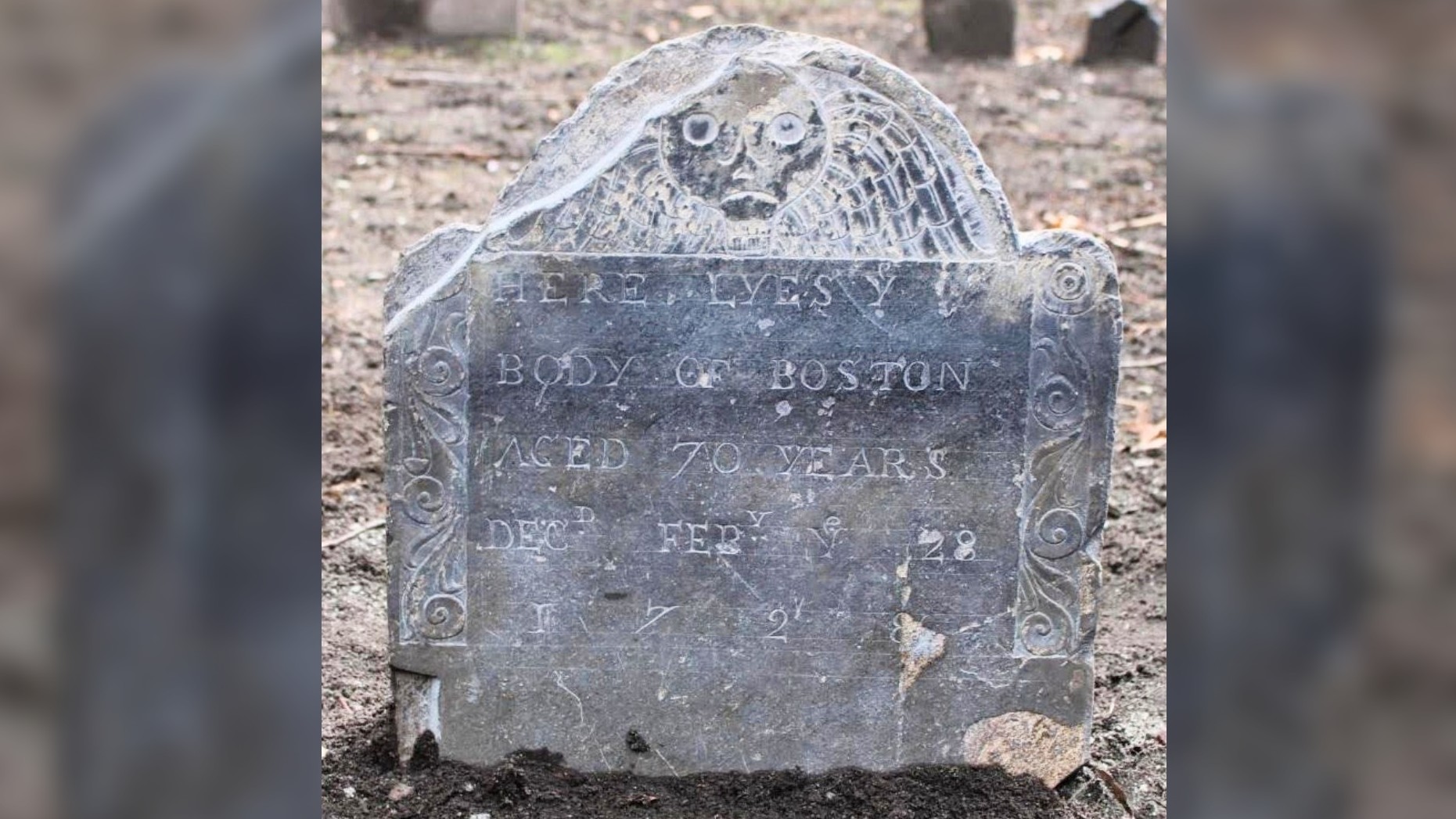
They found it in the dirt. Or rather, they cleaned it enough to read the words carved into the stone.
It’s Sebastian. He called himself Boston.
He died free in 1739? No, 1729, though the calendar says 1728. Technicalities matter less than the fact that he is here, under the soil of Granary Burying Ground in Boston. One of the oldest gravestones marking a free Black person in American soil. Mayor Michelle Wu pointed it out on July 4, noting the stone was never missing, just ignored.
“It’s been there all along.”
That discovery changes how we read the cemetery. The stone bears the standard death’s head symbol. Skull. Wings. A hope for resurrection perhaps? The inscription is brief, five lines total, using that archaic thorn letter for “the.” It confuses modern readers. Before 1752 the New Year didn’t start in January. February 28, 1728 in Julian time means 1729 today. Confusing.
Kelly Thomas from the Boston Parks and Recreation Dept spotted the anomaly during a restoration. She was reviewing photos of the headstones in the Granary ground. Established 1660. Older than the city’s founding in many ways. It holds Samuel Adams, John Hancock, Paul Revere, and Crispus Attucks. Famous white men mostly. And Attucks. But this one?
Single name. No surname.
That flag waved to Thomas. In that era a single name often signaled slavery or a precarious freedom. She dug into records. Found Sebastian. Also known as Bastian. And then she found a wife. Jane Lake.
A messy, painful reality. Boston and Jane were married, yes, they baptized a daughter at First Church in 1701. They were pious people. But the records show they were owned. By different people. In different houses. Living together by force of love or circumstance, apart by law.
John Waite held Boston. When Waite died in 1702, the chain might have broken. Or maybe it loosened. By 1708 a city list included “Boston” among free Black residents. He was a handyman. Hard worker. Known around town.
Did freedom change him?
He gained about thirty years of liberty before death. Three decades. Long enough to get an obituary in the New-England Weekly Journal. Rare then. A luxury few received.
So why the stone? And why now?
Mayor Wu tied it to other finds recently. Archaeologists pulled musket balls from the dirt. Remnants of the Battle of Bunker Hill in 1775. Gun flints. The Revolution. But this is pre-revolutionary. This is earlier. Older.
We talk about history as if it is clean. A timeline. Sebastian’s story doesn’t fit neatly into the founding fathers narrative, even though they rest in the same dirt. He is right there. Boston the man, Boston the city. Same name. Different weight.
The stone is back where it belongs. Visually restored. But the story? It was always here. Waiting for someone to look down instead of up.