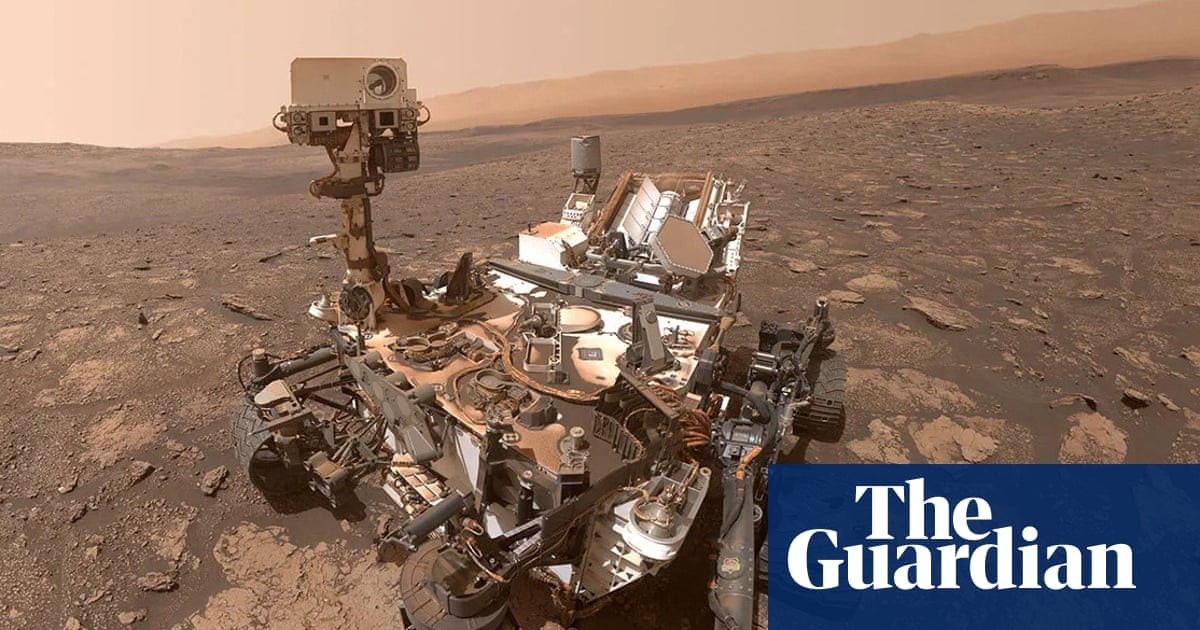
NASA’s Curiosity rover has uncovered evidence of complex organic molecules within a dried lakebed on Mars. This discovery is significant because these chemicals are the fundamental “building blocks” that allowed life to emerge on Earth, raising new questions about whether Mars once hosted similar biological processes.
The Discovery in the Gale Crater
While exploring the equator region of the Red Planet, the Curiosity rover identified seven distinct organic molecules. Notably, five of these molecules have never been observed on Mars before.
The analysis revealed several key components:
– Benzothiophene: A sulfur-containing chemical often introduced to planets via meteorites.
– Nitrogen-bearing compounds: Molecules that share structural similarities with the precursors of DNA.
Despite the excitement, scientists are maintaining a cautious stance. The presence of these molecules does not prove that life existed; rather, it confirms that the chemical ingredients necessary for life are present on the planet.
The “Bricks vs. The House” Dilemma
A central challenge in astrobiology is determining the origin of these compounds. Organic matter can be produced through two primary pathways:
1. Biological processes: Remnants left behind by ancient microbial life.
2. Geological or cosmic processes: Material delivered by meteorites or formed through non-living chemical reactions within the planet’s crust.
Professor Amy Williams, a mission scientist from the University of Florida, uses a helpful analogy to explain the distinction:
“It is definitely a building block to how DNA is made now. But it is truly just the bricks, not the house.”
In short, while the “bricks” (organic molecules) are present, scientists have not yet found the “house” (the actual biological structures).
Why This Finding Matters: Survival Against the Odds
For years, many planetary scientists believed that Mars’ harsh environment would make finding organic traces nearly impossible. The planet is currently a hostile wasteland characterized by:
– Extreme temperatures: Dropping below -100°C at night.
– High radiation: A thin atmosphere that offers little protection from solar radiation.
The fact that these complex molecules have been preserved for approximately 3.5 billion years suggests they were shielded within the subsurface environment. This discovery proves that the chemical signatures of Mars’ habitable past—a time when liquid water flowed and the atmosphere was much thicker—can survive the planet’s modern, brutal conditions.
Looking Toward the Future
This discovery sets the stage for even more intensive exploration. While Curiosity has provided a vital piece of the puzzle, the next leap in detail may come from the European Space Agency’s Rosalind Franklin mission.
Scheduled for launch in 2028, this mission will be designed to drill up to two meters below the surface. By sampling deeper into the Martian soil, scientists hope to bypass the radiation-damaged surface and determine once and for all whether these organic molecules are the products of geology or the ghosts of ancient life.
Conclusion
The detection of complex organic molecules confirms that Mars possesses the chemical foundation required for life. While this does not confirm the existence of past Martians, it proves that the essential building blocks of biology have survived billions of years of harsh environmental degradation.