Look up tonight.
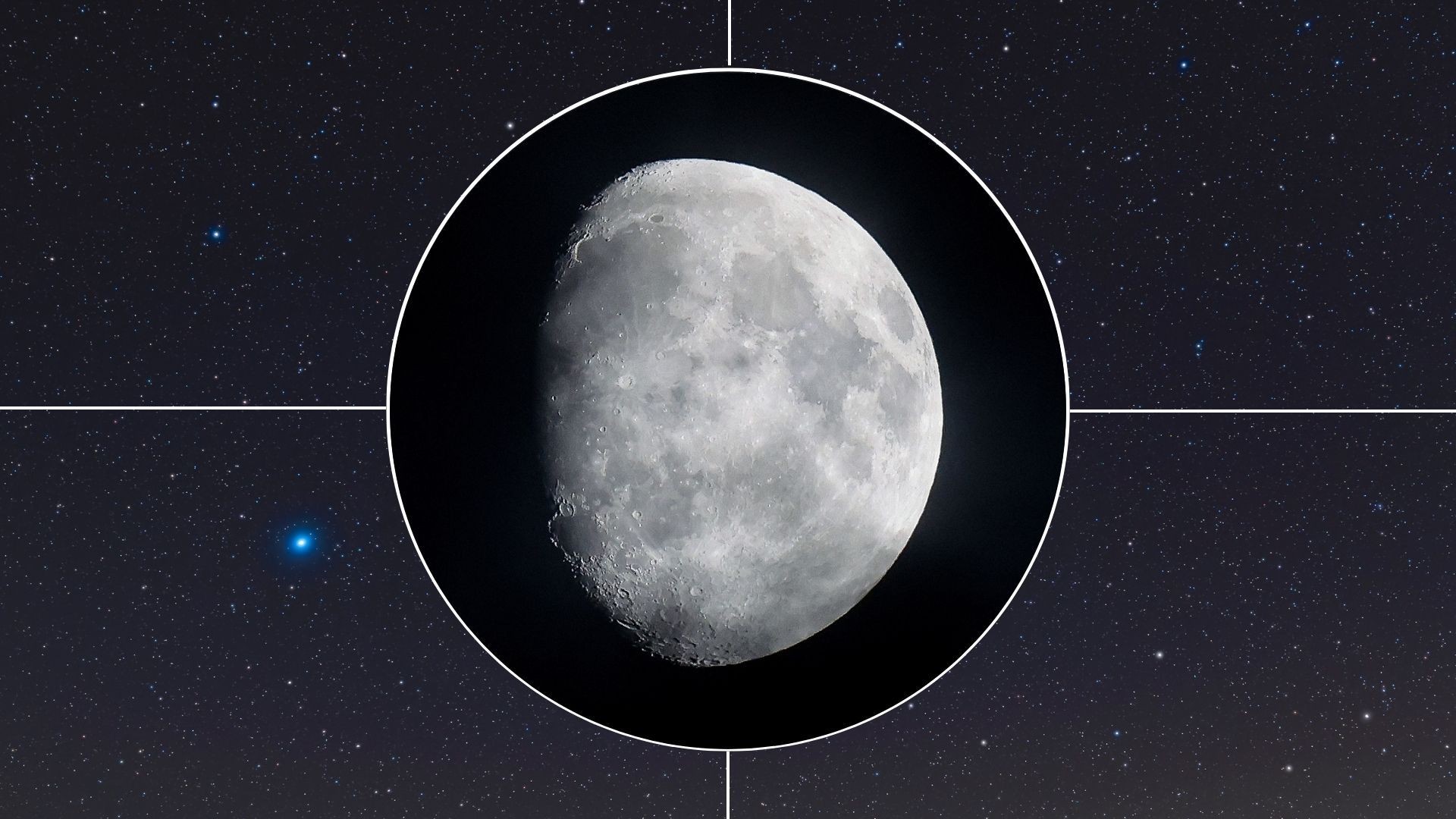
May 26 offers a clean pairing. The waxing gibbous Moon hangs close to Spica. A bright, blue-white star. It sits in the constellation Virgo. This is right before this week’s rare “Blue Moon”.
The Moon is 83% lit. It floats roughly 40 degrees above the southern sky at sunset. About four clenched fists high, if you stack them at arm’s length. Spica is to its left. Close by.
Spica isn’t just one star. Two. They are colossal. Orbiting each other every four days. EarthSky says they burn with the combined brightness of over 12,000 Suns. That’s intense.
Want more detail? Use binoculars. Point them at the Moon. You’ll see an arc of light along the terminator line. Sunlight catching the peaks of the Montes Jura range. On the northwest edge of Mare Imbrium it is bright and sharp.
Shift your gaze down toward the equator. Look for Copernicus Crater. It is 58 miles wide. Surrounded by bright streaks from the violent impact that made it. Keep following that shadow line down. You are looking at the approximate spot for the south lunar pole. Artemis 4 plans to land there in 2028.
The Moon moves. Drifts toward Spica as the night goes on. They will set together in the west on May 27 morning. Wait until sunset the next night? The Moon has moved again. To Spica’s lower left.
Where does it go from there?
May 31 brings a meeting with Antares. The red supergiant in Scorpio. This is the second full moon of May. The so-called “Blue Moon”.
Do you have good gear? Read our guide on photographing the Moon. Or check our roundups on the best astrophotography lenses and cameras. 📸
What if you miss the light?