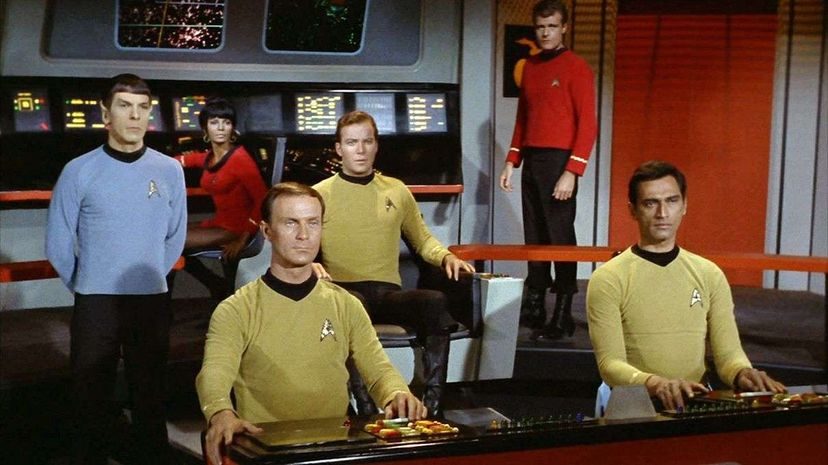
The Enterprise touched down on TV screens on September 8, 1966. Half a century has passed. The franchise has ballooned into 700-plus episodes and more than a dozen films, culminating in this year’s Star Trek Beyond. To mark the anniversary, a massive Blu-ray box set has dropped, offering remastered adventures from the original crew across both small and big screens.
Events are popping up globally to celebrate. But the real question remains: what keeps Star Trek’s staying power alive? We asked two of the show’s original architects, David Gerrold and D.C. Fontana, for the answer.
The Message Behind the Sci-Fi
Fontana, a writer on the original series who also penned the pilot for Star Trek: The Next Generation, believes the show’s endurance comes from its subtext.
“The stories still ring true, even now,” she said.
She argues that the writers hid social commentary behind the sci-fi veneer. Viewers got messages about feminism, racism, and the Vietnam War without the show ever having to tackle those topics directly in the real world.
“Nobody else could talk about it,” Fontana noted. “We could under the guise of science fiction.”
The show broke ground visually, too. It featured aliens, women, and Black characters from the start. It even staged one of television’s first interracial kisses between Captain Kirk (William Shatner) and Lieutenant Uhura (Nichelle Nichols).
Three Pillars of Longevity
Gerrold was in college when the show premiered. He immediately started pitching episodes to the studio. He is best known for writing “The Trouble with Tribbles,” introducing the furry creatures and their obsession with quadrotriticale.
Speaking over the phone, Gerrold boiled the franchise’s success down to three points.
First, it was fun.
Second, it offered a positive vision of the future. A time where humanity is thriving and solving interesting challenges rather than collapsing.
The third point is less obvious but arguably more important: inclusion.
Gerrold pointed out that traditional television tended to erase marginalized groups. It erased Black and Asian people initially. When those groups were included, gay people were often left out. Women’s contributions were rarely recognized. Star Trek flipped that script.
It featured women captains. Black officers. Asian crew members. Later, it even included Klingons as a metaphor for the other.
“It didn’t matter who you were, ‘Star Trek’ says, you’re part of this. And that’s very important to the little kid watching TV at home wondering if he’s going to be a part of the future.”
Gerrold emphasized that this message of belonging resonates deeply. It tells the viewer that the future is open to everyone. Not just some. All.
A Legacy in the Works
The franchise has consistently offered a future worth looking up to. With Star Trek: Discovery, helmed by Bryan Fuller, set to premiere in January 2017, the hope is that the spark continues. Fans are betting on another 50 years.
The Truth About Tribbles
Speaking of Tribbles, the quadrotriticale they love is based on real science. Triticale is a hybrid of wheat and rye. It was first bred in laboratories in Scotland and Sweden in the late 19th century.
Of course, Ensign Chekov insists it was a Russian invention. He doesn’t care about the history. He cares about the grain.